(Editor’s note:This post on startup and tech trends is part of Dispatches’ Tech Tuesday series. Dispatches covers tech because so many of our highly skilled internationals are engineers and researchers.)
Four months have passed in 2026, and the outlook for tech startups and investors is already looking quite different from what we might have expected at the beginning of the year. Amid worsening global conflicts, looming price rises and growing economic uncertainty, prudent investments in technology that can be integrated into preexisting infrastructure are on the order of the day.
Senior Forbes contributor John Hall recently explained how the proliferation of wars and geopolitical instability around the world is leading investors to lean towards startups which are able to make their initial cash injections go further, and appear resilient to market turbulence. It isn’t an easy time to be leading a new venture, but those able to capitalize on current trends can still thrive while others fall by the wayside.
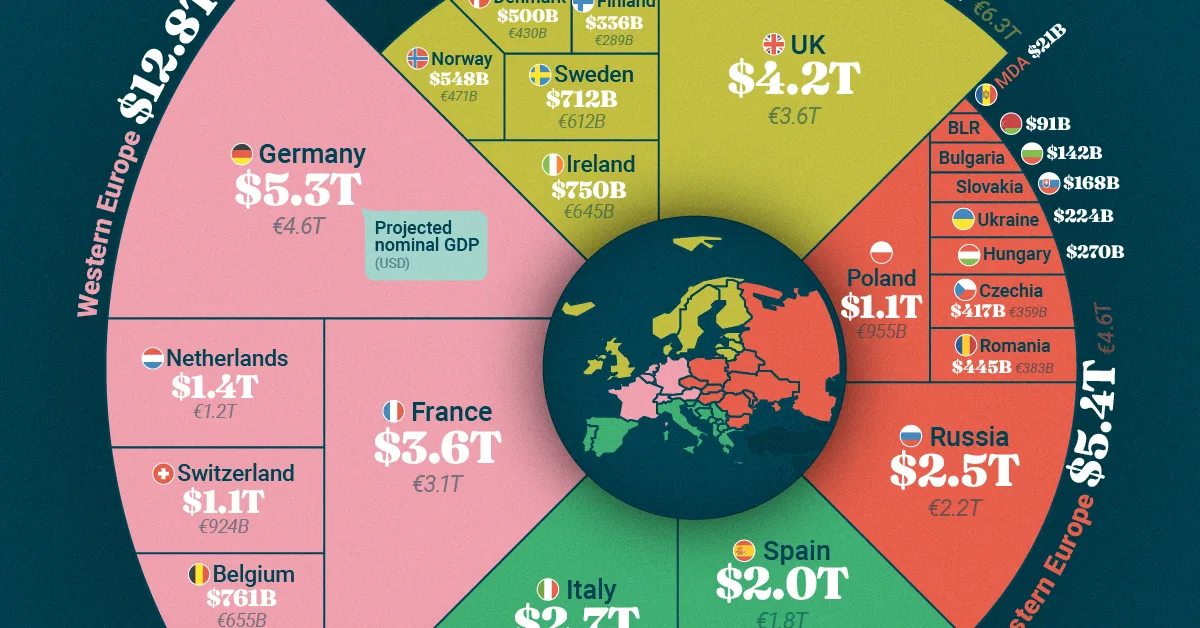
European startups also have it better than most, as there are indications that European tech is beginning to fight back against American hegemony. Europe’s biggest economies are in big trouble overall, but their relative decline actually serves as an opportunity in disguise for startups in various sectors, especially in the context of their increasing economic and military independence from the United States.
Integrated AI solutions for every sector
In every sector of the European economy, artificial intelligence is fast becoming an essential element of production and the provision of services. Axelera AI, which creates chips for AI at the edge – integrated into closed systems ranging from laptops to embedded software in robotics – has raised a total of $450 million, the most of any semiconductor company in Europe.
We’ve moved beyond the phase of AI primarily serving experimental ventures separate from the broader “human” economy. The best examples of AI-based startups today seamlessly integrate smart automation into preexisting processes, making them more efficient, accurate, productive, and cost-effective.
Whether Croatia’s AI coding startup Daytona or Portugal’s next wave of startups offering integrated AI solutions for everything from business forecasting, solar power storage, and health testing, to shopping, household utilities and travel visas, it’s safe to say that AI is no longer a speculative technology of the future.
It’s now part of pretty much everything there is to invest in.
Infrastructure consolidation over breakout technology
At the same time, concerns over a precarious global economic outlook and a Silicon Valley bubble that just keeps getting bigger mean investors are hedging their bets this year, and certainly aren’t going out on a limb with risky projects. It’s more important than ever that startups avoid the kinds of mistakes that can be deadly in the long run, such as attempting to build in a market vacuum, and failing to scale their operations.
Investors want ventures that work with the economic infrastructure that’s already there, rather than chart a completely fresh course. For example, European startups that find smart solutions to problems within the ongoing transition to green energy on the continent, or which build on other recent biotech innovations, look set to do well this year. RIFT is one of several startups in the Netherlands developing iron fuel technology, providing CO2-free heat for industry.
In biotech, Paris-based Polygon Therapeutics is developing novel immunotherapies for acute cardiovascular diseases that, sooner or later, seem to affect us all. Salvia BioElectronics at High Tech Campus Eindhoven has been perfecting an implantable to treat people with migraines, which is a significant percentage of the global population.
Whether Europe can develop its own Silicon Valley with tech, capital and talent development all in once place remains to be seen. But High Tech Campus is the main innovation center for biotech and smart biomaterials, photonics and artificial intelligence in Europe.
Fintech is bouncing back
As a press release by KMPG in February details, global fintech is in the midst of a major rebound, following a significant downturn in the sector between 2023 and 2024. Arguably more than anywhere else in the economy, fintech has made a serious push towards the integration of AI tools into its operations, including advanced agentic AI.
This is one area in which Europe and the United Kingdom flex, with Adyen in Amsterdam, Revolut in London and Klarna in Stockholm.
It’s integrated AI, with the promise of lowering operating costs and more sustainable profitability that it brings, that’s behind the surge in fintech investment over the past 12 months. Of course, the potentially disastrous impact of a protracted war in Iran on world trade could threaten the longevity of this trend.
Cybersecurity is experiencing record demand
With the threat posed by malicious cyber actors bigger than ever, as Fortinet reports, cybersecurity remains a growing sector for startup investment in Europe. This sector should be relatively unaffected by an economic crisis or continuing geopolitical instability, which, if anything, will make it an even higher priority area for investment.
We highlighted cybersecurity in last year’s startup trends briefing, and there’s every reason to think it will be even more important to the startup ecosystem this year. As military and economic conflicts escalate and hacking technology continues to develop at lightning speed, it becomes even more of an imperative for countries and corporations alike to improve their online security infrastructure.
Defense tech is on the rise
Within this global context, there’s also a massive push for innovation in military technology. Europe, in particular, is seeing more investment in defense sector startups than ever before, for better or for worse. In fact, as Vestbee reported back in October, Europe raised a record $1.5 billion in defense tech investment last year. Which is a rounding error compared to the US, but it’s a significant start.
This capital is being deployed across nearly ever defense sector from fighters to next-gen drones and tanks. For example, France will expand missile and drone stocks by up to 400 percent by 2030, according to a draft military planning law reported by POLITICO earlier this month.
Still, there are – to no one’s surprise – complications. Airbus and Dessault currently are in a tussle over which company is in charge of building sixth generation European fighters. The timing is unfortunate.
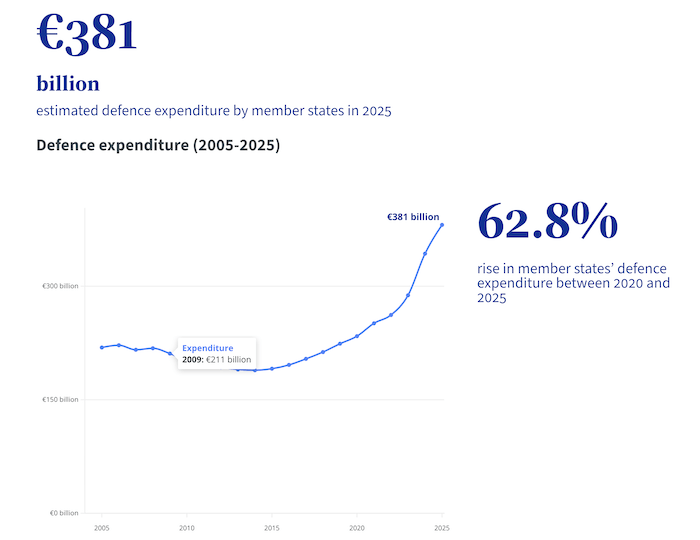
The United States has already begun to remove the protective umbrella with which it’s effectively guaranteed European security since 1945, leaving the continent to find its own means of military defence. The political leaders of both the European Union and the United Kingdom are treating this issue as an urgent priority, and those startups working on defense tech will undoubtedly be some of the biggest beneficiaries.
––––––––––
You can see a list here of promising startups from Vivatech.
Alex Beaton is a writer from London, UK. His published works include a guide to starting a business in Warsaw, a fictionalised account of his time living in Egypt, and a 2013 report of the political situation in Bulgaria. He has also written extensively about his travels in France, Portugal, Italy and Malta.
Receive the latest news and updates from Dispatches Europe. Get lifestyle & culture, startup & tech, jobs and travel news dispatched to your inbox each week.