

(Editor’s note: Dispatches covers startups because so many of our highly skilled internationals are founders. This post is part of our Tech Tuesday series.)
Popular culture has glorified working in tech startups. You get to bring cool stuff to market, work in a smaller team and a more relaxed business culture, and possibly change the world, but startup life isn’t as easy as that daily ping pong work break.
Startups fail a lot and for various reasons. The statistics tend to be dismal for anyone starting: 20 percent of startups fail within the first year and 65 percent fail within a decade, according to Forbes.
And the competition? In the U.S. alone, more than 750,000 startups are created each year.
So what are some of the most common mistakes made by startups?

Building in a vacuum
Sure, you can build the perfect product, but do people really want it? And will they pay for it?
If you are a fan of the Harry Bosch series (the books and the TV series), the gruff detective lives by this quote: “Get out and knock on doors.” I find this quote to be as true for startup founders as it is for detectives.
Yet, it’s easy to stay in your startup-cool office. It’s less confrontational.
But in order to see if your business model has any merit in reality, you need to talk to people.
You need to consider what they say and reiterate or pivot.
Does the product have flaws? Does the business model have flaws? Is your pricing okay? What does the competition do that you don’t? You need data to know this, and only by talking to a lot of potential customers and users can you know whether your product might take off.

Founder issues
Co-founder relationships are just as serious and hard as any marital relationship. The startup world is a pressure cooker, and it’s not a question of if things will come to a head, but when. You need to sit down with your co-founders at regular intervals and talk about the hard stuff, hashing out in advance how you’ll handle uncomfortable situations.
These are topics like:
• Are your visions and expectations the same?
• How do you handle unequal effort by the founder?
•What will you do if and/or when a co-founder wants out?
If you don’t talk about them now, they will become problems later.
Poor hiring choices
Think your friend is good for a vacant position? Can’t find enough talent? Hiring key talent too late?
These are all potential hiring problems, and HR can be a thorn in your side.
You really need to consider how each hire aligns with your company milestones and your company culture. You can never get it 100-percent right, but hiring needs to be very intentional and proactive.
Scaling problems
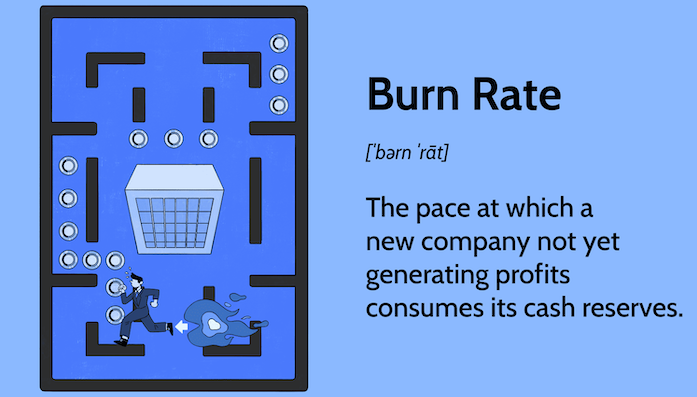
This can go both ways. Some startups scale too soon and start burning cash on unnecessary (at that moment) items such as marketing or hiring, among other things. But when the sales don’t materialize so quickly, founders find they’ve burned through the company’s liquidity and can’t survive until the traction hits.
On the other hand, if you don’t plan for future scaling, you might be caught off guard when an unexpected large order hits and be scrambling to put things in place. Planning for distribution and getting all the pieces together so you can scale quickly (if needed) is 100-percent necessary.

Can’t Raise Money
Fundraising is your lifeblood as a startup founder. If you can’t raise any money, well, that’s the end. Many startups can’t even raise seed funding and go bust very quickly.
Yet for those founders who are able to successfully raise money, there is a critical balance between not asking for enough and asking for too much. Startups in Europe tend to ask for far too little invesment, which tells angel investors and VCs they’re either not serious, or they don’t have real understanding of how much capital it will take to market.
Also, when you don’t raise or ask for large enough rounds, you will be in constant fundraising mode, chasing one small round to the next. Until one day, liquidity issues arise when the funding gets delayed or you can’t find more investors for your next round.
On the other hand, if you ask for too much, the round might never come together because investors won’t trust your numbers.
It’s all about being credible in your pitch deck.
The details behind your numbers and your customer traction matter. Don’t like building your financial model? Well, tough luck … either learn to like it or find a right-hand (wo)man to work on it with you.
Founder/culture burnout
We all know about the startup unicorns that rocket to success overnight, such as the French AI startup Mistral. But that’s a small sliver of all startups.
Instead, many startups may have a slow burn, gaining some initial customer traction and investment, but finding they really have to dig deep to push the company further. In this situation, founders and employees of the startup can become burned out, both mentally and physically, from running unsustainably to get the company profitable. This can lead to personal collapse or a cultural collapse within the company. Both are dangerous and should be avoided by preventative action.
Passion and interest drive a startup. The hours will be long, that’s for sure.
But if there is any advice to help avoid some of these common startup pitfalls, it’s this:
You gotta seek out and listen to feedback – no matter how tough that feedback is – and make changes when necessary. Whether this feedback is from potential customers, potential investors, co-founders or even yourself, if you don’t listen, you will fail.
––––––––––
See more about startups here in Dispatches’ archives.

Lane Henry is an accidental long-term expat. She is an American who came to the Netherlands for two years—or so she thought. She has now lived in the Netherlands and explored Europe for over a decade.