(Editor’s note: This post on Bulgaria’s emerging young AI generation is part of Disptatches’ Tech Tuesday series. Dispatches covers tech because so many of our highly skilled internationals are computer engineers and developers.)
In the global conversation about artificial intelligence, most of the attention is focused on Silicon Valley, London or China. Yet far from those traditional tech capitals, Bulgaria is quietly building one of the more interesting digital ecosystems for young entrepreneurs, marketers and AI creators. For many, Bulgaria still evokse images of ancient monasteries, Black Sea beaches and Communism. Inside the country’s rapidly growing tech sector, a new Bulgaria is forming – the AI Generation. Bulgarian teenagers are learning programming before they finish high school. Young content creators are using AI tools to build businesses from their bedrooms. Students are attending webinars on automation, marketing funnels, AI-generated video and social media growth while still in their teens.
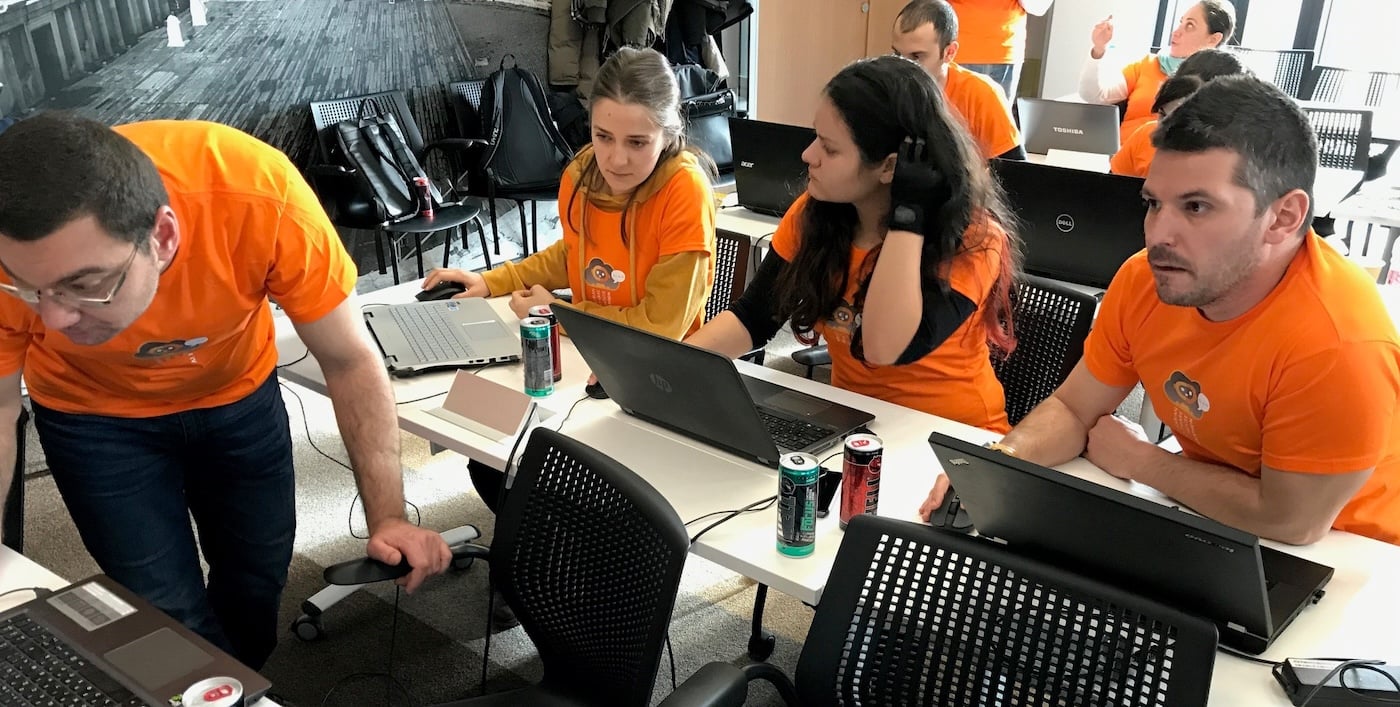
At the center of this transformation stands a network of educational communities, online courses, and digital mentors that are reshaping how an entire generation approaches work and entrepreneurship. One of the most influential organizations in this movement is SoftUni – short for Software University – which has become one of the largest practical technology education platforms in Eastern Europe. Since 2013, SoftUni has trained more than 300,000 students, with 17,000 graduating from its professional software development and IT courses, according to the company website.
The rise of Bulgaria’s digital education revolution
Unlike many traditional universities, SoftUni is focused on practical skills instead of academic theory. Over the past decade, the organization expanded beyond software engineering into digital marketing, AI education, content creation, SEO, automation and creative technologies. Today, SoftUni Digital offers extensive programs focused on modern online business skills, including performance marketing and e-commerce. The platform regularly hosts webinars, workshops, and live online events covering the newest trends in artificial intelligence and digital entrepreneurship.
The timing is fortuitous.
As AI tools reshape global industries Bulgaria’s younger generation is adapting quickly. Many students no longer see programming as a boring career. Instead, they view coding and AI as tools for independence. Teenagers now experiment with ChatGPT, image generators, AI video platforms, voice synthesis software and automation systems the same way the previous generation experimented with Photoshop or YouTube.
AI and the new marketing economy
In the United States, artificial intelligence is often discussed in terms of billion-dollar investments and massive tech corporations. In Bulgaria, AI has become simply practical. Young marketers use AI to generate advertising copy and TikTok scripts, design Instagram visuals, automate customer support, build web landing pages, edit video content and optimize SEO campaigns.
SoftUni’s recent “AI for Marketing” programs illustrates this transformation. Courses teach students how to use AI for content generation, advertising optimization, video creation, avatar production, analytics, automation, and digital branding. A generation raised on-line now has a chance to monetize that experience. Without ever leaving home, a Bulgarian teenager with internet access can now create a niche social media brand, run affiliate ad campaigns, manage advertising for small businesses or offer freelance services to international clients. This model has become increasingly common in cities such as Sofia, Varna and Plovdiv, where local tech communities have merged with global online culture.
The Webinar Culture
One of the most fascinating aspects of Bulgaria’s digital ecosystem is the rise of webinar culture. In the US, webinars are often associated with corporate training or professional development. In Bulgaria, they have evolved into something closer to a digital mentorship economy.
Thousands of young people regularly attend online seminars on topics such as AI productivity, digital advertising, branding, YouTube automation, AI-generated video, prompt engineering, and social media growth strategies. SoftUni Digital alone hosts a constant stream of live events and seminars focused on AI–powered business strategies and digital transformation.
Beyond institutions such as SoftUni, Bulgaria’s digital scene is also powered by entrepreneurs and educators who have built highly engagiomg online communities. One of the names frequently discussed in Bulgarian digital marketing circles is Yoan Yonchev, who is associated with educational webinars and online business initiatives focused on marketing and AI-driven growth strategies. Yonchev is the owner and manager of Marketing Fort, a Bulgarian digital marketing and IT consulting company founded in 2024. The company works in areas such as digital advertising, social media marketing, online education, branding, and content creation.
Another notable figure is Viktor Hristov, a Bulgarian digital marketing specialist, entrepreneur, and online educator known for his work in social media marketing, Instagram strategy, digital advertising, and online business development. Hristov has been associated with DigitalPRO and other marketing education initiatives, as well as webinars, training events, and digital consultancy work connected to online branding and growth strategy.
Teen entrepreneurs
Perhaps the most surprising part of Bulgaria’s AI and digital marketing story is how young many participants are. Some Bulgarian teenagers begin freelancing before turning eighteen. Others build TikTok channels, meme pages, dropshipping stores, YouTube automation brands, or local advertising agencies while still in school. Because Bulgaria has a relatively low barrier to entry ompared with Western Europe or the US, young entrepreneurs can experiment cheaply and scale quickly. A teenager in Varna can create content for American businesses. A student in Sofia can manage Facebook ads for a local restaurant chain. Another can build Shopify stores targeting English-speaking audiences.
English fluency also plays a major role. Many Bulgarian students grow up consuming American YouTube content, following global tech influencers, and learning directly from English-language online communities.
This creates a hybrid culture where Eastern European technical discipline meets American- style internet entrepreneurship.
Why Programming Still Matters
Despite the explosion of AI tools, programming remains central to Bulgaria’s digital culture. SoftUni originally became famous for software engineering education, and coding continues to be one of the strongest career paths in the country. Even within digital marketing, programming knowledge is an increasingly valuable skillset. Teenagers now learn Python automation, web development, API integrations, AI workflows, data scraping, chatbot creation and no-code or low-code systems.
In previous generations, marketers depended heavily on developers. Today, many Bulgarian creators can do both. A single teenager with AI tools and coding skills do everything from building a website to scaling ad campaigns. independently. That level of autonomy would have required an entire small company only a decade ago.
The influence of social media
Platforms like TikTok, Instagram, Discord, Telegram, and YouTube have become the infrastructure of Bulgaria’s new digital economy. Teenagers exchange prompts, growth hacks, automation workflows, and monetization strategies daily. AI-generated content is especially popular because it lowers the barrier to entry. A student without expensive equipment can still create professional-looking content using AI-generated visuals, voiceovers, or video editing systems. At the same time, there is growing awareness of the risks and limitations of AI-driven platforms. Researchers globally have warned about the psychological effects of algorithmic social media on teenagers and the challenges of balancing digital opportunity with mental well-being. Bulgarian educators increasingly face the challenge of teaching not only digital skills but also digital responsibility.
A new type of education
One reason Bulgaria’s AI ecosystem is evolving so quickly is that traditional education alone is no longer relevant. Students today learn through webinars, Discord communities, YouTube tutorials, AI assistants, online bootcamps, practical workshops and peer communities. Research into AI education for teenagers suggests that interactive and practical learning environments significantly improve engagement and skill development.
This aligns closely with Bulgaria’s current educational trend: fast, practical, Internet-native learning. For many young Bulgarians, success no longer depends entirely on obtaining a traditional university degree. Instead, success increasingly depends on adaptability, creativity and the ability to learn new tools rapidly … a mindset that mirrors Silicon Valley more than old Eastern Europe.
Bulgaria’s unexpected advantage
Ironically, Bulgaria’s historical disadvantages may now be helping it. Because the country developed outside the world’s major technology centers, young Bulgarians learned to adapt quickly, work internationally and operate with limited resources. That mindset works well in the AI era when everything is changing rapidly. Artificial intelligence rewards speed, experimentation, and creativity more than traditional corporate hierarchy. Small agile creators can now compete globally in ways that were impossible only a few years ago.
For Bulgarian teenagers, AI is not a distant technological revolution discussed on television. It is already part of daily life. And unlike previous generations, they are starting younger than ever before.
The future of Bulgaria’s AI Generation
The next few years may determine whether Bulgaria becomes one of Eastern Europe’s most influential digital talent hubs. Initiatives such as SoftUni, online webinar communities, marketing mentors, and AI-focused educators are already shaping a generation that thinks globally from childhood. Some of these young creators will become developers. Others will become digital marketers, AI consultants, founders, influencers, automation specialists or online educators.
Many might never have traditional office jobs at all.
For American audiences, Bulgaria’s story offers an important reminder: the future of AI entrepreneurship is not limited to Silicon Valley. In apartments overlooking the Black Sea, inside Discord servers, during late-night webinars, and across online classrooms filled with ambitious teenagers, a new digital culture is emerging.
Bulgaria rapidly is becoming part of the global AI conversation.
–––––––––––
Read more about Bulgaria here in Dispatches’ archives.
See more from Kalina here.

Kalina Varbanova freelance journalist based in Varna, Bulgaria. Kalina’s interests include culture, tourism, archeology and politics. She's been a Dispatches contributor since 2017, and has written some of our best-read posts.