
(Editor’s note: This is Pt. 2 of Lauren Simmonds post about the evolution of Croatia. You can jump to Pt. 1 here.)
I recently wrote about the 10 ways Croatia changed me in 10 years, But, a more important topic is just how Croatia has changed in 10 years. The alterations this country has gone through since European Union accession in summer, 2013 (alright, that’s 12, but who’s counting?) are both jarring and impressive.
Here’s Pt. 2 of my post.

Cost of living
All the changes aren’t necessarily good. Now, I’ll be honest, I work in the media and the topic of prices increasing is a constant theme. It’s true, the cost of living has skyrocketed and the prices here have spiralled, but (there’s always a but), it has altered the tourism perception of Croatia.
Once famed as a “cheap” holiday destination, Croatia has carved out a place for itself on the luxury tourism map. Dazzling hotels don the coastline and the islands, and staggering sums of money have poured into the country.
Croatia is now anything but a cheap break.
Those with deeper pockets are now attracted to this stunning country of 1000-plus islands, and there is an enormous array of offers tailored to everyone – not just those wanting a 12 kuna beer and a burek (ah, those were the days). Despite the stunning hotels you’ll find all over Croatia, it actually has the smallest hotel capacity of any Mediterranean country. Hotels account for a mere 9.5 percent of all of the tourism accommodation capacities in the country, with private houses and apartments owned by locals still dominating the scene.
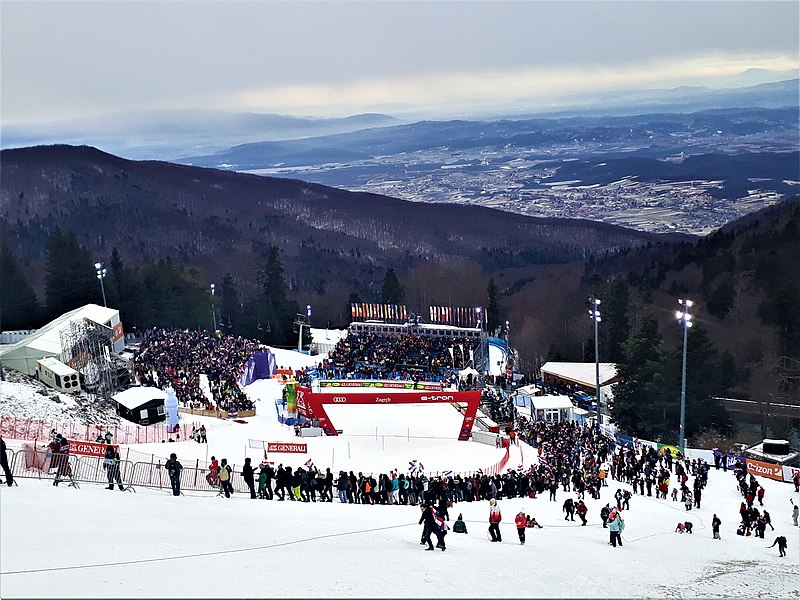
Croatia has broken free of its seasonal constraints
Like any Mediterranean country, many people used to think Croatia vanished into a cloud of dust when June, July and August were over. The same fate was also shared by the likes of Greece, Spain and Portugal. As soon as the temperatures dropped, these countries just ceased to exist.
That’s no longer the case for Croatia.
Now, year by year, the tourist season is slowly extending, with offers geared towards everything from nautical tourism to active tourism, to cultural trips, to sporting events, to city breaks. Year-round. Ten years ago, hotels would lock their doors as soon as the temperatures dropped and the characteristic storms would hit Dalmatia in September. That’s no longer the case.
Continental destinations and their promotion have also helped in this regard, with the likes of Zagreb, once a city you just flew into in order to head to the coast, positioning itself on the city break map of Europe. The winner of the Best Christmas Market in Europe for three consecutive years wasn’t Bern,
Munich or Vienna – it was Zagreb.
Croatia in winter?! Who’d have thought it?
More and more investments have poured into the country – and not only in tourism Giant tourism companies like Valamar have of course invested eye watering sums of cash into the country’s strongest economic branch – tourism. That is far from all, however.
Beyond tourism
Entrepreneurial zones, startup hubs and investments in enormous production and R&D facilities have poured into Croatia over the last decade. The types of businesses that have popped up like mushrooms here, often foreign owned, would have been impossible to imagine 10 years ago.
From the state of the art Rimac Campus to the brand new Samobor RC Zone, the list is lengthy. Major credit ratings such as S&P, Moody’s and Fitch Ratings have provided huge upgrades for Croatia’s rating, signifying the country’s growing economic stability and strength in the eyes of both domestic and foreign investors.
That absolutely was not the case a decade ago, with few daring to place their cash anywhere even close to Croatia.

Pelješac Bridge is anything but ‘just’ a bridge
The war that rocked Croatia and the region in the 1990s left indelible scars and saw territories scattered in some often rather odd ways. If you were in the extreme south of Dalmatia before the end of July 2018, you’d have to cross the border into Bosnia and Herzegovina along that country’s only little bit of coastline (Neum), drive a few miles through it, and then cross back into Croatia to get anywhere else in the country by car.
Now, you can imagine the headache this would cause in summer.
Bosnia and Herzegovina is not in the European Union, and Croatia is. The queues could sometimes be hours-long in the sweltering Dalmatian heat, and – more importantly – Croatian territory was not physically united. Talks of building the famous Pelješac Bridge had gone on for decades with nothing to show for it. Then the process finally began and the bridge which united both Croatian and EU territory was completed on 30 July 2018.
This was an enormous strategic move for Croatia, and it finally united the country as one whole.
It has become a hit among Digital Nomads
I’ve written extensively about the Digital Nomad boom in Croatia, and there’s a good reason for it. This country offers a lifestyle few could replicate successfully, not to mention the safety and security on offer. Croatia’s digital nomad visa came to be on 1 January 2021, allowing foreign nationals from outside the EU to come and live for a year (and in some cases longer) in Croatia while working remotely for a foreign company.
Remote workers from across the world came to spend time living in this incredible nation, with only positive things to say. Croatia branded itself as the perfect place for “workations”, and the remote work revolution found a spot for itself among the Mediterranean pines, at the side of the crystalline
Adriatic Sea.
People flocking to live in Croatia from the likes of the United States 10 years ago? Unheard of. Now, the lines of them applying for Croatia’s digital nomad residence permit keeps on growing.
––––––––––
Read more about Croatia here in Dispatches’ archives.

Lauren Simmonds
Lauren Simmonds is the editor of Total Croatia News, the largest English language portal in Croatia. She lives in Zagreb, Croatia, and is a translator, content writer, interpreter and the co-author of "Croatia - A Survival Kit for Foreigners," which was published in 2022.