Croatia is a land of paradoxes. It’s a country where everything is made impossible, but at the same time anything is possible, a country where there’s a brain drain and yet tech startups do exceptionally well, and a country that had a prime minister who barely spoke the language.
I could go on.
In short, it’s a tiny nation with supersized issues that leaves anyone who has scraped the surface scratching their heads.
Now, Croatia is enacting new laws to deal with an influx of foreign workers as the country tries to deal with a shrinking population. As the economy booms, Croatia is experiencing an increasing demand for foreign labor to fill shortfalls in tourism, construction and the service sector. More than 160,000 work permits were issued to foreign workers as of 2025. Stricter regulations implemented in 2025-2026, including mandatory accommodation standards and financial requirements for employers, and demand for permits is trending downward.
Croatia’s demographic issues go back decades. Entry into the European Union in 2013 only exacerbated this problem as work permits and bureaucracy vanished for the nation of then over 4 million people, and the UN currently believes Croatia will lose 600,000 people by 2050. That’s a staggering sum, and if the 2021 Census is to be believed, there are less than 4 million people living in the country, with far more ethnic Croats born and living outside of Croatia than there are in it.
Labour crises follow demographic ones, and quick decisions end up being made to plug the increasingly large gaps. Croatia was until recently considered one of the most homogenous countries in the world, and the only time you’d ever notice anyone of a different cultural, racial or often even religious background was when they were tourists.
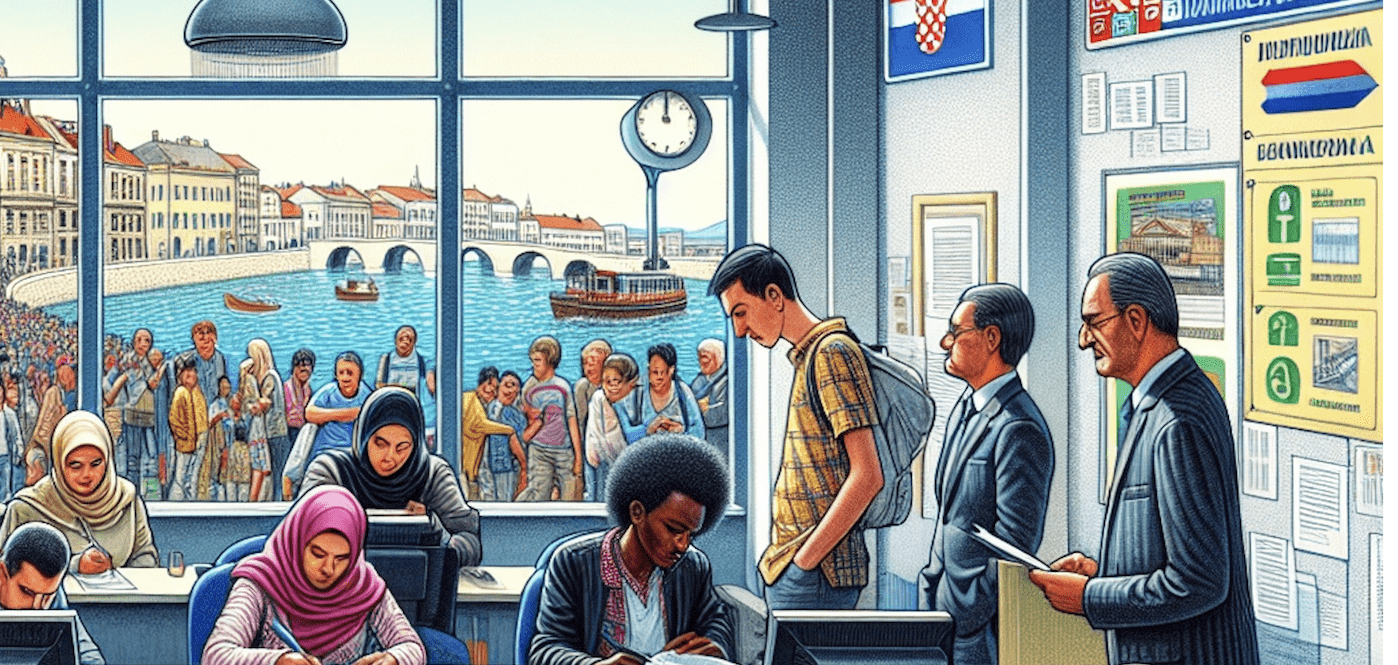
Never did you see a woman from the Philippines or a man from Bangladesh working in a bakery or on a construction site. Now, construction sites, bakeries, taxis, restaurants and bars are filled with workers from third countries who often struggle with basic Croatian. It isn’t discrimination to note that this is a problem, both for Croatia and for its imported workers who were often the victims of shady agencies and employers who neglected their rights.
Amendments to ensure Croatia and its language are respected
In fact, it’s such a problem that Croatia has been unaligned with EU law on the matter.
Now, Croatia is making it mandatory for foreign workers to undertake and pass a Croatian language exam before they can extend their work permits. They will need to pass the A1.1 level Croatian language exam in order to remain in Croatia legally after one year of lawful residence. These amendments are intended to harmonise Croatia’s national policies with the EU’s Pact on Asylum and Migration and the Single Permit Directive and allow for greater checks into third country nationals coming to work in Croatia. Finally, it’s meant to ensure a proper return process at the EU’s external border (of which Croatia is a guardian).
Retaining the current workforce and ensuring standards are met
The idea behind it outside of aligning with EU law, according to Croatia’s Interior Ministry, is to ensure proper security standards for both the country and for the foreign workers in question. It will also help to retain those already here as opposed to encouraging frequent turnover.
Job mobility improvements for foreign nationals
Foreign workers from third countries will also now enjoy greater employment mobility and be permitted to change their occupation freely without needing to adhere to labour shortage tests as long as they remain with the same employer. Should they want to change their employer, they will be permitted to do so without needing to jump through the administrative hoops of applying again for a new work permit.
Should a foreign national end up unemployed, they’ll no longer need to scramble around hunting for a new job quickly or face being deported. As long as their initial work permit remains valid, they’ll be free to job hunt for three months, and if they’ve held a work permit for over two years, they’ll have six months to find work without facing any issues.
Protection for Croatian employers
One of the biggest obstacles faced by Croatian employers alongside the fact they “just can’t get the staff” is the bureaucracy and waiting times to legally employ foreign nationals from outside the EU. Historically, the point from applying for a work permit to actually receiving it would take months, with funds poured into it and with the potential member of staff from abroad getting sick of waiting around and simply going elsewhere. Now, a maximum time period of 90 days is allotted, during which a decision must be made by the Interior Ministry on an application and a permit issued if that decision is positive.
With dodgy agencies and poor employers being cracked down on, local employers who have muddied the rules will now be black listed and banned from applying for any new work permits for foreign nationals for one year.
Striking a balance
Striking a balance is something Croatia has always found cumbersome. However, with work permit numbers having declined, it seems the country is approaching somewhat of a normal situation. This latest shake up has a primary goal of harmonising Croatian policies with EU directives, as well bringing balance to variable demands of the labour market, social integration security when it comes to legality.
In true Croatian fashion, there will always be loopholes, but with a demographic crisis in full swing, it’s better late than never.
––––––––––
Read more about Croatia here in Dispatches’ archives.

Lauren Simmonds
Lauren Simmonds is the editor of Total Croatia News, the largest English language portal in Croatia. She lives in Zagreb, Croatia, and is a translator, content writer, interpreter and the co-author of "Croatia - A Survival Kit for Foreigners," which was published in 2022.