

One of the most controversial pieces of legislation to come into effect so far this year, the United Kingdom’s Renters’ Rights Act of 2025 didn’t actually come into effect until 1 May, 2026. The act was significant enough that the government gave both renters and landlords several months’ notice to help them get ready for the changes.
But what, exactly, is in the Renters” Rights Act? And what does it mean for you if you currently rent in the UK? Does it change what to look for if you want to move? And how can you make the most of the new rules in your next housing hunt?
Let’s take a look:
No-fault? No more!
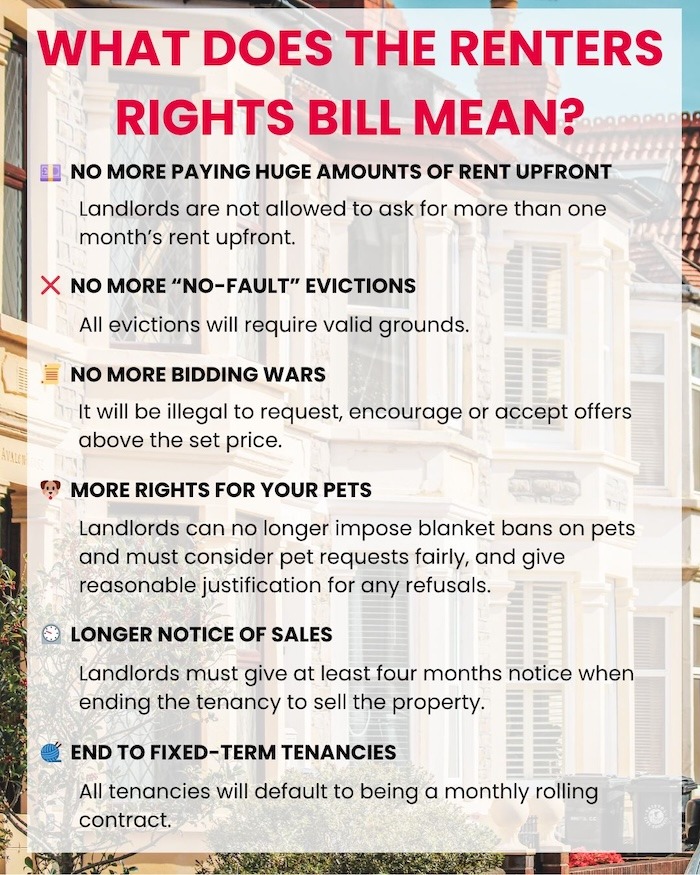
One of the biggest changes in the Act is the elimination of so-called “no fault” evictions. For Americans, “no-fault” brings divorce to mind, but in real estate terms, the principle is the same, and similar to at-will employment.
Until now, your landlord could give you notice (per the terms of your lease) for any reason at all, or no reason.
That left renters with a lot of potential for instability, and the Renters’ Rights Act is ending it by banning no-fault evictions. Your landlord can still evict you if they want to sell the property, or move into it themselves, or if you haven’t been paying your rent. But even then, they would have to give you notice and honor the terms of the lease regarding how long that notice is (usually at least a month).
Bye-bye, bidding wars
Another major change outlined in the Act will have an immediate impact on those looking for a new home: ending bidding wars.
This means that if there are multiple parties interested in renting a property, the landlord can’t ask them for higher rent, and potential tenants cannot offer higher rent in the hopes of “beating out” the competition. This does mean that you’ll have to be quick putting an offer on a desirable property, and may want to have references lined up if possible, but you no longer have to worry about getting outbid by someone else with a viewing booked.
Freedom and flexibility
One of the advantages of renting over owning is the flexibility, which can be especially valuable for expats who may be considering more moves. That flexibility is going to be even greater under the Act, which includes a provision that, rather than expiring, your tenancy will simply “roll on” monthly or weekly, depending on your lease’s terms, meaning no renewal process, and an easy procedure for ending the tenancy by giving two months’ notice if you plan to move. This can be especially helpful if you’re in a tenancy, but planning to buy a property, and want to avoid getting stuck with a long lease and the beginning of a mortgage.
The Act also strengthens anti-discrimination laws that protect renters, including a prohibition against discriminating against tenants with children. There’s good news for animal lovers as well, as the Act makes it so that landlords must “reasonably consider” all requests to move in with, or acquire, pets. The landlord does still have the right to refuse, though, so don’t count on bringing your multiple exotic snakes or domesticated raccoon into your new flat.
So, what do these changes mean for me?
If you’re currently renting, or planning to find a place to rent following a move to the UK, the Act is largely good news for you. Under the new provisions, you won’t have to worry about getting outbid on a rental property, or being evicted out of the blue because your landlord thinks a new tenant might command higher rents. You also won’t fall victim to frequent rent increases, as landlords may only raise rent once a year, and there are provisions to appeal unfair rent hikes. The Act does a lot to professionalize landlords, which is further good news for expats who might be unsure about their rights as tenants in a new country.
However, with the United Kingdom already facing a major housing shortage, and many landlords having sold their properties out of concern about the Act, competition for rentals will continue to be fierce. This goes doubly true in high-demand places like London and Manchester, which also have larger populations of renters, so prepare for an intense process if you’re going flat-hunting.
Coming soon: even more changes
While 1 May was the “big day” for many provisions of the Act (and many landlords have been selling properties or giving tenants notice in advance of it if they’ve been planning alterations to their property), it’s far from the end. Later in 2026, the government is expected to roll out a national database of private landlords and properties for rent, so you can make sure your current or potential landlord is properly registered, and a free-to-use complaints service for tenants to report illegal behavior.
All in all, while you can expect some changes to the rental market, they’re likely to be a net positive for renters, and for the housing scene in Britain more broadly.
Happy flat hunting!
–––––––––––––
See more about the UK here in Dispatches’ archives.

Ellery Weil
Dr. Ellery Weil is a writer and historian based in London. She was born in Washington, DC, raised in Maryland, and attended undergrad in Ann Arbor, Michigan, before moving to the UK to attend grad school at University College London, where she earned her PhD in History. She lives in London with her husband, where you can find her writing, reading, petting dogs in Regent's Park, and exploring the city's antique markets.