

(Editor’s. note: This is the first post in a two-part series. You can jump to Pt. 2 here.)
Are you looking to take the leap and buy a property in the United Kingdom? If so, congratulations! This is a major accomplishment … that calls for major considerations. There are a lot of moving parts to consider when it comes to mortgages in the UK, and many aspects of them work very differently than their American counterparts. There’s too much to cover in just one piece, so we’re breaking it down into some of the need-to-know considerations and what you should be aware of.
Looking to speak with a realtor about your property goals and potential mortgage? Let’s have a look at one of the biggest differences in what you’ll encounter in the UK as opposed to the US: different mortgage types.
Buying a home or building a portfolio? The difference matters
One major consideration when purchasing residential real estate in the UK is that there are different types of mortgages depending on your plans for the property. Generally speaking, residential properties fall under one of two mortgage types: residential, or buy-to-let. The former is for a residence you intend to live in, while the latter is for a property you intend to lease out.
The terms surrounding the two types are very different, and one important thing to remember is that, in the UK, residential mortgages are far more regulated than buy-to-let mortgages; the thinking is, if you can’t pay your buy-to-let mortgage, you won’t be left without a home, the way you will with a residential mortgage. However, because of this, you’ll need a bigger deposit for buy-to-let.
There are government programs in place to help first-time home buyers purchase a home, but these only apply to residential mortgages. Remember, though, that it doesn’t break the terms of your residential mortgage to have a roommate paying rent; the issue is entirely based on whether or not you live in the property.
How much can I borrow?
Getting a mortgage is, at the end of the day, getting a loan. So, how much money will the bank be willing to lend you?
If you’re used to American mortgage lending terms, you may be in for a bit of a surprise.
Banks in the UK tend to offer much smaller loans for mortgages than many American establishments; typically, you can expect to be offered a loan of up to five times your annual income, but FICO credit scores do not exist in the UK, and won’t be relevant in your mortgage application (although your general credit history will be considered). This means that many people looking to buy a house in the UK save up large deposits of over 20 percent of the total cost.
Another key difference is the length of the terms of the loan. Unlike the US, the UK doesn’t have 30-year fixed-rate mortgages, but instead reviews your interest rate every few years. While this can make your payments more volatile, it also means you don’t need to think about “locking in” a favorable interest rate.
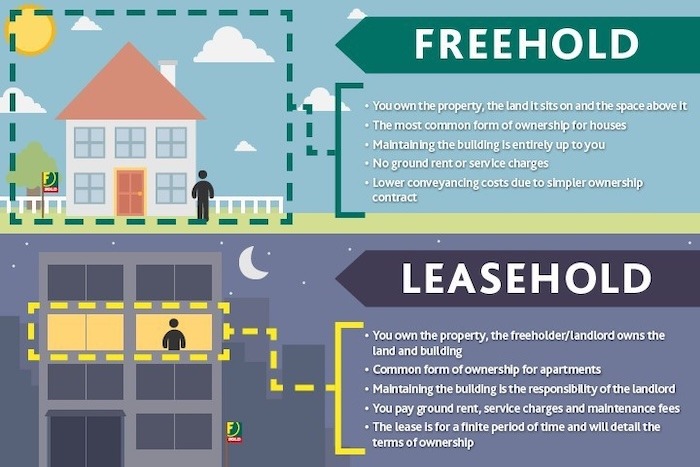
Leasehold vs. freehold: know the difference
One of the biggest differences in UK mortgages as opposed to US mortgages is the leasehold system, which is especially common if you’re buying an apartment. A freehold is what Americans would typically consider a standard mortgage; you own the property outright. Leaseholds, on the other hand, don’t exist in the United States, but are not uncommon in the UK, especially if you’re looking to buy a flat rather than a house. In a leasehold, you own the building, but not the land on which it stands, which you only have the right to occupy for a fixed amount of time. That fixed amount of time is usually very long, though—often over a century, and at times as much as 999 years. Leases on a leasehold can be extended for a fee, which will usually be between £1,000-£10,000, but can vary substantially depending on your circumstances.
Watch Out for Changes Coming Soon
One final note: the information you just read may be subject to changes, and those changes could be coming sooner than you think. The Leasehold and Freehold Reform Act was first passed in 2024, and has led to substantial changes in the terms of both leasehold and freehold mortgages. More changes are expected in 2026, so keep your eyes out before you make any big decisions, as these changes could have major impacts on what type of mortgage is best for you.
Now that you know what kinds of mortgages exist in the UK, what’s the process of getting one like? And how long from finding the house you want until move-in day?
Stay tuned to learn all that and more in Pt. 2.
–––––––––––
Read more about the United Kingdom here in Dispatches’ archives.
See more from Ellery here.

Ellery Weil
Dr. Ellery Weil is a writer and historian based in London. She was born in Washington, DC, raised in Maryland, and attended undergrad in Ann Arbor, Michigan, before moving to the UK to attend grad school at University College London, where she earned her PhD in History. She lives in London with her husband, where you can find her writing, reading, petting dogs in Regent's Park, and exploring the city's antique markets.