(Editor’s note: This is Pt. 1 of a two-part post with tips from actual Londoners on navigating the city’s complex transportation system. You can jump to Pt. 2 here.)
London newbies can find the public transport system overwhelming, with tube lines, buses, the Overground, National Rail services and even trams competing for attention. But once you’ve mastered reading the tube map, realised that the Zone fare system means you’ll be charged based on distance. So buzzing around one or two zones is cheaper than a long schlep from an outer zone to an inner city zone. Once you’ve downloaded the Citymapper onto your phone – and heeded the words of wisdom from long-time Londoners, getting around the capital of the United Kingdom won’t seem quite so daunting after all.
Pick your carriage wisely
Sometimes, you’ve just got to accept that you won’t get a seat on the tube, especially during the morning and evening rush hours. But there are a few tips to increase your chances. Robin says you shouldn’t be afraid to take a walk along the platform: “Go to the very front or rear carriage and sit in the farthest seat; it’s by far the least congested and quietest spot.”
Another way to boost the odds of pouncing on a newly vacated seat is to wait for the train near the exit, according to Wendy. She says that “many Londoners prefer a short walk to the exit, so wait for them to alight and you may well find space.”
Kate is a keen Citymapper advocate, especially because it has a handy function that “tells you which carriage to get on so that you arrive by the exit.”
Mastering Kings Cross/St Pancras
It’s a rare Londoner who never has to use Kings Cross/St Pancras.
Whether you are heading to that busy end of town for work or play, catching a train out of town, or taking an international trip on the Eurostar, most of us end up there sooner or later. It’s almost always busy and can be confusing, but our panel of Londoners are here to help.
“If you’re getting off at Kings Cross St Pancras underground station, and want a mainline train from either St Pancras or Kings Cross, don’t follow the signs to the stations – they’re deliberately long and winding to even out the queues,” says Alan. “Instead, follow the signs to Euston Road and they will take you to the lovely piazza outside the stations, from which you can walk on in civilised peace.”
For those who need the Northern or Piccadilly lines at Kings Cross, Robin’s advice may seem counterintuitive, but he swears it’s effective: “At King’s Cross don’t follow the signs to Northern and Piccadilly lines; follow the signs for the Hammersmith and City, Circle and Metropolitan lines instead. This takes you to the old ticket area and Northern and Piccadilly lines. There are now lengthy tunnels to divert you away from the old ticket area and in a big loop to avoid congestion.”
Getting to and from the airport
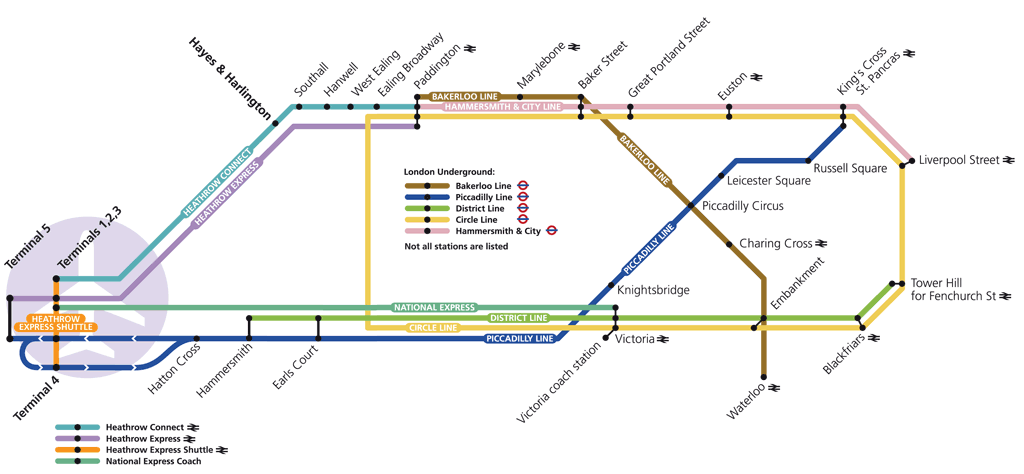
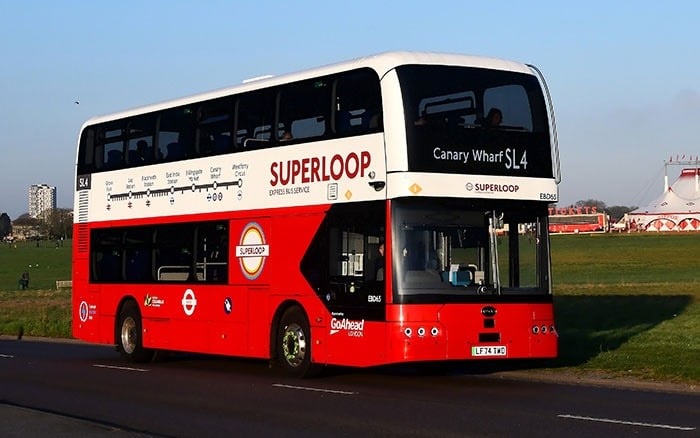
Catching a taxi to or from a London airport has become an increasingly expensive exercise, but public transport options have improved in recent years. The Heathrow Express between Paddington and Heathrow, and the Gatwick Express between Victoria and Gatwick, are fast, cheaper than a taxi, although not as cheap as the tube or the SuperLoop bus.
When you get off the plane at Heathrow, Alan says to avoid the Heathrow Express because “it’s stupidly expensive and will dump you at Paddington,” which is really only practical if you live near Paddington. Instead, he advises using the Elizabeth and Piccadilly tube lines to travel to and from Heathrow.
Wendy says if you’re getting on a London-bound train at a Heathrow tube station, you’re more likely to get a seat in the front coaches. Within Heathrow itself – a five-terminal behemoth of an airport – public transport between terminals and from nearby Hatton Cross is free.
For Gatwick and Stansted, Kate reminds you that you can now use your contactless card to get all the way there on trains from London, “so you can just tap in and tap out rather than faffing about buying a ticket.”
And Rima is here to let you know that the SuperLoop buses to Heathrow are “a game changer.” Here is the information you need to check if it’s practical for you to get to the airport for the price of a bus fare on one of the 10 SuperLoop routes.
Interchange tips to save time – and your feet
Many a Londoner will simply tell you to avoid changing at certain stations unless you genuinely have no other option, with Green Park being one that invokes particular ire. But Stephen says that changing at Green Park “is much easier if you take the escalators to the top from whichever line you’ve arrived on and then back down again to the line you want to leave on, saving miles of mindless walking through tunnels.”
“Getting from West London to the Barbican has been completely revolutionised by the Elizabeth line station at Farringdon, which has such long platforms that the eastern end is basically another part of Barbican station,” Stephen adds.
Steve, a serious public transport enthusiast, says that at Green Park, changing from the Victoria line to the Jubilee line “can be done in about 60 seconds,” and at Embankment, another station that can confuse newcomers, the southbound swap from the Northern line to the District line via the Bank branch is similarly swift.
Victoria is another station that can be challenging to navigate, but Kate has a handy tip for changing from the Victoria line to the District and Circle lines, which share a platform: “Ignore the sign at the end of the platform that says NO ACCESS TO DISTRICT AND CIRCLE LINES and leave by that exit, head up the escalator, and then head down the escalator to your left, which takes you to the District and Circle line platforms, thus avoiding a long yomp along a tunnel.”
While the tube map is a handy resource for figuring out your journey, sometimes there are quicker routes that may not be as obvious. For example, Daniel says that if you’re travelling south on the Northern Line and want to continue heading southbound on the Victoria line, “the tube map makes it look like it’s easiest to do that at Warren Street, but at Euston it’s a 10-second walk from one platform to the one adjacent.” 
Be a considerate commuter
It doesn’t take long for most Londoners to learn two things. First, as Wendy pleads, “do not, repeat, do not stand on the left-hand side of the escalator on the tube.” There are even handy signs to remind you of this vital piece of London etiquette, so nobody can say it’s an unwritten rule.
Second, if you are able-bodied, offering your seat to someone who needs it more than you is the right thing to do. Sometimes, someone will board a train or bus in obvious need of a seat and suddenly everyone is engrossed in their phone or newspaper, but you will go about your day with a warm glow if you are the person who pipes up with a “Would you like a seat?”.
“No matter how old, infirm or pregnant you are, some Londoners will consider their perfectly healthy child to be more entitled to a seat and will react accordingly when challenged,” admonishes Wendy. You do not want to be that commuter.
Wendy adds that “if you have a pram, pushchair or heavy luggage, please use the lifts rather than the stairs at stations; I’m sick and tired of having suitcases and children dropped on me.”
–––––––––––
See more about London here in Dispatches’ archives.

Georgia Lewis
Georgia Lewis is an Australian expat who spent five years living in the United Arab Emirates before moving to London in 2011. She is a freelance writer and editor. When she's not writing or editing, she loves cooking, trying new restaurants, going to the theatre and travelling. Her favourite destinations are the Greek islands, Mallorca, Oman and Vietnam.