Spain’s housing crisis is heading toward a showdown at the ballot box. With a general strike planned for 11 November and a snap election set for 29 November, Prime Minister Pedro Sánchez is hoping to make housing a defining issue of the campaign.
The latest wave of protests began with a single eviction.
On 23 September, police carried 87-year-old Maricarmen Abascal out of the Madrid apartment where she had lived for more than seven decades. According to Reuters, the investment firm that bought her building in 2018 sought a steep rent increase. The Madrid Tenants’ Union said her monthly rent had risen by about 275 percent, to 2,650 euros from 500 euiros. Although it was later reduced to 1,650 euros, the amount remained beyond her pension of approximately 1,350 euros.
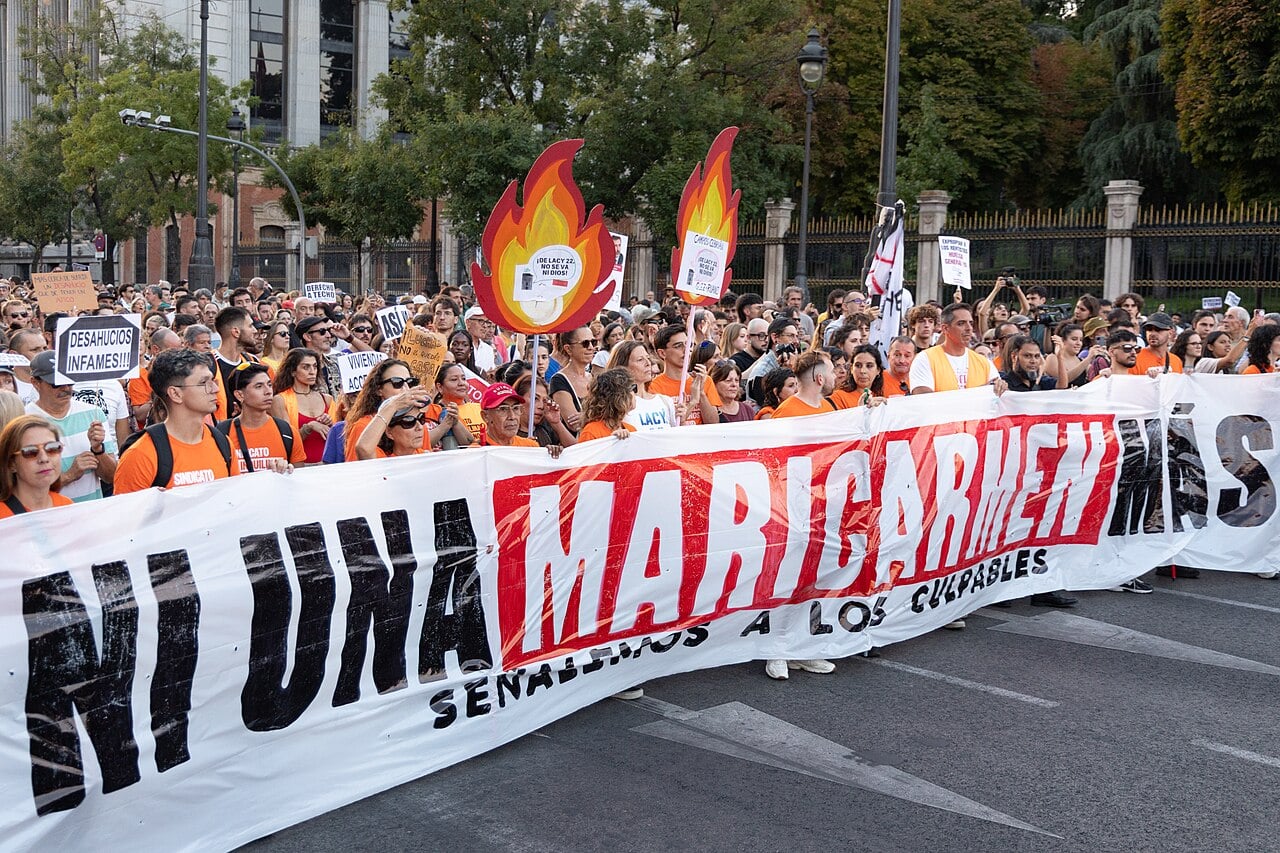
Her eviction struck a nerve in a country where rising housing costs have left more people struggling to afford a place to live. On 26 September, thousands of people marched through central Madrid demanding stronger protections for renters. The government put the crowd at around 25 000, while organizers reported a substantially larger turnout (tens of thousands). Protesters subsequently set up a tent camp in Puerta del Sol, the capital’s central square and demonstrations spread to other Spanish cities.
The government responded with emergency housing measures that included extending rental contracts and tightening eviction protections. But on 2 October, parliament rejected two proposed decrees after opposition parties voted against them. The defeat was a significant setback for Prime Minister Pedro Sánchez’s minority government which has struggled to secure support for its housing agenda.
Three days later, Sánchez called a snap election for 29 November, bringing forward a vote that had been expected in 2027. Housing is now shaping the campaign with the prime minister seeking to turn the crisis into a test of his government’s response to rising rents and the shortage of affordable homes.
Wikimedia Commons
A crisis years in the making: The political fallout is the peak of a housing crisis that has been bubbling for years
Spain’s central bank estimates the country faces a housing shortfall of around 750 000 homes. Meanwhile, the growth of tourist accommodation has added pressure in some of the country’s most popular destinations.
According to the Banco de España’s 2025 annual report, the number of tourist-use dwellings rose to around 400 000 between 2021 and 2024. Although these properties represent a relatively small share of Spain’s overall housing stock, they account for around 10 percent of the rental market nationally with a much greater impact in some cities and coastal areas.
Rising prices have made buying a home increasingly difficult, too. Eurostat figures reported by Euronews show that Spanish house prices increased by 12.1 percent in the year to the second quarter of 2026. For renters and prospective buyers already struggling to keep up, the prospect of finding an affordable home has become increasingly remote.
The government has continued trying to respond. On 6 October, the cabinet approved a new package of 21 urgent housing measures including stronger eviction protections, restrictions on seasonal rentals and financial incentives intended to help people buy or rent homes. The measures followed the earlier parliamentary defeat but their passage through the legislative process remains a separate hurdle.
Protesters, meanwhile, want faster action including tougher restrictions on tourist rentals and greater protection against eviction. The debate has exposed a familiar divide: supporters of stronger regulation argue that housing must be treated as a basic need, while critics warn that additional restrictions could discourage landlords from renting out their properties and further constrain supply.
Why Europe should be watching
I know what it feels like to watch housing costs reshape the places people call home. I’m from California and I now live in Portugal; another country where rising housing costs have become a major source of frustration.
Over the past decade, Portuguese house prices have risen by almost 240 percent while average wages increased by roughly 59 percent, according to Global Property Guide data cited by Euronews. Lisbon has become one of Europe’s least affordable capitals for prospective homeowners with prices increasingly detached from what many residents earn.

Wikimedia Commons
Portugal has also seen major housing demonstrations in recent years with protesters calling for action on rents, short-term tourist accommodation and the lack of affordable homes. Like Spain, it faces difficult questions about how to balance tourism and investment with the needs of people who live and work in the country.
The similarities extend beyond the Iberian Peninsula.
Across Europe, housing is becoming one of the clearest dividing lines between people who can afford to stay in the places they call home and those being priced out of them.
In cities where rents and property prices rise faster than incomes, the consequences reach beyond individual households. They affect who can work in a city, who can raise a family there and whether long-established communities can survive.
When a housing crisis becomes personal
What makes Spain’s current moment different is that the crisis suddenly has a face. Abascal died in hospital on 7 October, two weeks after her eviction. Her case had become a rallying point for housing activists, and her death intensified public anger. Days earlier, her lawyer had said she had reached an agreement to return to her apartment after being discharged from hospital. The Tenants’ Union said the agreement came too late.
The story prompted renewed demonstrations in Madrid, where protesters gathered to honor Abascal and demand action on housing. The union has vowed to continue mobilizing. Her case has also sharpened the political stakes ahead of the election. Sánchez is betting that voters will prioritize housing while the opposition is expected to challenge his government over its record and other political controversies. Spain’s main unions have added further pressure by calling a nationwide general strike over housing and wages for 11 November, just 18 days before voters head to the polls. Whether the crisis ultimately benefits Sánchez or his opponents remains to be seen. But the election has already turned housing into a central political question, one that neither side can easily ignore.
For Spain, the coming weeks will test whether public anger can translate into meaningful policy change. For the rest of Europe, the protests offer a warning about what can happen when housing becomes increasingly unaffordable and people begin to feel that their governments are failing to protect their ability to stay in their own communities. Whatever happens on 29 November, Spain is showing the rest of Europe what can happen when a housing crisis stops being an economic statistic and becomes personal.
**********
Read more about solutions to the housing crisis here on Dispatches.
See more from Taylor here.

Taylor Haught
Taylor Haught is a Lisbon-based travel writer and editor specializing in European destinations. She also coaches aspiring travel writers and women ready to trade their zip codes for European addresses."Taylor is a Lisbon-based travel writer and editor specializing in European destinations. She also coaches aspiring travel writers and women ready to trade their zip codes for European addresses.