
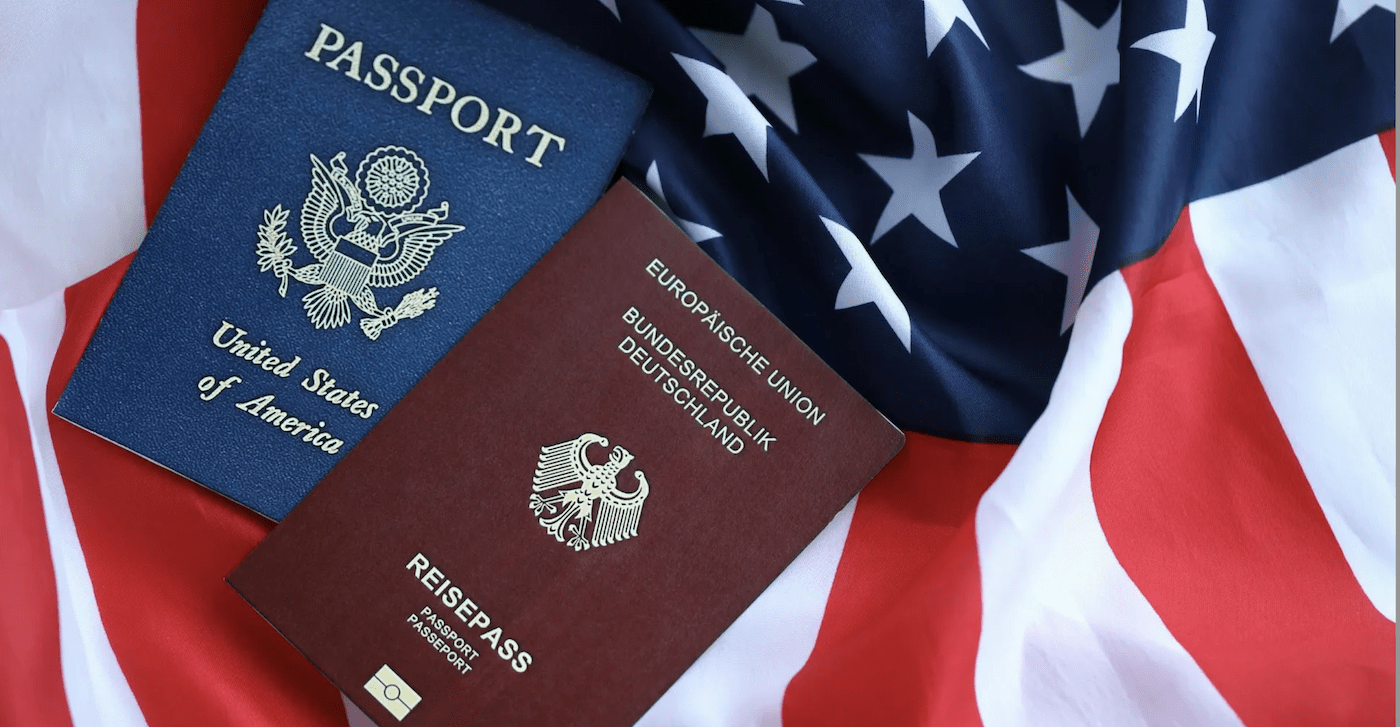
(Editor’s note:This is Pt. 2 in a two-part series and you can read here in Pt. 1 about Taylor Haught’s initial efforts to gain German citizenship by descent.)
Taylor Haught’s story begins in Rome, where she was in film school, chatting with a Dutch friend when Taylor said she wished she could stay longer in Europe. “Isn’t your dad German?” the Dutch friend asked. That put Taylor on a path to prove her German heritage, and ended with her recieving German citizenship. Here’s her advice.
One of the best things that happened for me was something rather unconventional, and it doesn’t always work. Instead of going through the standard application process — the Feststellung, which requires proving you’re a German citizen and then waiting up to another two years to be approved — I went to my nearest German consulate (in Houston) and applied for my passport outright, as if I was already a German citizen (which, technically, I was from birth).
Uwe told me this approach may or may not work, but I decided to go for it.
It’s important to note that this doesn’t always happen. Many people do need to go through the formal Feststellung process, which involves submitting an application to the Federal Administrative Office (Bundesverwaltungsamt) in Cologne. They review your documents, verify your claim to citizenship and issue a certificate confirming your German citizenship. This can take anywhere from several months to over two years, depending on the complexity of your case. Only after receiving this certificate can you apply for a German passport. Going this route requires patience, but it’s the standard path for most applicants.
After my consulate visit, I waited about six to eight weeks for my passport to arrive in the mail. And now I live in Portugal with my rescue pup from Mexico.
The freedom that comes with EU citizenship
My European Union citizenship means the world to me.
It means I can freely travel throughout the Schengen Zone without a visa and establish residency anywhere in the EU, which allows me to work, attend university, vote in local and EU elections and access public health insurance. It gives you options and, sometimes, an escape route that is simply priceless.
I always recommend people research their ancestry. Germany allows citizenship by descent through grandparents in many cases, though the rules can be complex depending on when ancestors emigrated and whether they naturalized elsewhere. Other countries offer even more generous provisions — Ireland and Lithuania, for example, allow claims through great-grandparents and sometimes beyond. You can use services like Ancestry.com and, more importantly, talk to your family about where they came from and gather their stories while you still can.
How to get started
If you think you might qualify for German citizenship by descent, here’s how to approach the process:
Step 1: Determine if you qualify
German citizenship by descent can be complex, but generally:
- If your parent was a German citizen at the time of your birth, you likely qualify
- If born after 1 January 1975, you qualify if either parent was German
- If born before 1975, you typically only qualify through your father, unless your parents were unmarried
- Children born to German mothers before 1975 may still qualify under updated laws
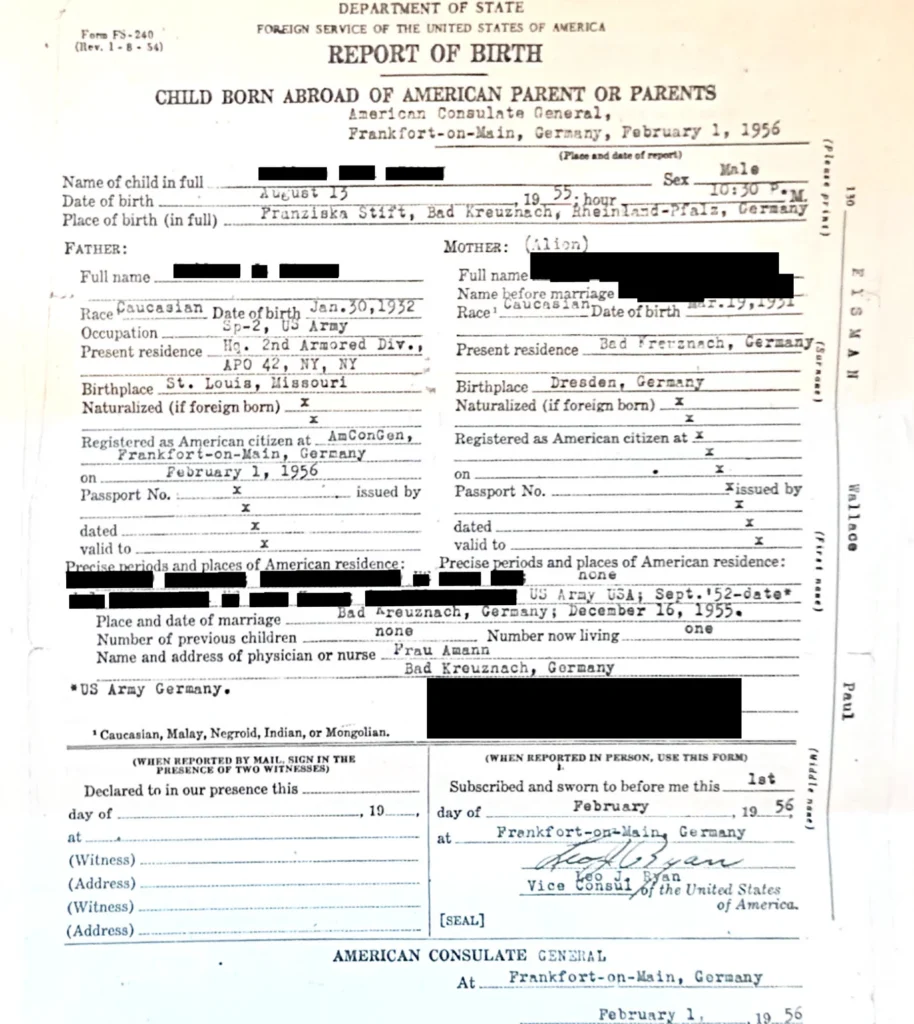
- Being born on a military base doesn’t automatically disqualify you
- Your German ancestor must not have naturalized as a citizen of another country before your parent (or you) were born
Step 2: Gather preliminary information
Before you begin, collect:
- Your birth certificate
- Your parents’ birth certificates
- Your German ancestor’s birth certificate and any documentation of their German citizenship
- Marriage certificates for all relevant generations
- Naturalization records (to prove your ancestor didn’t renounce German citizenship before the next generation was born)
- Dates and places of birth for all relevant family members
Step 3: Decide on your approach
You have three main options:
- Hire a law firm: Comprehensive service, costs $3,000-$7,000, handles everything
- Use an independent consultant: More affordable ($300-$800), helps obtain German documents and translations
- DIY: Free except for document fees, but requires navigating German bureaucracy in German
Step 4: Obtain required German documents
You’ll need certified copies of German vital records, which must come from the original German municipalities. These typically include:
- Birth certificates (Geburtsurkunden) of your German ancestors
- Marriage certificates (Heiratsurkunden)
- Proof of German citizenship, if available
- Evidence that your ancestor didn’t naturalize elsewhere before the relevant birth
- All documents must be official certified copies, not photocopies
- Documents not in German must be translated by a certified translator
Step 5: Choose your application path
- Direct passport application: Bring all documents to your nearest German consulate and apply for a passport as if you’re already a citizen. This only works if your claim is straightforward and well-documented.
- Feststellung process: Apply for a certificate of citizenship from the Bundesverwaltungsamt in Cologne. This is required for more complex cases and takes 6 months to 2-plus years.
Step 6: Prepare for your appointment
Whether applying for Feststellung or a passport:
- Make an appointment at your local German consulate or embassy
- Bring original certified documents and certified translations
- Bring all forms completely filled out
- Be prepared to answer questions about your family history
- Have your application fee ready (varies by consulate)
Step 7: Wait
- Passport applications: 6-12 weeks if approved on the spot
- Feststellung process: 6 months to 2-plus years for the certificate, then 6-12 weeks for the passport
Important documents checklist:
- Your birth certificate (certified copy)
- Parents’ birth certificates
- Parents’ marriage certificate
- German ancestor’s birth certificate from German municipality
- German ancestor’s marriage certificate(s)
- Proof German ancestor didn’t naturalize (or naturalized after relevant births)
- All necessary translations by certified translators
- Completed application forms
- Passport photos (biometric)
- Proof of identity (current passport)
One last thing
The process of claiming my German citizenship was one of the most rewarding things I’ve ever done.
It connected me to my family history in ways I never expected and eventually opened up a life I’d only dreamed about. If you think you might qualify, I highly encourage you to explore it. Start with conversations with your family, dig into your ancestry and don’t be intimidated by the bureaucracy (the whole process was actually a lot less stressful than I imagined).
The European adventure waiting on the other side is worth every bit of patience and paperwork.
(Author’s note: German citizenship laws are complex and subject to change. The information in this article is based on personal experience and should not be considered legal advice. Always verify current requirements with official German government sources or consult with a qualified immigration attorney.)

Taylor Haught
Taylor Haught is a Lisbon-based travel writer and editor specializing in European destinations. She also coaches aspiring travel writers and women ready to trade their zip codes for European addresses."Taylor is a Lisbon-based travel writer and editor specializing in European destinations. She also coaches aspiring travel writers and women ready to trade their zip codes for European addresses.