

(Editor’s note: This is Pt. 1 of a two-part series. You can jump to Pt. 2 here, which includes detailed lists of documents you’ll need to gain German citizenship by descent.)
A short story about how I discovered my German citizenship through my paternal grandmother and navigated the German bureaucracy for $500 until now, where I have my German passport and can move around and live freely in the EU:
It all started when I was in Rome, chatting with my Dutch friend over Aperol Spritz. I was living there for a few months while attending film school, but I couldn’t stop wishing to stay in Europe more permanently.
“Isn’t your dad German?” she asked.
I paused. “Yeah, he is. And so is my grandmother. But my dad came back to the States pretty young. He was born on a military base.”
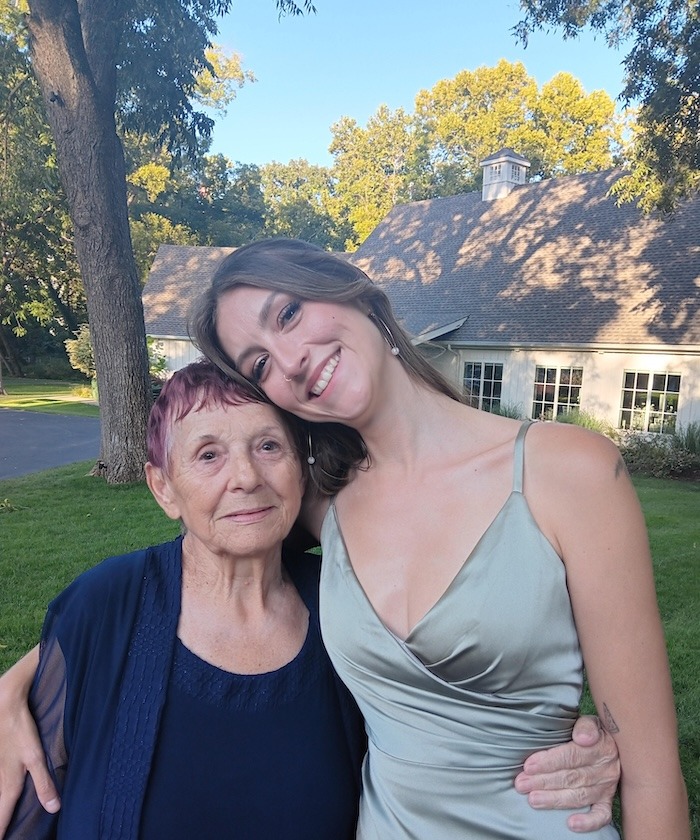
I’d always been fascinated by my grandmother and father’s past in Germany. As a child, I asked to hear their stories constantly. I didn’t really think of myself as German, even though I was the child of an immigrant, often spoke German with my grandmother Ingeborg and grew up eating her very interesting cooking. My friend wasn’t convinced.
“Look into it,” she said. “I think you might still be able to get dual citizenship by descent. If not through your dad, then through your grandmother.” I didn’t know much about this. I’d looked into it briefly when I was younger and had been told very conflicting information. Also, at the time, Germany didn’t yet allow dual citizenship through descent; I would have had to choose one nationality over the other. Still, that conversation lit a spark in me and I decided to investigate once I got back to the States.
The beginning
When I arrived home, I did some research and took a preliminary assessment with a German citizenship consulting service to see if I even qualified. I submitted basic information like my name, my grandmother’s name and date of birth, and my father’s name and date of birth. I’d sat down with my parents beforehand to gather this necessary information for getting started.
To my surprise, they emailed back saying that based on what I’d provided, I qualified for German citizenship by descent. I remember the rush of excitement when I read that email. Then they told me the whole process through their law office would cost around $5,000.
For some people, $5,000 is absolutely worth it to get comprehensive help with sourcing German documents, filing paperwork and ultimately gaining freedom of movement in the EU. But I just didn’t have that kind of money lying around. So I turned to Reddit and found an incredibly helpful guide that pointed me toward independent consultants who specialize in this process.
I ended up working with someone named Uwe, who was highly recommended in the community. The whole retrieval process took about a year and a half (this varies significantly case by case) and only cost $500 through this route. Was I nervous about sending my money and personal information to someone in Germany I’d met through an online forum? Absolutely. But I read his glowing reviews, trusted my gut and everything went even better than I could have imagined.
Essentially, what consultants like Uwe do is obtain all the certified German documents you need from your German ancestors’ local municipalities. They also translate everything for you. Since my family is from Nuremberg, he was able to request documents directly from that city’s records office and forward them to me. This included marriage certificates, birth certificates, proof of citizenship and naturalisation certificates. This part of the process was surprisingly very interesting because I learned so much about my family history while gathering the paperwork.
The unconventional shortcut
Now, one of the best things that happened for me was something rather unconventional, and it doesn’t always work. The standard application process, in German known as the “Feststellung”, is the name of the process that confirms that the applicant is already a German citizen, followed by waiting up to another two years for the citizenship to be approved.
Instead of going through these long formalities, I went straight to my nearest German consulate (in Houston) and applied for my passport outright. Since it turned out I was already a German citizen (technically, I was from birth), Uwe told me this approach may or may not work but advised me to go for it. I brought all my paperwork with me, including certified original copies that had taken over a year to gather. The consular officials looked over everything thoroughly. I was so nervous, sweating in my seat, and politely answering every question they had. I waited patiently while they scrutinised every detail.
Then the woman processing my application asked, “What address should we send the passport to?”
I said, “Wait, I’m a German citizen?”
“Yes,” she said matter-of-factly. “Cash or card?”
There were no ringing bells, no confetti. Just: where do we send it? I remember jumping for joy in the elevator on the way down.
**********
This is Taylor’s first post for Dispatches!
Read more about German passports here on Dispatches.

Taylor Haught
Taylor Haught is a Lisbon-based travel writer and editor specializing in European destinations. She also coaches aspiring travel writers and women ready to trade their zip codes for European addresses."Taylor is a Lisbon-based travel writer and editor specializing in European destinations. She also coaches aspiring travel writers and women ready to trade their zip codes for European addresses.