
What I discovered at a French Day Hspital had less to do with medicine than I expected and more to do with how we want to live.
France has a remarkable relationship with longevity. Its claim to fame is Jeanne Louise Calment, who lived to 122 – the longest authenticated lifespan on record, a title she has held with the smugness of an unbeaten chess champion. Perhaps that makes France a fitting place to consider what healthcare looks like as we grow older – assuming, as most of us must, that 122 is a stretch goal rather than a plan.
One of the more encouraging features of French medicine is specialized care that doesn’t require an overnight stay. What’s called an hôpital de jour – a day hospital – feels surprisingly different from the hospital experience many of us grew up dreading: less beeping, fewer gowns that open at the back, considerably better snacks.
Professionals assessing the whole problem
I recently visited a respiratory one, which makes as good a case study as any. Doctors were testing me for respiratory function. They confirmed my history of acute asthma and put me on a specific type of inhaler for one-year to see if I can reduce the inflammation in my bronchiole tubes. They will check up in six months to verify my progress, adjust if necessary and then continue the treatments.
This up-close-and-personal clinical experience with the French Day Hospital provided some solid insights into a remarkable healthcare system.
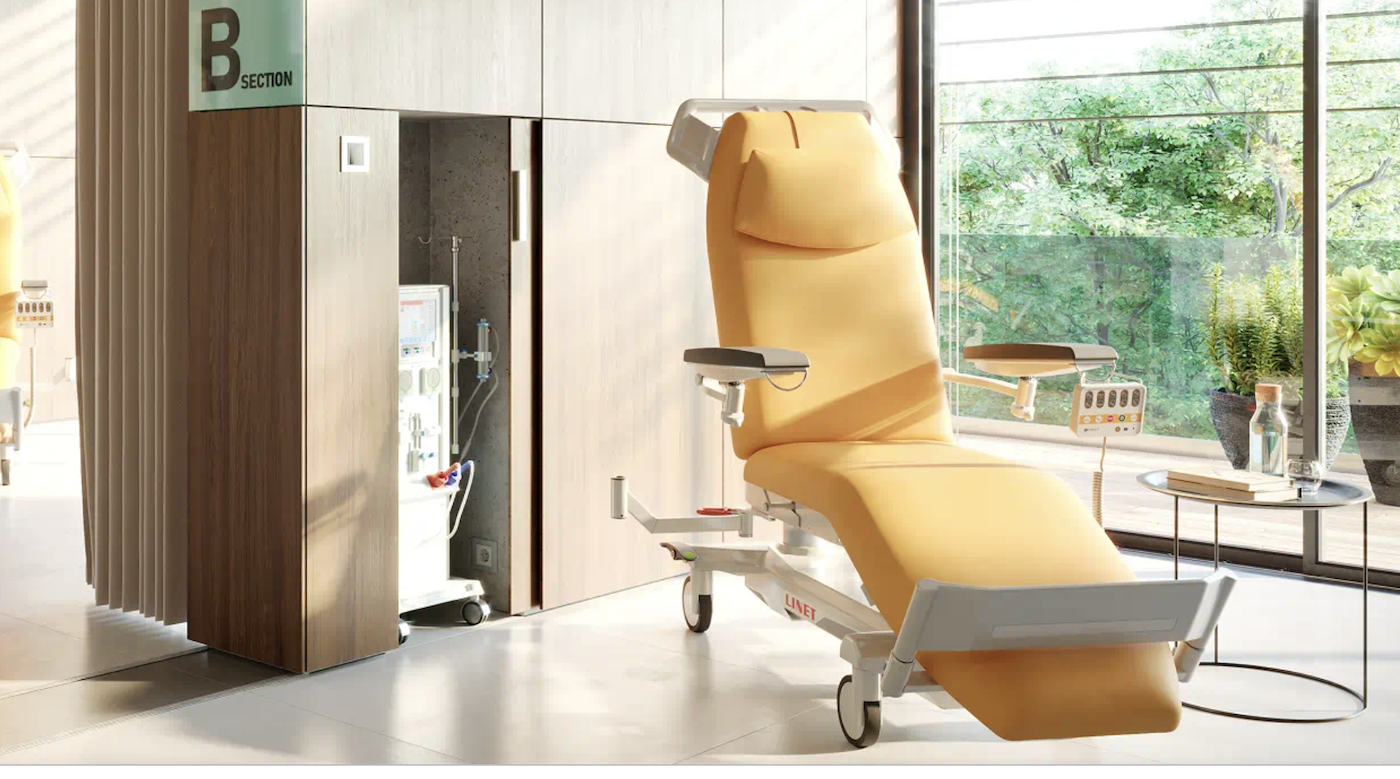
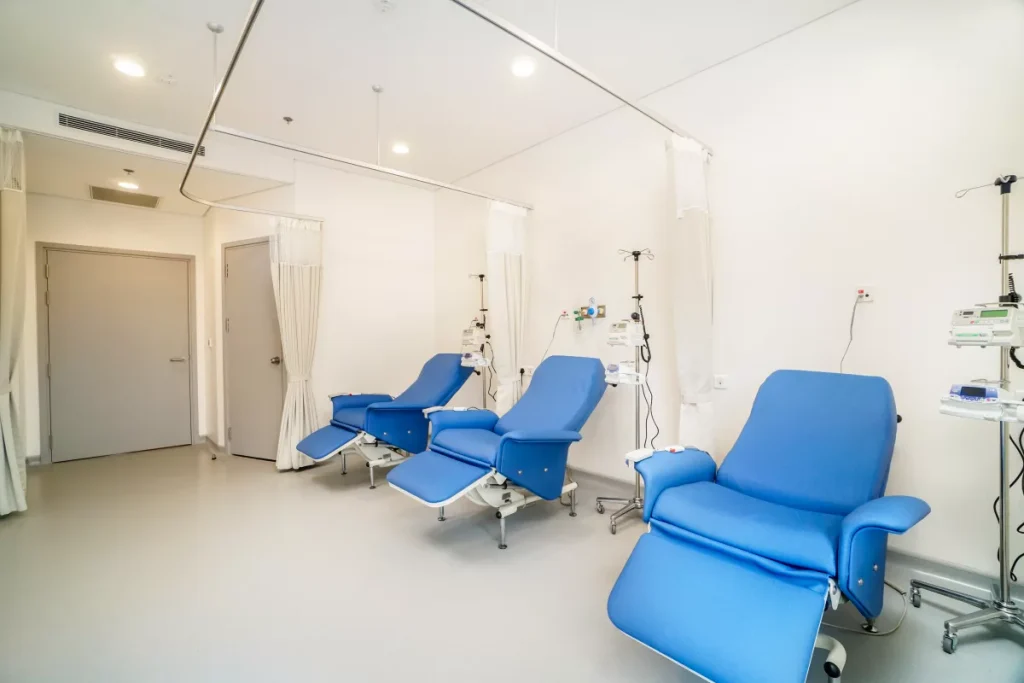
Patients get their own small space for the day and, instead of a hospital bed, a remarkably comfortable, electrically adjustable chair, a chair with enough buttons and gadgets to make Archie Bunker weep with envy, and frankly built for exactly one activity besides being examined: reading. I’d brought a paperback on the theory that if I was going to spend a morning being monitored, I might as well pair it with something suitably long and unhurried — Proust, say, whose books are themselves a kind of endurance test.
Add a meal tray and a station stocked with coffee, tea, hot chocolate, cookies and small cakes, and you have proof that the French have never once believed suffering builds character.
But the real luxury isn’t the chair — it’s a team of professionals looking at the whole problem instead of just patching one symptom and shoving you out the door. Take a patient with breathing trouble: a spirometry test (blow into a tube, breathalyzer- style, minus the awkward questions about your evening) checks for asthma or COPD, then a walk-and-monitor stress test fills in the rest.
Ninety-odd minutes later, the verdict arrives – in one case, excellent fitness, long-term asthma – and the real point get made: treating symptoms as they flare up is not the same as managing the disease underneath, a distinction considerably less fun to discuss than the cookies. Depending on the hospital and what you need, a full respiratory rehab program can rope in a genuinely absurd amount of expertise – breathing tests, physiotherapy that sounds suspiciously like yoga with better branding, smoking-cessation coaches, nutritionists, psychologists for the days breathing itself feels like a chore, vaccination schedules, and long-term follow-up to make sure it all sticks.
Basically, if a professional could plausibly help you breathe better or live better, France has found a way to put them in the same building.
France’s Haute Autorité de Santé backs this up officially, describing the same approach we just walked through — and noting it can happen in a hospital, a day hospital, an outpatient setting, or at home, the healthcare system apparently never having met al ocation it didn’t think could be improved by a nurse showing up.
Surprisingly human
There’s also a growing emphasis on prevention.
Pneumococcal vaccination is recommended for adults at elevated risk, and for everyone from age 65 under the current schedule — often arranged through the local pharmacy, no appointment saga required, just a pharmacist, a needle, and a briskness that borders on the affectionate. That matters more as we age: asthma and other respiratory problems don’t retire when we do, and older adults are more vulnerable to complications from infections. Sleep is part of the picture too — persistent nighttime breathing trouble, snoring, poor sleep and daytime fatigue are reasons to raise the subject with a doctor, rather than simply blaming the mattress.
For newcomers to France, there’s another reassurance built in: you don’t need to know which specialist you need before you begin. A médecin traitant (your regular doctor) can point you toward a pulmonologist, sleep laboratory, physiotherapist, rehabilitation program, or whatever else fits — a bit like having a very calm, medically trained concierge. And the experience can be surprisingly human. Nurses and doctors take the time to explain what they’re doing. Patients are monitored throughout. There’s food, coffee and
a comfortable place to sit. Most importantly, the goal isn’t simply to identify what’s wrong and hand you a prescription — it’s to understand the problem and figure out how to help you live better with it. And it’s worth remembering: you don’t have to wait untilyou’re seriously ill to ask.
My own stay ran from 10 a.m. to noon, at which point the doctor delivered her verdict: nothing left to do now but wait for her to finish her rounds. Minutes later, as the corridor began to smell suspiciously like an actual restaurant, a woman appeared and asked if I’d like to stay for lunch.
The tray, against all hospital-food odds, was good – low-salt and mild as required, but with real texture: something crunchy, something soft and cloud-like, something creamy.
Nutritious, balanced. Bravo.
The building itself was nothing grand, just perfectly, unglamorously adequate — and yet it did what Proust’s madeleine did, minus the seven volumes: one bite, and I was a child again, in a hospital that still had time for people. Jeanne Calment was already alive and eating her way toward 122 when Proust wrote that scene, which feels about right – apparently the secret to a very long life in France has always involved paying close attention to dining.
Perhaps that’s what stayed with me: medicine at its best isn’t only tests and treatments. It’s someone remembering to bring you lunch.
––––––––––
Read more about France here in Dispatches’ archives.
See more from Alice here.

Alice Verberne is a contributing writer for Dispatches Europe. She has worked in print journalism and magazine production in the United States and Europe throughout her career. She currently resides in France where she enjoys visiting former French speaking colonies and discussing history with the locals.