
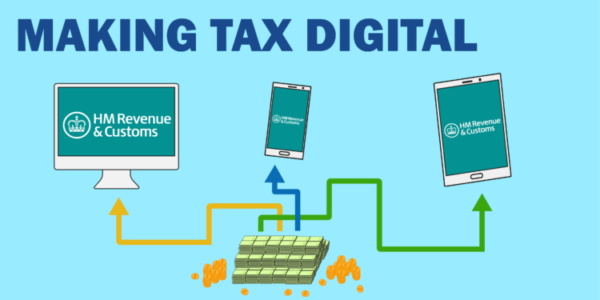
If you’re self-employed in the Uunited Kingdom, you may have already seen the emails. And how many emails there have been! For those who haven’t heard, or had His Majestry’s Revenue & Customs in their inbox on a regular basis, the process of filing and paying taxes in the UK is being digitized. While the mandatory implementation of Making Tax Digital (as the program is called) is being phased in over the course of several years, much of the process is already up and running if you want to get a head start.
But what is Making Tax Digital, exactly? When will it come into effect for your taxes? Will you need an accountant to help you navigate it? Will any of this change the taxes you actually owe? Americans abroad in the UK often have to deal with the complexities of filing US and UK tax returns so the prospect of even more tax information to worry about can feel daunting. Don’t worry though, read on to learn about how Making Tax Digital will impact you:
Which taxes are going digital?
At its core, Making Tax Digital, sometimes abbreviated as MTD, is about ensuring that businesses both keep accurate financial records throughout the year and pay the full amount of tax they owe. This applies to businesses of only one employee as well as larger businesses—meaning that self-employed people will also need to be aware of the changes and ensure they’re complying with them. The plans for MTD have been in the works for over a decade, since they were first announced in 2015, but in 2026, there have been more steps taken to actually implement the changes, particularly as they regard self-employed individuals and landlords.
This shouldn’t exactly come as a surprise—the MTD program, which already covers Value Added Tax (VAT), was meant to expand into income tax several years ago. However, implementation was delayed due to the financial and commercial disruptions caused by the covid pandemic. Now, though, the process has been cleared for implementation and is progressing full steam ahead.
How does this change my income taxes?
Well, that depends on how you’re making your income. If you’re self-employed and a sole trader or you’re a landlord, you’ll need to use Making Tax Digital for Income Tax (not the catchiest name, but it certainly explains its function). Exactly when you’ll need to start filing digital taxes will depend on how much you’re earning—those with an income of £50,000 or higher per annum were in the first group of those required to use the new system and needed to start in April 2026.
Now, for Americans in the UK, the process may actually be less stressful than it is for born-and-raised Brits. That’s because Making Tax Digital For Income Tax is actually quite similar to the American system of self-employed persons filing quarterly taxes. HMRC has an automated system to pay estimated taxes once per quarter. You’ll need to update and make payments before filing annually and paying any remaining tax owed. For anyone who’s ever paid American quarterly taxes, the system shouldn’t seem unusual, but you’ll be going through HMRC rather than the IRS.
Now, if you’re an employee of a company, none of this will be impacting you. Your employer may have to work with MTD (or may already be doing so, as we’ll get to below) but your taxes will remain as they’ve always been. In all likelihood, you won’t have to file as your tax will already have been deducted from your paycheck. Even if you do need to file on income earned from interest or similar, that’s unrelated to the MTD process.
Where does VAT fit into all of this?
Another aspect of UK taxation that’s going digital is Value Added Tax (VAT). While most Americans only know about VAT as something they might be eligible to get refunded at the airport, for some Americans in Britain, is a development that’s been relevant to their business. In 2018, the UK government set up the system whereby businesses which are eligible for VAT (which is any non-exempt business with a turnover of £90,000 or more) began keeping digital records and paying HMRC through the MTD system.
Now, if this is all sounding a little complicated to you, don’t worry—you’re not alone. And much of the process will be outlined in an easy-to-use way on the HMRC website through your existing account if you’ve already been paying Self-Assessment. However, you can always consult an accountant if you’re worried about tax compliance. And remember, accountancy is a protected, licensed profession in the UK, so be sure you’re getting a fully qualified professional to help you with any tax queries!
**********
Read more about the UK here in Dispatches’ archives.
See more from Ellery here.

Ellery Weil
Dr. Ellery Weil is a writer and historian based in London. She was born in Washington, DC, raised in Maryland, and attended undergrad in Ann Arbor, Michigan, before moving to the UK to attend grad school at University College London, where she earned her PhD in History. She lives in London with her husband, where you can find her writing, reading, petting dogs in Regent's Park, and exploring the city's antique markets.