(Editor’s note: This post on Luxembourg’s digitalization of infrastructure is part of Dispatches’ Tech Tuesday Series. Dispatches covers tech because so many of our highly skilled internationals are engineers and developers.)
Luxembourg has never had much trouble getting things from one place to another. Sitting in the middle of Europe, the country has built a formidable logistics business around its location, roads, railways, airport and connections to neighboring countries. Its international airport is a major European freight hub, and Cargolux, headquartered in Luxembourg, is one of the world’s major all-cargo airlines.
Now Luxembourg’s government says it wants to make all that movement smarter. Policymakers haqve identified automotive technology, smart mobility and drones as priority sectors for economic diversification, with an emphasis on innovation, data and cooperation between government and private companies, according to national development plans. That ambition extends directly into freight.
A 16 million euro project
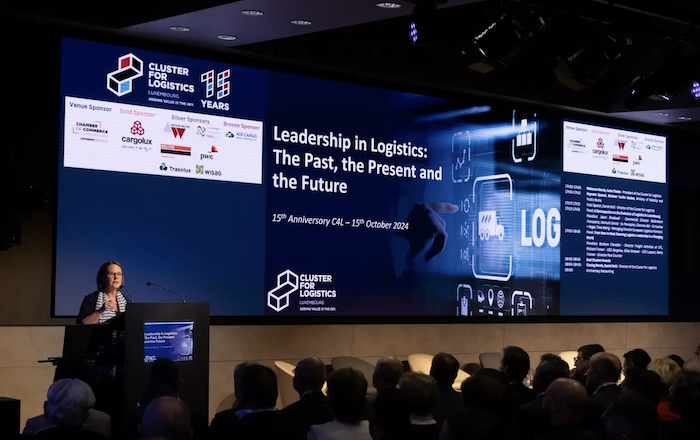
The Cluster for Logistics, an industry association that includes government and private partners, has pointed to AI-powered logistics control towers, warehouse automation, predictive supply-chain analytics and digital twins as among the technologies reshaping the sector this year. Digital twins – virtual models that simulate what is happening in a physical transport network – allow companies and authorities to test routes, traffic patterns or delivery strategies before making changes in the real world.
The University of Luxembourg is coordinating one such effort. NEXTLOGIC, a four-year, European Union-funded research project that launched in January 2026, is developing a digital platform combining real-time traffic information, sensor data, geospatial data and digital twins to improve urban freight movement including smarter loading zones, delivery microhubs and electric cargo-bike deliveries.
The 16 million euro project, backed by the European Union’s Horizon Europe program, brings together 34 partners across 13 countries and is being piloted in eight cities, among them Differdange, Luxembourg’s site in the program.
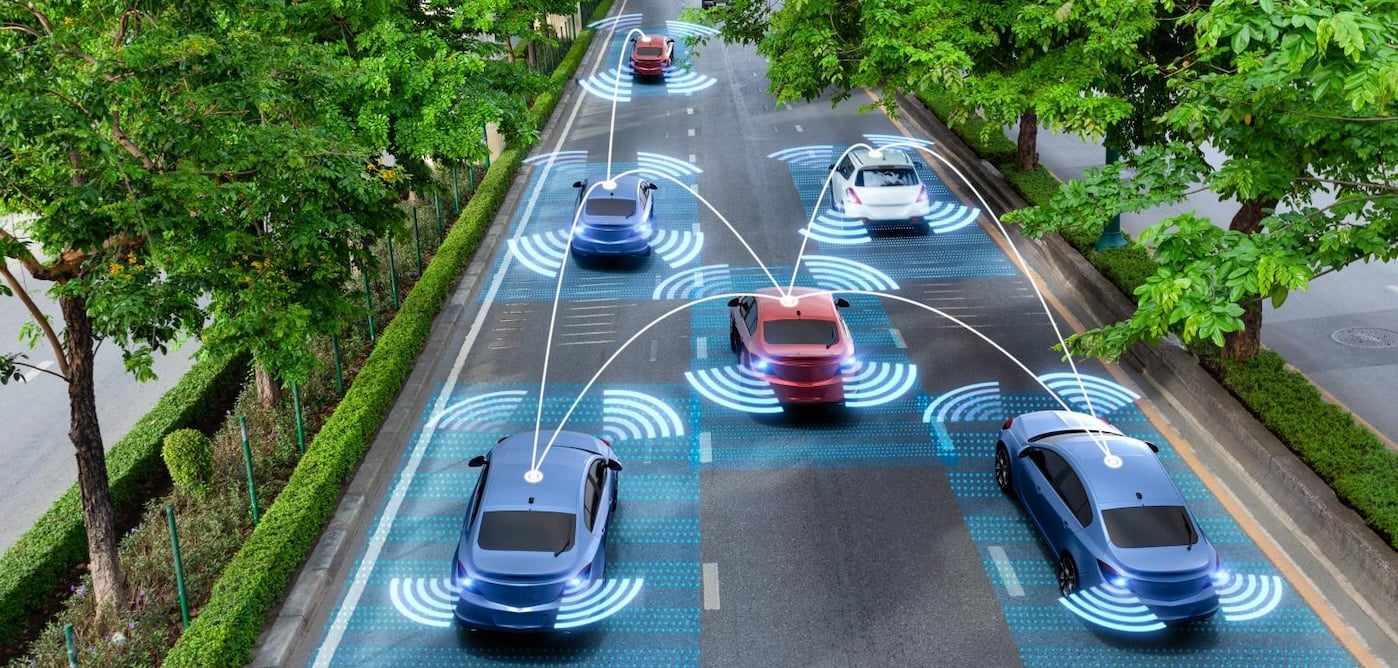
The technology does not stop at the ground. Luxembourg has built a notable presence in satellite communications, and researchers at the University of Luxembourg are studying how to integrate satellite and terrestrial networks — including AI-driven systems designed for connected and autonomous vehicles. As automated transport systems expand, they will depend on increasingly reliable communications linking trucks, warehouses, ports, aircraft and delivery systems that generate and exchange large volumes of data.
Autonomous driving by 2028
In October 2025, Economy Minister Lex Delles and Mobility Minister Yuriko Backes unveiled a national strategy, “Automatiséiert Fueren 2028,” that aims to make Luxembourg the first European country to allow automated driving across its territory by 2028. The strategy names logistics among five priority use cases, alongside robotaxis, highway “motorway chauffeur” systems, last-mile shuttles and automated valet parking. “We want to be a pioneer in this area,” Backes said at the strategy’s unveiling, noting that no European Union-wide regulation for autonomous driving yet exists.
The government is also investing in supporting infrastructure, including secure data centers and the MeluXina supercomputer, as part of a broader push into artificial intelligence, cybersecurity and satellite systems research. Officials and researchers involved in the effort say Luxembourg’s small size is an advantage for testing: its mix of urban, highway, industrial and cross-border environments lets new transport technologies be tried out without the scale a larger country would require.
The problems the technology is meant to address are concrete.
Congestion costs time and money. Freight crosses borders constantly. Warehouses need to become more efficient. Companies want better ways to predict disruptions, and governments are under pressure to cut transportation emissions. Luxembourg remains a financial center, a major logistics hub and home to SES, one of Europe’s most prominent satellite companies.
What’s changed, officials say, is an effort to link those industries — using artificial intelligence to manage logistics, satellites to connect systems, data to anticipate problems and automation to move people and goods.
––––––––––––––
Read more about Luxembourg here in Dispatches’ archives.
See more from Alice here.

Alice Verberne is a contributing writer for Dispatches Europe. She has worked in print journalism and magazine production in the United States and Europe throughout her career. She currently resides in France where she enjoys visiting former French speaking colonies and discussing history with the locals.