(Editor’s note: This post on Tech Show Paris is part of Dispatches’ Tech Tuesday series. We cover tech because so many of our highly skilled internationals are founders and engineers. And by the way, the international keynotes are in English, but local case studies will be in French.)
For years, France’s technology revolution seemed to have a familiar setting: a young entrepreneur in a hoodie, a laptop glowing in a Paris startup incubator, and President Emmanuel Macron somewhere nearby encouraging everyone to “think big.” Now the revolution has moved into rather less glamorous territory: Corporate IT departments, data centers, cybersecurity operations and the vast machinery required to make artificial intelligence actually work.
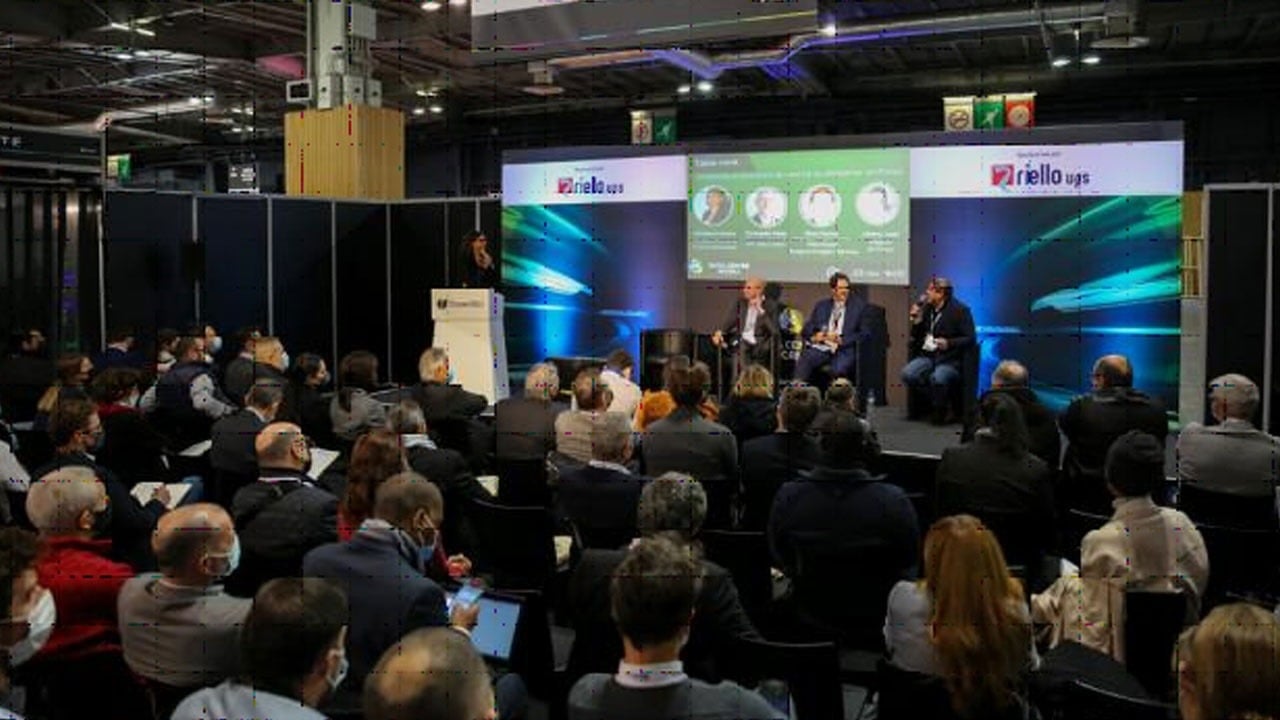
That shift will be on display 18 and 19 November at Paris Expo Porte de Versailles, when Tech Show Paris celebrates its 10th anniversary. The event brings together the people who make technology decisions inside companies—CTOs, CIOs, cloud architects, data scientists, cybersecurity specialists and developers—for five co-located shows covering AI, cloud infrastructure, cybersecurity, DevOps, data and data centers.
In other words, this is less about the next shiny gadget than about the plumbing underneath the digital economy.
And that makes it an interesting moment to take the temperature of France’s much- vaunted AI ambitions, ambitions that have led to Paris-based Mistral AI, Europe’s most valuable AI company and its only viable alternative to Open AI and Anthropic. Following a 3 billion euro Series D round earlier this month, the three-year-old scale-up’s valuation is now more than 21 billion euros.
AI strategy
Macron’s government began building a national AI strategy in 2017-18, putting nearly 2.5 billion euros from the France 2030 investment plan behind artificial intelligence. The goal was not simply to produce clever algorithms, but to build an ecosystem spanning research, talent, startups, commercialization and the adoption of AI across the economy.
Then came the big numbers.
At the Paris AI Action Summit in February 2025, France announced 109 billion euros in private French and foreign investment for AI infrastructure. A year later, the Élysée said 63 potential data-center sites had been identified, 26 of them already secured, while French AI startups had raised more than $3 billion. Not only that, but Mistral is now in a strategic partnership with Europe’s most valuable company, Eindhoven-based ASML, which has a monopoly on the photolithography equipment necessary to produce advanced computer chips.
That is a remarkable transformation for a country once better known for producing philosophers, luxury goods and paperwork than software unicorns.
France has some unusual advantages in the AI race. Its electricity supply is relatively abundant, stable and low-carbon, thanks largely to nuclear power. It has major research universities and a growing pool of AI specialists. And the government has increasingly treated computing capacity, data centers and digital sovereignty as strategic infrastructure rather than merely private-sector concerns.
Macron himself now talks about going beyond startups to building the entire chain: computing capacity, chips, service companies, robotics and large language models. In June 2026, he argued that France needed to move faster, operate at greater scale and simplify the rules that slow investment. That is a very different proposition from simply encouraging entrepreneurs to start
companies.
Lots of questions
The question now is whether all that investment will translate into something ordinary French workers and businesses can actually feel:
• Will French companies use AI to become more productive?
• Will it create new businesses and jobs — or primarily automate existing ones?
• Can France produce globally competitive companies rather than simply provide the electricity, data centers and talent that American technology giants need?
• And can Europe maintain enough technological sovereignty to avoid becoming permanently dependent on American and
Chinese platforms?
Those are the questions worth asking on the floor of Tech Show Paris.
The show’s own 2026 themes—”industrialization” of AI, technological sovereignty, data governance, cyber resilience, energy efficiency and the evolution of data-center infrastructure—suggest that the conversation itself has changed. The French tech revolution is no longer asking whether France can produce the next great startup. It is asking whether France can build the industrial machinery around it
That may be the more important revolution — and, unlike a startup pitch, it is one that will be considerably harder to fake.
Admission to Tech Show Paris is free for professionals from companies using technology solutions. Registration fees apply to sales, marketing, HR, and similar roles within companies that provide services or solutions. You can register here.
––––––––––
Read more about tech here in Dispatches’ archives.
See more from Alice here.

Alice Verberne is a contributing writer for Dispatches Europe. She has worked in print journalism and magazine production in the United States and Europe throughout her career. She currently resides in France where she enjoys visiting former French speaking colonies and discussing history with the locals.