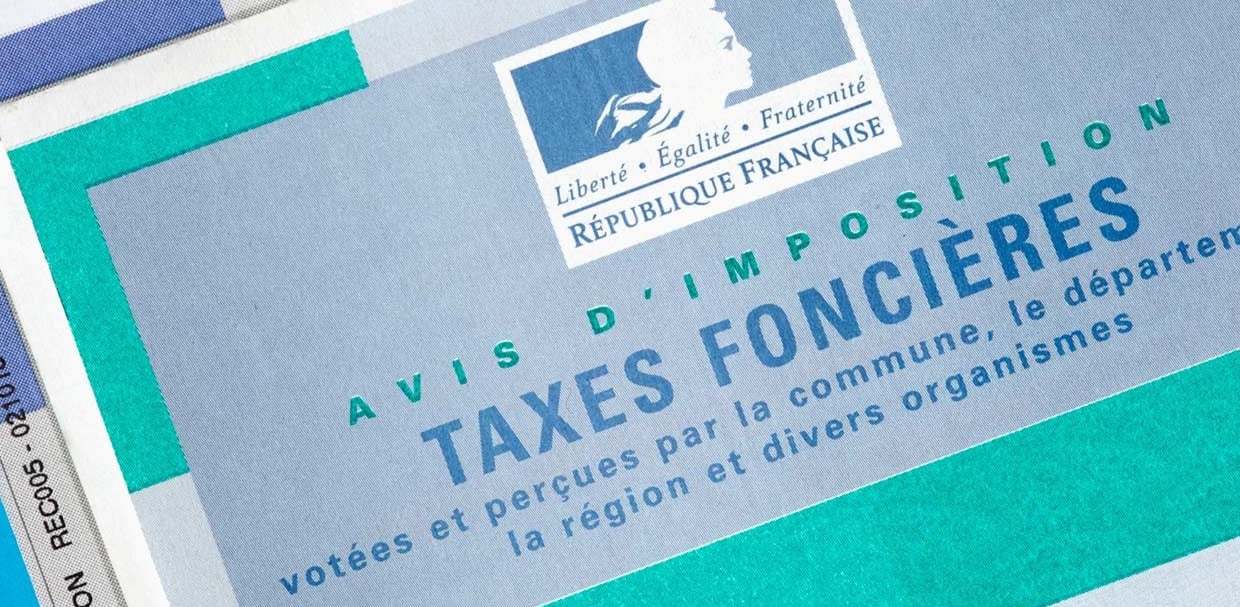
If you own a house or apartment in France, you may notice something a little different when your property-tax information arrives this year. Along with your usual taxe foncière notice — whether you receive it online or by post — you may also find a reminder about your reporting obligations through Gérer mes biens immobiliers, or “Manage My Real Estate.”
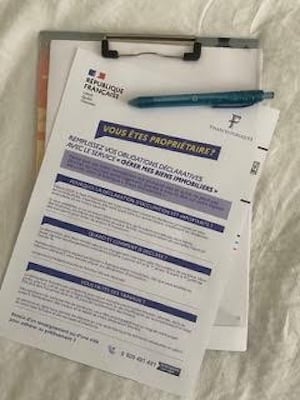
For many expats, the first reaction might be: “Oh no, another French tax I have to pay!” But don’t panic. The notice is primarily a reminder of your obligation to tell the tax authorities about certain changes to your property. It isn’t, by itself, a new bill demanding immediate payment. Still, if you’ve spent years renovating an old French house, it’s worth paying attention.
First, what is taxe foncière?
The taxe foncière is the annual property tax paid by property owners in France. It’s calculated using the property’s cadastral rental value — essentially, the theoretical annual rent the property could generate under normal conditions — multiplied by the applicable local tax rates. That’s why two similar properties in different communes can end up with very different bills.
The key point for homeowners is that this assessment can change when the property itself changes. And that’s where renovations come in.
French tax authorities require owners to report certain changes to a property. These can include a new construction, an extension, a garage, a carport, a terrace or veranda, a garden shed, a swimming pool and other work that changes the property’s size or physical characteristics. Some of this work may also trigger urban-planning taxes.
Importantly, this declaration is separate from any permit or declaration you may have already filed with your mairie. Getting local government approval for the work doesn’t mean your tax declaration is done — they’re two different processes.
Remember the 90-day rule
This is the part homeowners really need to remember: for qualifying construction or alterations, the declaration generally must be filed within 90 calendar days of the work’s completion. The information is used to update the property’s tax assessment and, where applicable, to calculate urban-planning taxes. Much of this can now be handled through the “Biens immobiliers” section of your personal account on impots.gouv.fr.
There’s good reason not to let the deadline slip: Failing to declare qualifying work on time can trigger a 150 euro penalty and can affect certain temporary property-tax exemptions.
What if you haven’t done any work?
This is where the reminder notice can cause unnecessary anxiety.
If nothing about your property has changed in a way covered by the declaration requirements, you don’t suddenly owe a new construction declaration just because you received the notice.
It’s also worth not confusing the déclaration foncière with the déclaration d’occupation, which concerns who occupies the property. These are separate obligations, and French tax paperwork has a way of making every notice feel like it demands another form.
It doesn’t.
Why should expats pay particular attention?
Many of us who buy property in France don’t move into something brand new. We buy the old farmhouse, the stone cottage or the village house that’s been standing for decades — and then spend the next 10 years improving it. New windows one year. A new roof the next. Then maybe a bathroom, an extension, a veranda, a swimming pool.
That’s exactly why this reminder is worth reading closely.
It’s a prompt to ask yourself: Have I made any changes to my property that I was supposed to declare?
One important distinction: Ordinary maintenance and repairs aren’t automatically treated the same as creating new taxable space or changing the property’s characteristics. The rules target specific kinds of construction, additions and alterations — not every renovation requires a declaration.
So, what should you do?
When your French property-tax information arrives this year, don’t ignore that extra notice.
Ask yourself three questions:
• Have I built anything new?
• Have I increased or changed the size or physical characteristics of my property?
• Have I added something substantial — a veranda, garage, permanent garden structure or swimming pool?
If you answer “yes: to any of these, check whether a déclaration foncière was required= and whether it was filed within the 90-day window. If you’re unsure, start with your espace particulier on impots.gouv.fr, specifically the “Biens immobiliers” section. And remember: This reminder is not the same thing as your annual property-tax bill.
When do you actually pay taxe foncière?
For 2026, the timetable is straightforward. If you’re not paying monthly, your avis de taxe foncière becomes available toward the end of August or in September, depending on whether you’ve opted for monthly payments. If you’ve opted for online notices, you’ll get an email when it’s ready in your tax account. The standard payment deadline is 15 October 2026, for taxpayers not using a digital payment method. Paying online – via impots.gouv.fr, a smartphone or a tablet – extends that to 20 October at midnight, with the payment debited from your account beginning 26 October.
If you’ve set up monthly payments, your taxe foncière is simply collected in installments rather than as one lump sum in October. And if your bill exceeds 300 euros, electronic payment is mandatory — either online or via an authorized direct-debit arrangement.
So when that extra piece of French tax paperwork lands in your mailbox, don’t assume the government is asking for more money. Think of it instead as a nudge: If you’ve changed your property, make sure you’ve told the tax authorities.
For those of us who’ve spent years lovingly restoring an old French house, that might be exactly the part of the paperwork worth a second look.
–––––––––––
Read more about France here in Dispatches’ archives.
See more from Alice here.

Alice Verberne is a contributing writer for Dispatches Europe. She has worked in print journalism and magazine production in the United States and Europe throughout her career. She currently resides in France where she enjoys visiting former French speaking colonies and discussing history with the locals.