(Editor’s note: This post on Hallstatt is part of our series of quick trips we believe better reflect the expat lifestyle in Europe.)
Zagreb is perfectly positioned for weekend trips. Very close to Slovenia, Hungary, Bosnia and Herzegovina, Italy and even Serbia, there’s plenty in the immediate vicinity to visit. Venture a tiny little bit farther, however, and you’ll arrive in gorgeous Austria. One fairytale location here has been attracting Croats and Slovenes for decades – Hallstatt.
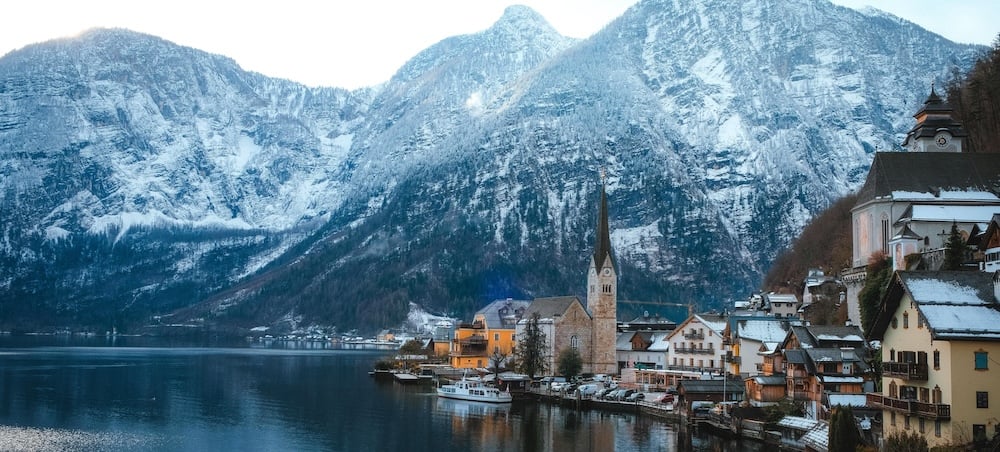
Hallstatt looks as if it was pulled from a Hallmark Christmas card or a fairytale book of yore, dominated by imposing mountains, unspoiled nature and traditional Austrian chocolate box houses.
It is the ideal break from Zagreb or Ljubljana.
A drive of about 4.5 hours will see you transported from the bustling Croatian capital to idyllic Hallstatt, passing through beautiful Slovenia and a decent chunk of the glorious Austrian landscape that never fails to impress at every turn. The undulating Slovenian landscape, with its perfect roads and pristine and litter-free surroundings, immediately instil a sense of zen, with the entire journey from Croatia, through Slovenia and into Austria being seamless thanks to Schengen.
Like something out of a fairytale
Arriving into the wider Hallstatt area is in itself something to take in, with the mountains growing in height, the pine forests increasing in density and the amount of crystal clear rocky streams flowing by the roadside getting wider. Austria’s 100 kilometer per hour roads aren’t limited solely to the motorways, and you’ll be whipping past these picturesque scenes at a pace that will leave you wondering if you’re in for a speeding ticket. (Don’t worry, you aren’t.)
This glorious little quintessential Austrian town – dominated by a deep lake – is a location you’d expect to hear the “Sound of Music” playing on repeat in. Traditional houses with perfectly cultivated gardens rich in colourful flowers are dotted along the lakeshore, swans float peacefully in the water, passed only by boats carrying camera-laden visitors. It is as if it’s been taken from a 19th century folktale and transplanted into the often stressful era we currently live in, without suffering any change as a result.
A slower pace and a relaxed atmosphere cloak the entire place like an invisible mountain mist, and visitors from all over the world come to stroll, take in the scenery and of course – visit the oldest still working salt mine on Earth.
NaCL
This 7,000 year old salt mine has shaped the economic life of Hallstatt’s residents since its inception, with the town’s history beginning in around 12,000 BC. Back then, humans discovered what would eventually be a salty jackpot deep below the surface. Organised salt mining actually began in the mountainous Salzkammergut region between 2100 and 800 BC, and the oldest staircase in Europe was discovered in one of its many tunnels.
Despite still being a functioning salt mine, tours are organised on a daily basis, offering a truly fascinating look into another world hidden deep below the ground. Hiking up to Rudolfsturm (Rudolf’s Tower), perched high above with an accompanying skywalk is possible, but it isn’t for the faint of heart (or even the “strong of heart”, if I’m being frank!) Luckily, a gondola transports groups high up into the mountains, with panoramic views throughout the short journey that will leave nobody indifferent. Upon arrival, you’ll don white protective overalls and begin your descent down into the bowels of the Earth and begin an otherworldly experience.
Once down there, you’ll use slides to descend deeper and deeper, a method employed by workers centuries ago to avoid broken legs and a subsequent inability to work when lugging their tools and salt around in this seemingly endless subterranean abyss. Seeing the oldest staircase in the world in person is also an experience difficult to put into words. Preserved by the highly specific conditions of this salt mine and threatened by any other due to its sheer age, it will remain deep below the ground here
forever.

The sublime, the quirky and the downright macabre
While up in the mountains, dining overlooking glorious Lake Hallstatt at the restaurant on Rudolfsturm is a must. What could be better than a generous portion of schnitzel and a pint of Austria’s popular Kaiser beer while admiring the views that have inspired artists for countless centuries?
After descending back down to normal heights, a stroll by the lake and a visit to the bizarre but fascinating Bone House is a must. The Bone House (Bienhaus) houses many intricately painted skulls and other human bones from centuries ago, with its inception recorded as being the 12th century. You’ll notice when arriving that quaint little Hallstatt’s graveyard is very small, and as the human population grew, the town quickly ran out of places to bury bodies. This was made more problematic given that authorities at certain times outlawed cremation.
The issue was solved with the digging up of graves after the passage of time and the removal of the bones in order to bury someone new.
The painting of the bleached skulls began in the 1700s to remember that departed soul, with their names, birth and death dates as well as all kinds of elaborate floral patterns lovingly imprinted onto them. Perhaps the Bone House isn’t one for the kids, but it’s a very interesting “must visit” location
for adults when in Hallstatt.
Idyllic weekend
Not far from Salzburg, a much more urban environment is a short journey away should you want to up the pace, though filling your lungs with the incredibly clean mountain air here is second to none.
Hallstatt is an idyllic location for a weekend trip from either Zagreb or Ljubljana, with both the journey there and back offering constant impressive vistas and nature at its absolute best from all angles. It is simply gorgeous at all times of year.
Snow coats the mountains and tops the pine trees in winter, creating the perfect winter wonderland scene. In summer, Hallstatt is a much needed break from the intense Croatian summer heat, with pleasant 15 degree mountain temperatures to enjoy, all while the sun still shines.
–––––––––––
Read more about Austria here in Dispatches’ archives.

Lauren Simmonds
Lauren Simmonds is the editor of Total Croatia News, the largest English language portal in Croatia. She lives in Zagreb, Croatia, and is a translator, content writer, interpreter and the co-author of "Croatia - A Survival Kit for Foreigners," which was published in 2022.