
(Editor’s note: This interview with Euclyd CEO Bernardo Kastrup is part of Dispatches’ Tech Tuesday series. See our original post about Euclyd here. Dispatches covers tech because so many of our highly skilled internationals are founders and entrepreneurs.)
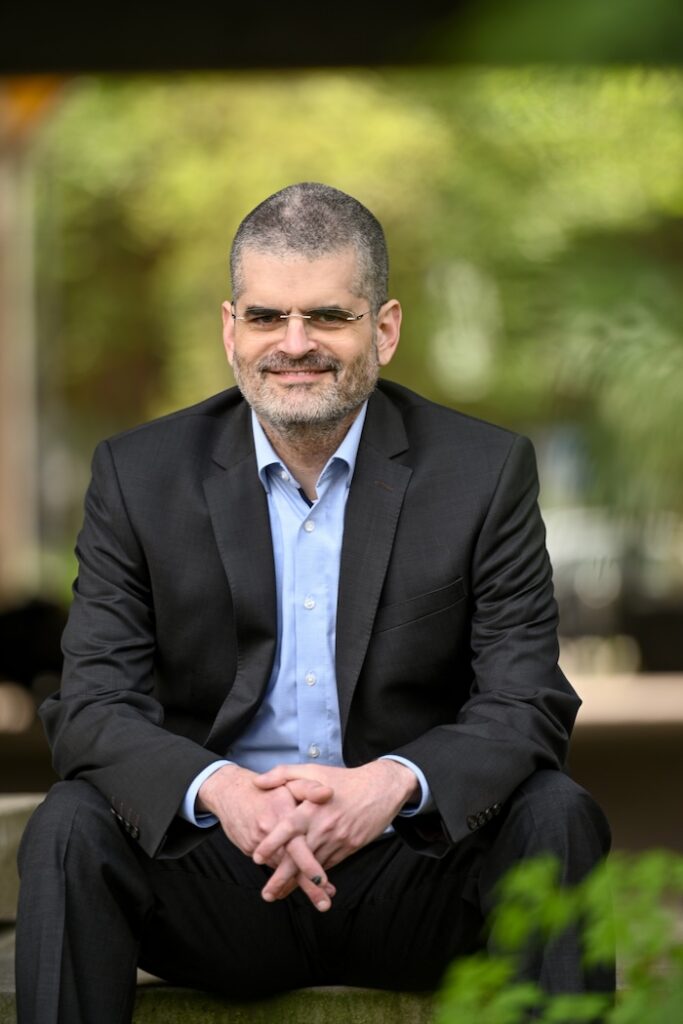
Euclyd, Europe’s great deep-tech hope, is in a suite of unmarked offices in HTC 84 on High Tech Campus Eindhoven. To get in to meet with the CEO, I knock on a window to get someone’s attention and yell, “I’m here to see Bernardo Kastrup.” Kastrup, 51, appears almost instantly, smiling, with a buzz cut and a surprisingly robust build for a tech guy. Euclyd’s offices are nearly bare, far more spartan than even some of the startups on Campus. But this startup is not about impressing people with groovy office space.
It’s about advancing artificial intelligence with a European ethos.
AI could be an instrument “misused for the concentration of power over others,” Kastrup says. “That’s a real danger, and that’s why I’m so hot on European autonomy … so that our values are reflected in how we deploy this technology, not somebody else’s values.”
Tech pedigree
He was born in Brazil, came of age in Switzerland and earned a PhD in computer engineering from Eindhoven University of Technology and philosophy of mind from Radboud University in Nijmegen. Kastrup leads an all-star, all-European team to create data center hardware startup Euclyd. The founder/investor draws heavily from his 15 years at ASML – the most valuable tech company in Europe – and includes Peter Wennink, the retired president and CEO who turned ASML into a global semiconductor juggernaut, as a co-investor and mentor.
At ASML, Kastrup oversaw strategy and M&A, and in both cases, “you’re always interacting with the board, and then the board is your customer. You’re basically supporting them. So, I’ve known Peter for quite a while.” Well enough to send Wennink a request to pitch, which he accepted. “And at the end of that meeting, he said, ‘I’ll chip in as well. Let’s do it together.’ ”
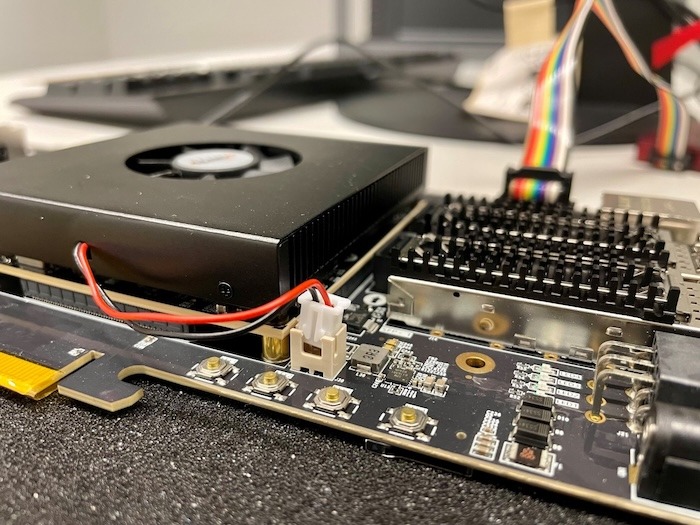
“It” is developing an AI inference system-in-package, a specialized hardware component designed to run AI tasks at the data center. A package that uses less energy while outperforming the competition, generating 7.68 million tokens (the bits of text AI needs to produce to answer a query). Kastrup is quick to emphasize that Euclyd’s technology is not some incremental advancement based on existing IP libraries.
Instead, it represents “the spirit of the ‘70s,” when personal computer technology was in its infancy and everything had to be invented.
His team has designed the processor architecture from the ground up, starting at the level of single NAND (logic) gates and bus systems. “We know what every gate (binary switch), what every wire is doing. No one else is doing anything like this.”
While the TRL is important, in the American VC investment methodology, it’s always team first. Euclyd includes people from the original team from parallel processor pioneer Silicon Hive, founded on the High Tech Campus in 2002 and sold to Intel in 2011. “We brought a lot of those guys back together because Intel is not doing great, so it’s not difficult to poach from Intel these days,” Kastrup says. “So, we have a lot of them. We also have the former CEO of GrAI Matter Labs, acquired by Snap.”
Ingolf Held, former CEO of GrAI Matter Labs, joined Euclyd as VP of product. Regarding Euclyd’s co-founder “Atul Sinha, he has done this 10 or 11 times,” Kastrup noted. “He has been a founder or a member of the board of 10 or 11 startups. He never failed. Fingers crossed, this is not going to be the first time that he fails, but all indications are that it will not be.”
Change agents in a time of a tech revolution
Just don’t think of this as Kastrup and co-founders Atul Sinha, Gerard Egelmeers, Ingolf Held and Harm Peters establishing Euclyd, then going out to recruit a team. “This is not something Euclyd achieved, to put this thing together. It’s the other way around. This team put Euclyd together. So, it’s not like Euclyd already existed substantially and we went shopping for big names,” Kastrup says.
Regarding investors Peter Wennink, Steven Schuurman and chip pioneer Federico Faggin, “The fact that they are investors is almost like a side note. They were there with us in the very early days, discussing what we should do, what angle we should take, what made sense, what didn’t.
“That’s why I tell you that, although they are investors – because they put in their money and a lot of it – it’s almost insulting to call them investors.” That kind of star power bent on revolutionizing AI has generated publicity around the world, and the pressure is on.
As for AI skeptics, Kastrup is blunt: In the next few years, the world is about to change faster and more dramatically than ever before: “The applicable market segments are everything.” AI is applicable to medicine, drug discovery, financial markets, industrial automation and process control. Autonomous vehicles. Increasing yield for computer chips.
If you ran a discounted cash flow analysis for all markets, you’d get to value levels that are “just mind boggling,” Kastrup says. “Nothing else compares. That’s why it’s such a disruptive technology, business wise, because its application is … everything. It’s the first time a technology was developed that can be applied to everything, literally everything, that human beings do.”
Euclyd’s focus is B2B, enterprise applications of AI. Kastrup says his team might pivot to consumer chatbots or agents, but for the moment, it’s all about real AI applications, “and I can tell you the timing for that was yesterday.” He predicts that it’s going to take time for the consumer side of AI to pay off. ChatGPT, DeepSeek, Gemini and all the other consumer-oriented LLMs get constant publicity. But the truth is, they’re bleeding money, Kastrup says. There isn’t a clear consumer business model that is profitable yet.
The hardware by the incumbents – NVIDIA and Cerebras – is so drastically inefficient that with every query, the company providing artificial intelligence is losing “a lot of money, even if you’re a paying customer because it costs so much CapEex (capital expenditures) and OpEx (operational expenses) to keep those vastly inefficient GPUs running to answer your question,” Kastrup says.
Is there an AI bubble?
As a business plan, initially losing money on every query is “completely logical.” AI providers want to have the first-mover advantage. They lose money to get the market, and then they milk that market afterwards when the technology becomes more efficient and costs go down, Kastrup says. “The thing is, they are all playing that game. They’re all playing that strategy, and as a consequence, they are all losing money right now. So, that’s the argument for the bubble.” But if you have the technology that “answers the needs of the corporate market,” that does what that market needs, “you make a lot of money … a lot of money.”
Providing the processors that make AI profitable is the goal at Euclyd, but that is just the beginning. The startup is raising what would be known in the U.S. as a seed round but is termed a Series A here in Europe. Kastrup won’t reveal amounts but is adamant there is sufficient investment capital in Europe.
That said, it’s going to take a major shift in mindset for the entirety of Europe, he says:
“Everybody who is a stakeholder in this ecosystem has to play a role, and that includes governments, that includes risk funding and that includes the startups themselves.” Startups will have to work harder and faster. Investors will have to get comfortable with risk and governments need to scale back the bureaucracy. “You have to have one party with the downright bull mentality that just plows through it,” Kastrup says. “Gets it, gets it organized and shows, ‘Look, it’s possible, and look how well we are doing.’
“Then things will change.”
––––––––––
Bernardo Kastrup is also a philosopher. Read more about his work here.

Co-CEO of Dispatches Europe. A former military reporter, I'm a serial expat who has lived in France, Turkey, Germany and the Netherlands.