

For American expats in Europe, getting a job can mean lengthy applications, complex paperwork, culture shock and more. But what if you’re not applying for jobs because you want to work for yourself?Freelancing and self-employment are increasingly popular options for anyone looking for a flexible schedule, the chance to work from home, and the opportunity to take on or cut back on working hours.
But for American expats looking to be self-employed in the United Kingdom, there’s the question of how this will compare to working for yourself in the United States. Having done both, I can tell you that there are differences you wouldn’t expect as well as some surprising similarities.
Below, you’ll find some of the most important differences and similarities that just might surprise you:
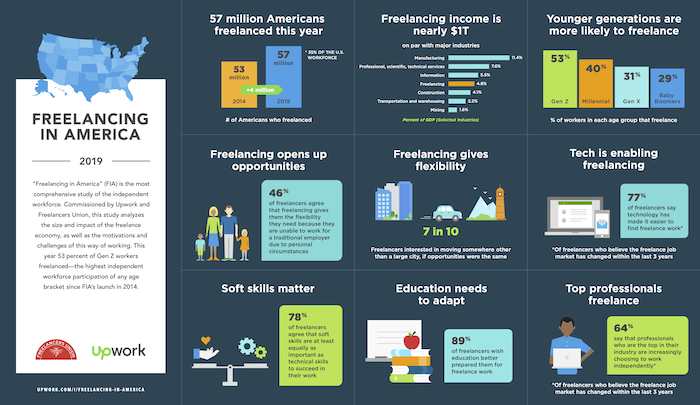
Key difference: Healthcare
Possibly the biggest difference when it comes to self-employment in the US vs the UK is healthcare. As any American can tell you, health insurance in the United States is, more often than not – for those over 26 and under 65 years old – tied to your employer. Tied to the point that employee-subsidized healthcare plans are one of the most important benefits for jobseekers to enquire about. If you’re self-employed, there are means of getting coverage, either through the Affordable Care Act (ACA, aka Obamacare), these plans can be limited and/or cost prohibitive, and the lack of an employer-sponsored health plan is considered one of the major risks of self-employment.
Meanwhile, in the UK, this won’t be a concern. The UK famously has universal healthcare, in the form of the National Health System (NHS). As a resident of the United Kingdom, you’ll have paid the NHS surcharge as part of your visa fees, and it entitles you to make full use of the NHS. While there are also private healthcare options, these are rare, and considered more of a “luxury add-on” for those looking for a boutique experience. As a freelancer in the UK, you’ll be able to get your healthcare needs met through the NHS, without having to worry about insurance, or feel like you’re taking on a major health risk by foregoing an employer-sponsored insurance plan.
Similarity: Scheduling
This is one of the most attractive aspects of freelancing and self-employment, whatever country you’re working from. Whether you’re in the United Kingdom or the United States, working for yourself means setting your own working hours and schedule. Remember, though, that it’s much easier to maintain a flexible schedule, where you can cut back or increase your working hours depending on what works best for you, if you have multiple clients/sources of income through your self-employed or freelance work.
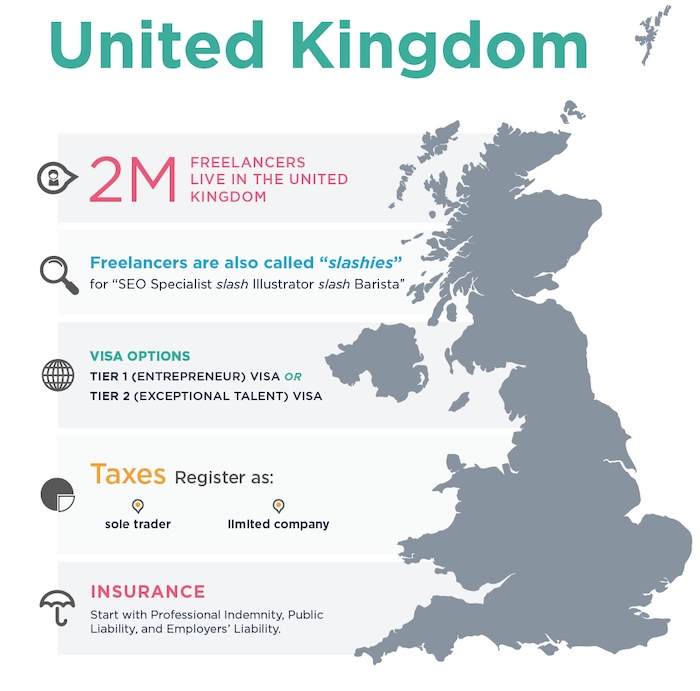
Key Difference: Taxes
Anyone who has worked for themself in the United States knows how complicated the tax situation can get. Filing quarterly taxes, making sure you’re withholding the correct amount, and then filing in April. While taxes for the self-employed aren’t exactly simple in the United Kingdom, they work differently than the American system.
While you can find more information about how to file UK taxes, whatever type of employment you’re working through, you should also remember that you will still need to file American taxes once per year. Don’t worry, though–the US/UK tax treaty means you won’t have to pay twice, only file!
Similarity: Registration
This one is often overlooked, especially by more casual freelancers on either side of the Atlantic, but there may come a point in your freelance or self-employed journey where you’ll want to register as a business. In the United States, this means incorporating, usually as a limited liability corporation, or LLC, while in the United Kingdom, this means registering with Companies House. Either way, this step comes with some potential advantages, but also extra responsibilities, so read up and weigh your pros and cons before making the jump!
Key Difference: Earnings
You may have heard your fellow expats sigh over this, but it’s true: average wages in the UK are indeed lower than the US, even after you account for the currency exchange rate. This can be at least partially offset with certain cost-of-living differences, but still, many Americans don’t like the shift.
That’s where freelancing and self-employment may come in. While these paths are often considered a tradeoff where you exchange higher earnings for more flexibility stateside, in the UK, working for yourself can actually be one of the fastest ways to get to a wage you feel comfortable with. After all, you can often set your own pricing as well as your own hours, and you’ll also potentially be able to work with North American clients and customers, who are used to US rates of pay.
Which brings us to …
Wild Card: Growth opportunities
This is one that could be similar, or different, between the US and the UK. The thing about freelancing and self-employment is, it’s not a job, it’s a type of work arrangement. Whether you’re a lawyer, a writer, a mechanic or a caterer, you’ll be looking at a very different market, landscape and working conditions.
Whether the US or the UK is a better market to grow your business largely depends on the business itself — and more micro-level location factors, like whether you’re in a city or a rural area. Whatever the case, remember not to bite off too much straight away, to help avoid burnout, and keep your portfolio growing at a sustainable rate.
Good luck, and congrats on becoming your own boss!
–––––––––––
See more posts about the UK here in Dispatches’ archives.

Ellery Weil
Dr. Ellery Weil is a writer and historian based in London. She was born in Washington, DC, raised in Maryland, and attended undergrad in Ann Arbor, Michigan, before moving to the UK to attend grad school at University College London, where she earned her PhD in History. She lives in London with her husband, where you can find her writing, reading, petting dogs in Regent's Park, and exploring the city's antique markets.