(Editor’s note: This edition of Dispatches’ Tech Tuesday series is dedicated to AI. Dispatches covers tech because so many of our highly skilled internationals are engineers, physicists and founders.)
There are a lot of predictions about how AI will upend the job market. The good news is, if you’rea plumber or electrician, you’re seeing a boom in blue-collar jobs. So, you’ll likely always be employable. Ironically, these are becoming the “skilled jobs” because they require the ability to do things besides type and code. The bad news is, if you still have 20th century skills – clerical, sales, law, accounting or finance – you’re drifting toward obsolescence.
In the Stanford Emerging Technology Review, computer scientist Fei-Fei Li ranks artificial intelligence as among the most transformative technologies in modern history. This means an increasingly “them and us” world where those who excel at math and abstract thinking – who can design, for example, the GPUs for neural networks – are the wealthy elites and those who can’t are, to use Marx’s term, Lumpenproletariat.
We’ve been here before. In the 19th and 20th centuries, disruptors such as Henry Ford went from the farm to being the 20th century version of the tech mogul on the basis of hustle, brutal business tactics and rudimentary engineering skills. In a generation, Ford accelerated America from a plodding horse-powered society to life in the fast lane. Recognizing they had to earn enough money to afford his cars, Ford encouraged employees to up their production skills and share in the wealth via the $5 per day minimum wage.
Now is different.
Spawned in the win-at-all-costs Altman/Musk/Jobs/Bezos era, this latest generation of tech disruptors doesn’t have an altruistic bone in their bodies. They want all the revenue. They want to control everything and everybody. They cut jobs. They want to control all information sources. They lie without compunction and they never, ever apologize.
Sorry if you find this upsetting, but we’re just the messenger.
Ch-ch-ch-changes
Everyone knows the great AI disruption is coming, but how many people are preparing for it? And what is life going to be like in the future for us expats with cushy jobs, working four days per week in Europe as engineers at Philips or wherever?
How do you skill up? Even if you do, artificial intelligence is changing every second of every day. How do you prepare for that? The fear is that when we reach artificial general intelligence – when AI surpasses human capabilities – that we all have a limited window of time to build cash before AI and robotics replace humans.
From the New York Times:
At that point, we will get frozen in our current class positions: The rich will be able to deploy superintelligent machines to do their bidding, and everyone else will be rendered useless and unemployable, left to live off welfare scraps.
As one wag noted, we’re all on a train with no destination.
• Go deep
In a New York Times AI expert roundtable, Meta executive Clara Shih notes that those who know how A.I. works, specifically A.I. agents, “can get their dream job, whether it’s in marketing or software, accounting, finance, you name it.” For those who don’t have serious skills, entry-level jobs are disappearing. If you don’t know what token-to-token latency is, you’ve got some catching up to do.
• Go wide
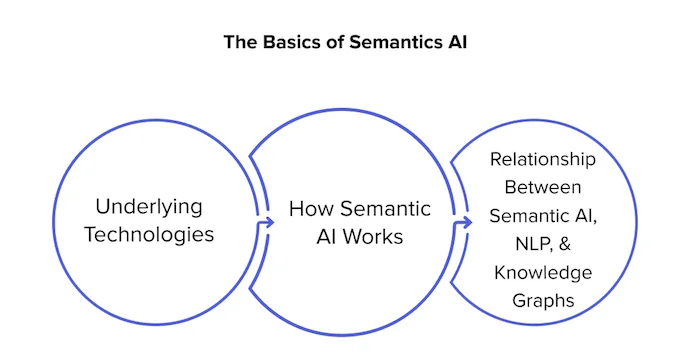
AI runs on compute, and compute runs on chips, at least at this point. So, the secondary and tertiary jobs related to AI will be increasingly important – designing and making conventional and photonic chips and data center switches. ASML and the other companies that supply the picks and shovels for the semiconductor industry are still hiring physicists, engineers and managers. But the software is going to change radically. Tokenization is simply transferring words to numbers, creating a digital representation of a real thing. BUT, you need semantic meaning to make the mass of data coherent. Semantic analysis is a crucial aspect of natural language processing and AI.
All this means creating new software
• Train for versatility
In that NYTimes round-table, Wharton Business School’s Ethan Mollick says that AI is restructuring the gaming industry: “…. suddenly the people who are designers can code, suddenly the coders can do design work, the artists can start writing.” For the fortunate few, there will be more creative work, not less.
• Get ready to change jobs frequently
AI and LLMs are evolving daily whether you’re talking about generative AI, chatbots or AI assistants/agents. This idea of always-evolving technology shaping always-evolving careers runs through all of the current literature. If you’re not down with frequently changing companies and roles, it’s going to be tough to adapt. The days of working 40 years at Philips are over.
Related jobs requiring AI skills
If all this talk of serfs and overlords is bumming you out, relax. At this stage, AI is creating a lot more career opportunities for those with skills than it’s eliminating.
Here are just a few:
Axelera AI
At High Tech Campus Eindhoven, AI on the edge scale-up Axelera AI has gone from zero to about 250 employees in just a few years. They have 17 jobs listed currently including:
Eindhoven-based NXP is one of the largest chipmakers for the auto industry, with more than 32,000 employees across the globe including in Eindhoven, India, Germany and its United States headquarters in Austin. NXP currently has about 700 openings, including:
TNO is the government-funded R&D institute that has spun out companies such as Nearfield Instruments, which just secured $380 million in investments, becoming a Dutch Unicorn.
Receive the latest news and updates from Dispatches Europe. Get lifestyle & culture, startup & tech, jobs and travel news dispatched to your inbox each week.