Many foreigners moving to Spain will buy an apartment in an urbanisation (a gated community) or a block of flats. Becoming a property owner in these developments automatically makes you part of the community of owners (Comunidad de Propietarios), which is responsible for managing common areas and services. At least once a year, an annual general meeting will be held to elect committee members, approve the annual budget and discuss any community issues.
There are a few phrases guaranteed to break me out in a cold sweat, such as “Your call is important to us, please continue to hold.” But a new edition that is coming close to topping my tiny list of terror is: “Next week it’s the community AGM.”
Some communities function like well-oiled machines, while others struggle, often due to apathy and petty squabbles.
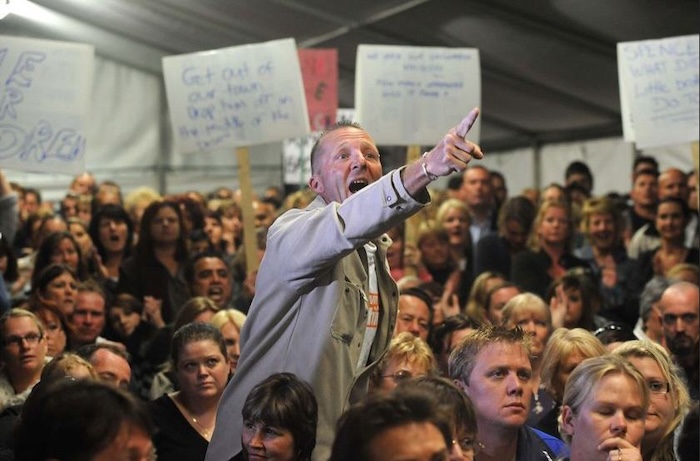
But even in well-run places, the annual gathering can quickly spiral from a polite gathering into a full-blown shouting match.
Marathon meetings
I live in a large, gated community and have some wonderful neighbours. However, something changes in a meeting, and even the most mild-mannered person can turn into a raging bull when passions ignite over community matters. The discussions and debates range from the truly important, such as debtors who haven’t paid their monthly community fees, to the utterly trivial.
Typically, a couple of hundred owners will attend our meetings. The proceedings are conducted in Spanish and simultaneously translated into English.
However, this is an impossible task when people are debating vigorously and speaking across each other in multiple languages.
When I attended my first AGM, I naively thought it would be over within a couple of hours as there were only a few items on the agenda. By the end of the second hour, we hadn’t even reached the first item. Amongst our number was an angry Spanish gentleman incensed that the meeting had been called the day before a general election. He had a point, but he didn’t need to spend two hours trying to ram it home. Looking at the frustrated faces around the room, I’m surprised he didn’t leave with several household objects inserted into places where manufacturers recommend they shouldn’t go.
By the forth hour, I had lost the will to live.
I was jabbing my leg with a pen, wondering if poking my eye out with my little finger would hurt. The meeting eventually wrapped up after seven hours, but I’ve endured even longer sessions since. I’m all for a well-run meeting, but I’ve wasted too much of my life in those that wander way off course, typically scuppered by a troublesome minority.
Man Shouting with Woman Covering Ears
So, like the TV naturalist David Attenborough observing the rituals of a herd of wildebeest, here is my candid anthropological study of the behavioural types to be found in community meetings:
Windbags: Puffed-up empty vessels who have nothing to say but say it anyway.
Nasties: Every comment that splutters from their acid tongues is designed to take a pop at someone else. Nasties are the sorts of people who pulled the wings off butterflies when they were younger.
Timewasters: They ask pointless questions, taking meetings off into unnecessary directions.
Jobsworths: Discussions can’t proceed until every last “i” has been dotted. These individuals spend more of their time picking holes in minutiae than finding solutions.
Doodlers: Forget Picasso, Dalí and Da Vinci. Some of the best artwork can be found scrawled on meeting agendas.
Helpers: They care passionately, listen attentively and have great ideas. We need more of them.
Daydreamers: They start well, but within minutes, they’ve left the building. There’s still a body sitting on a chair, but the eyes have misted over, and the brain is far away in another realm.
Obstructionists: You say black, they say white. No matter what, they will always be contrary.
After 17 years of living here, I’m a battle-hardened veteran of these annual gatherings. The only way I can get through them with sanity in check is with my handy meeting survival kit. It includes all the essentials: a flask of strong coffee, a couple of sandwiches and enough chocolate to feed a small army. And for later in the day, when the going gets tough, a mini bottle of red wine.
I pour myself a glass and create a small island of tranquillity while chaos erupts all around me.
Paul Arnold is a former BBC producer who worked on science, news and magazine programmes, traveling the world to interview Nobel Prize winners, politicians and celebrities. After 16 years, he left the corporation and moved to southern Spain, where he ghostwrites for publications across the USA, Canada and Europe.
Receive the latest news and updates from Dispatches Europe. Get lifestyle & culture, startup & tech, jobs and travel news dispatched to your inbox each week.