
If you’ve lived in Malta for more than five minutes, you’ll already know one thing, politics here is anything but a casual pastime. It’s loud, passionate, and at times feels somewhere between a football derby and a national sport. With a snap election locked in for 30 May, the entire island has officially turned the volume up to eleven. For the uninitiated or newly arrived expat, the sudden onslaught of giant billboards, flag-draped car processions and heated Facebook arguments can be a lot to process.
And once you start digging into the sheer amount of promises, slogans and political back-and-forth flying around, it can all become fairly dizzying, particularly if you are unfamiliar with the unique mechanics of the Maltese system. Here is a practical look at what is actually happening, what the main factions stand for and why anyone living here should probably be paying attention, even if they cannot vote themselves.
First things first, Maltese politics revolves around an incredibly rigid two-party system. While smaller groups do exist, the real power struggle has historically always been a fierce head-to-head.
The basics: Who’s in the running
The Labour party (Partit Laburista/PL)
Known across the islands by its signature red colour, Labour is currently in government under Prime Minister Robert Abela and heading into this election heavily focused on stability, economic growth, and maintaining Malta’s current path. After calling the election around nine months earlier than expected, the party has been leaning hard into its economic record, presenting itself as the safer pair of hands at a time when plenty of countries across Europe are still grappling with rising costs and uncertainty.
The Nationalist Party (Partit Nazzjounalista/PN)
Traditionally associated with the colour blue, the main opposition is now under the relatively fresh leadership of Alex Borg. The PN is positioning itself as a much-needed clean slate for the country. Their messaging focuses heavily on institutional reform, addressing the island’s infrastructure strains, and arguing that the current economic model is compromising the general quality of life. blue
While smaller options like the green-left ADPD or the newer Momentum movement are putting forward candidates, the final result will inevitably come down to the traditional battle between the reds and the blues.
The big island battlegrounds
You do not need a degree in political science to spot the main issues dominating this election cycle. You simply need to have walked down a street in Sliema or sat in the morning bottleneck on the regional road.
Cost of living and the growth model
Malta’s economic growth figures look fantastic on paper, regularly outpacing much of the Eurozone. But speak to people living here day today, and the picture can feel rather different. Grocery bills, utility costs and general day-to-day expenses have all crept up noticeably over the past few years. More and more, the conversation has shifted away from whether the economy is growing at all, and towards who is actually benefiting from that growth in real life.
The construction delimma
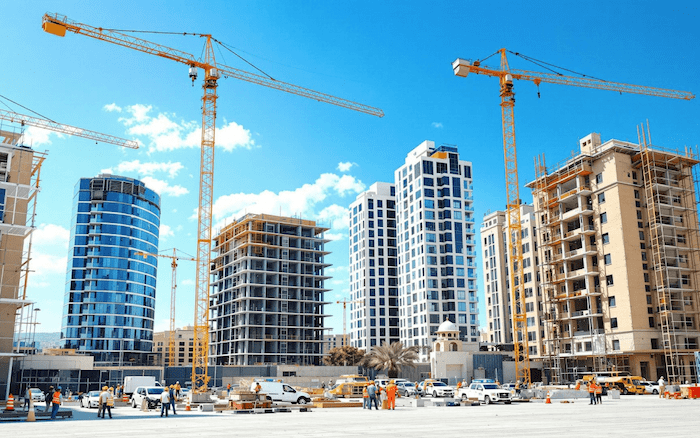
Overdevelopment has gone from being a minor local frustration to one of the biggest talking points in the entire election.
The sheer pace of construction, vanishing green spaces and the growing population density have left many residents questioning how much more development the islands can realistically handle. Trying to balance economic growth with everyday quality of life has quickly become one of the most sensitive issues on the ballot.
The daily traffic grind
Traffic is the ultimate unifier in Malta because absolutely everyone faces it. The islands’ roads are under immense pressure, and infrastructure has become a huge political battleground in this election. Both major parties are now scrambling to convince an increasingly sceptical public that they have the blueprint to finally tackle Malta’s permanently clogged roads.
What the parties are promising
Election campaigns in Malta tend to involve no shortage of flashy promises, and this year is proving no different.
The Labour Party
Labour has centred much of its campaign on economic stability and financial reassurance, tying much of its messaging into broader slogans such as “Int u Malta” (You and Malta) and “Il-Ħolma Tiegħek” (Your Dream).
Among the headline pledges designed to protect people’s wallets are a 5,000 euro payment for every child born in Malta, alongside plans to extend maternity leave to 26 weeks. For workers, Labour is also floating a 1,000 euro yearly tax-free bonus for employees, self-employed workers, and part-timers, alongside a full tax exemption on the first 30,000 euros earned by young workers and startup founders.
The party has also floated interest-free loans for first-time buyers, continued energy subsidies, and a new Mobility Wallet scheme that would reward residents for using public transport and leaving their cars at home more often. Labour has additionally unveiled plans for a proposed light rail system as part of its wider push to tackle Malta’s worsening traffic problem.
The Nationalist Party
The Nationalists, meanwhile, are steering the conversation toward public services and long-term structural overhauls under the banner of “Nifs Ġdid” (A Fresh Start).
Alex Borg’s platform is making a major play for healthcare, promising a brand-new hospital in the north of Malta, a new 400-bed hospital in Gozo, the expansion of Mater Dei Hospital and free cancer treatments across the board. For education, the PN is pledging to build a new school every year, modernise classrooms and hike student stipends by 25 percent. On the lighter side, they have proposed a 300 euro grant for a smartwatch for young people, linked to fitness tracking.
When it comes to traffic, Borg has pledged to kickstart a major underground metro system within his first 100 days in office, including an 11.5-kilometer line with eight stations and 10 trains, with the first phase targeted for completion within five years.
One proposal likely to catch the attention of expats and international workers, however, is the PN’s promise to overhaul Malta’s residency and work permit system, including the introduction of clearer quotas tied directly to the country’s labour market needs.
What to expect on the streets
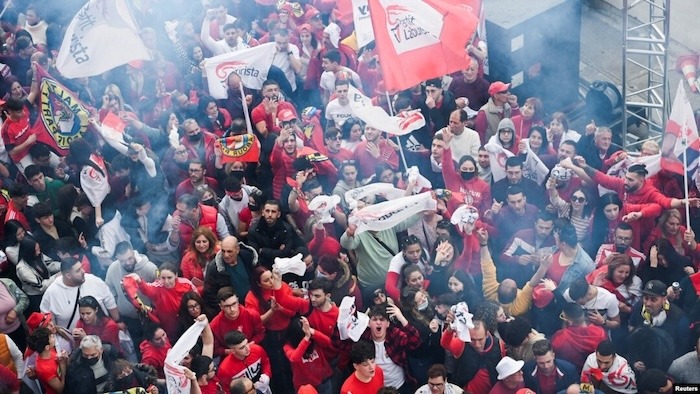
Election season in Malta really is a different beast entirely. One minute you’re simply minding your own business and grabbing a flat white, and the next you’re stuck behind a huge convoy of flag-covered cars while fireworks start exploding somewhere in the distance for reasons nobody seems entirely sure about. It’s noisy, emotionally charged, total chaos at times, and really, you haven’t got much chance of ignoring it.
The partisan temperature will keep rising until polling day on 30 May. Once the counts are in, expect the streets to erupt on 31 May. Whichever side claims victory, their supporters will hit the roads in massive, horn-blaring car processions that will bring local traffic to a complete standstill well into the early hours of the morning.
If you are chatting with colleagues or locals at the village bar, it is generally wise to listen more than jump in. Political allegiances here can go back generations, and people often feel very strongly connected to them.
What expats need to watch this space
The short answer is that unless you hold Maltese citizenship, you will not be able to cast a ballot on 30 May. While registered European Union citizens can participate in local council and European Parliament elections, the national general election is strictly reserved for citizens. For British residents, voting rights also changed significantly following Brexit, particularly when it came to European elections.
However, with Malta’s expat population now well above 100,000, international residents are becoming a much bigger part of the national conversation. Decisions made by the next government on work permits, rent, healthcare, and public transport will inevitably affect the daily lives of thousands of people living on the islands.
Look past all the campaign slogans, flags, and those massive billboards along Tal-Barrani road, and you’ll find some very real questions about where Malta is heading next. Housing, infrastructure, healthcare, development and the pace of growth on the islands are all firmly in the spotlight this election. For expats, understanding the election cuts deeper than politics alone. It is very much about understanding the future of the place you currently call home.

Dayna Camilleri Clarke
Dayna Camilleri Clarke is an award-winning writer, editor, and leading media voice from Malta, recognised for her contribution to the islands’ cultural and editorial landscape. Having held prestigious editorial roles, including editor of Air Malta’s in-flight magazine and the Malta Business Weekly, she is now a contributor to Oh My Malta and is widely regarded as a destination expert on Malta, Gozo and the wider European landscape, known for her elegant storytelling and astute editorial voice.