The world is watching Albania’s largest civic protest movement since the fall of communism. But the flamingo is just the beginning.
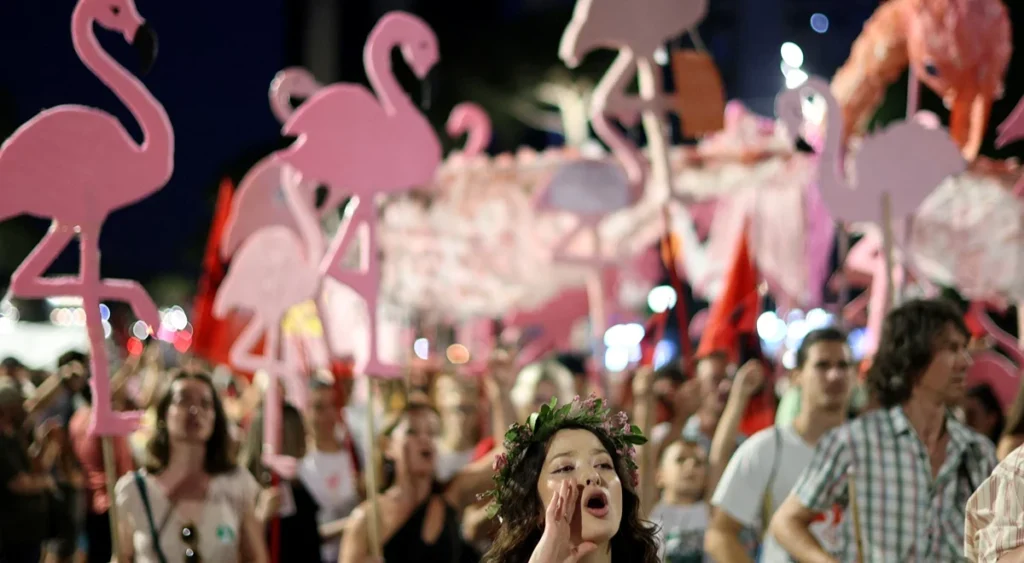
The first thing that struck me about the protest in Tirana was not the noise. It was the flamingos. Hundreds of plastic, cardboard, and hand-drawn birds bobbed above a sea of tens of thousands of heads as dusk settled over the capital. Families stood alongside pensioners. Young professionals mingled with students. Albanian flags caught the last of the light along the boulevard stretching from the Prime Minister’s Office towards Skanderbeg Square.
The noise was extraordinary. But it was the sheer, breathtaking scale of this pink-tinted defiance that truly stopped me.
From a distance, it would have been easy to dismiss this as another political rally. The Balkans are no strangers to demonstrations. Yet standing among the crowd, something felt different. This wasn’t the usual theatre of party loyalties and factional grievance. This was something rawer. Half an hour earlier, I had been sitting in Komiteti Kafé, surrounded by mismatched communist-era furniture and exposed brick, when a protester silently dropped a plastic flamingo on the table beside me and kept walking. No explanation offered. None was needed.
‘The last straw’
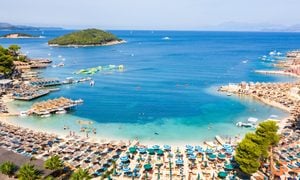
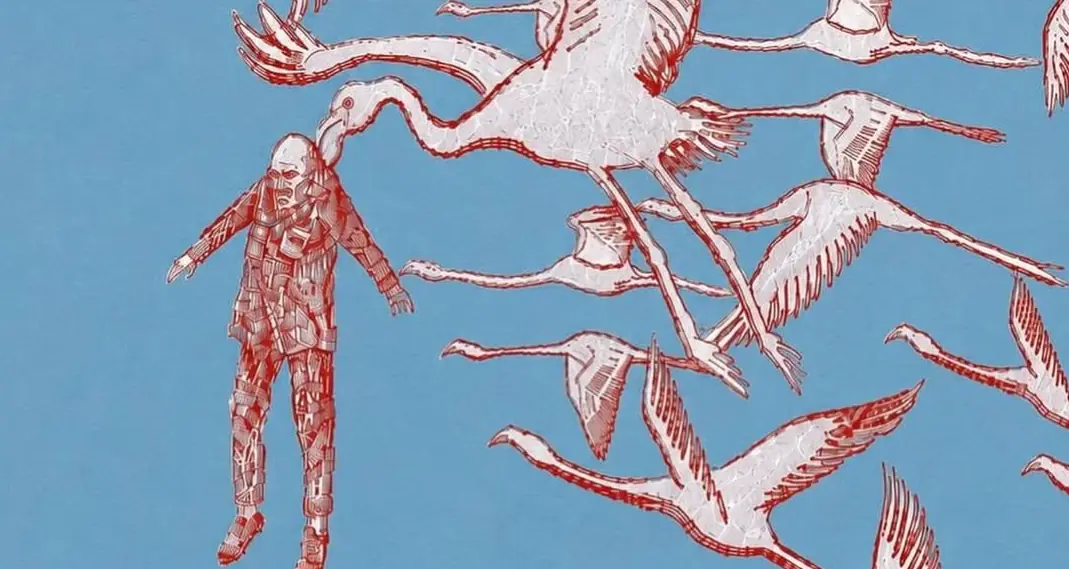
The flamingo has become the unlikely emblem of this historic uprising, marking Albania’s most significant independent mobilisation since the fall of communism. It began, officially, over a government-approved 5 billion euro luxury tourism project in Zvërnec, a protected coastal wetland in the south that happens to be home to a colony of the pink birds. The developer linked to the project is a company connected to Jared Kushner, son-in-law of Donald Trump. That detail gave the story international legs. But ask the people filling these streets every evening at seven o’clock why they are here, and you quickly realise the flamingo is almost beside the point.
Ebi had attended every single day of the protests since they began. A thirtysomething graphic designer, he lit a cigarette next to me and looked out at the crowd. “I don’t come here because of a bird. This was the last straw. The development, yes, but it’s sverything behind it. The corruption where nobody is held accountable. The feeling that the country is being sold off, piece by piece. We’ve been swallowing this for years.”
That weariness cut right across the boulevard. Standing nearby was Denedra, a university student who had travelled for hours from the south just to be here. She had never joined a demonstration before, having always questioned the point of protesting. “But then I saw the video of security guards dragging the protester across the sand at Zvërnec, and something clicked,” she said. Realising the person on the ground was simply an ordinary citizen shifted everything for her: “That could be any of us.”
Filmed on a mobile phone on 30 May, the footage spread rapidly across social media, turning a localised environmental protest into a national crisis. Private security guards hauled a protester across the beach while police officers stood by and watched. The images cut through in the way that only visceral injustice can.
Changes … on the surface
Prime Minister Edi Rama has dismissed the movement as a “hybrid war” orchestrated by foreign actors, digital mercenaries, opponents of Trump, and even Iranian state-sponsored interference. Older Albanians recognise this instinctively. It is the language of external enemies, the same language used during the communist period, when dissent was routinely blamed on hostile foreign forces rather than anything happening at home. That Rama has reached for the same playbook may tell you more about the state of Albanian democracy than any protest banner. And if anything, it seems to be bringing more people onto the streets, not fewer.
What made the movement particularly striking to me was the contrast between Tirana’s surface and its undercurrents. Over the past decade, the city has been transformed. Gleaming apartment blocks pierce the skyline. International hotel brands have arrived. Rooftop bars serve local organic wine and in-house craft beers to digital nomads.
To a visitor, Tirana feels like a capital very much iin the midst of a renaissance.
Beneath the cranes and brightly painted façades, the picture is far more complicated. Economic growth has not been evenly shared. Albania has lost around 40 percent of its 1990 population to emigration, one of the highest rates anywhere in Europe, and wages remain stubbornly low by European standards. Many of the people I spoke to had no objection to development, or even to foreign investment. What they couldn’t stomach was the feeling that decisions affecting their landscape, their coastline and their public institutions were being made without them, and for someone else’s benefit.
The protests have not gone unnoticed beyond Albania’s borders. The European Parliament has since passed a resolution expressing serious concern about the Vjosa-Narta protected area, calling for an immediate moratorium on construction permits. It matters, not least because Albania’s EU accession process is built on commitments to environmental protection and the rule of law. But whether Eurocrats can turn this statement into actual, teeth-bearing pressure is another matter entirely.
Every evening, the masses return. The flamingo banners come out. The chants roll down the road towards the Prime Minister’s Office. The people filling these streets night after night are doing so because they feel, collectively and with some force, that the country they live in is not listening to them.
Whatever the fate of the resort, Albania’s flamingos have already become symbols of something much larger. That is not a hybrid war. That is a democracy trying to hold itself to account.
––––––––––
Read more about Albania here in Dispatches’ archives.
See more from Dayna here.

Dayna Camilleri Clarke
Dayna Camilleri Clarke is an award-winning writer, editor, and leading media voice from Malta, recognised for her contribution to the islands’ cultural and editorial landscape. Having held prestigious editorial roles, including editor of Air Malta’s in-flight magazine and the Malta Business Weekly, she is now a contributor to Oh My Malta and is widely regarded as a destination expert on Malta, Gozo and the wider European landscape, known for her elegant storytelling and astute editorial voice.