
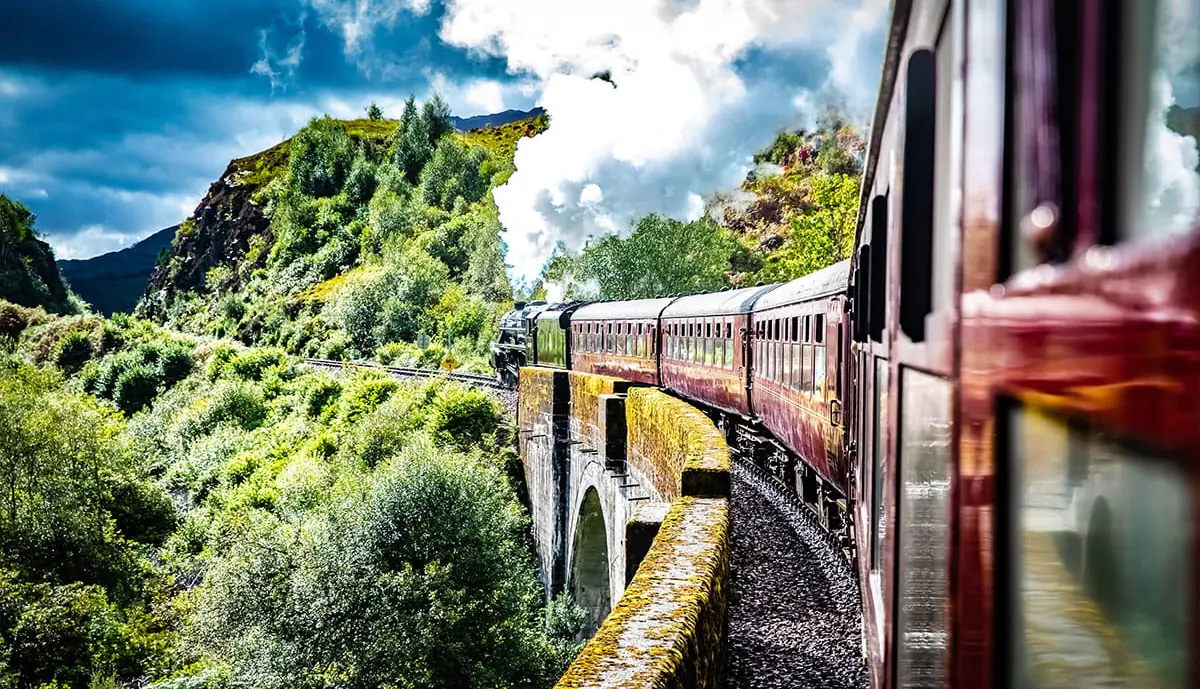
All aboard! In the United States, domestic travel means a road trip more often than not. Perhaps, for long distances like between coasts, a flight is the way to go. Now that you’re living in the United Kingdom, though, it’s time to get your thinking on a different track– literally. Train travel across the UK is a convenient and popular way to travel, both for business and for pleasure. Due to the UK’s smaller size, domestic flights are considerably less popular. While hopping in the car can be an option, many find it’s less convenient than a train, especially for travel between cities, where driving in town can be tricky or unpleasant.
But, while you can simply purchase a train ticket whenever you want (assuming there are still seats available on your preferred train…), that would mean missing out on some of the best opportunities the British train system has to offer. So, what do you need to know before riding the rails?
Let’s take a look:
Railcards rule!
You may have heard of Eurail cards, which are a staple for college students having a summer adventure, but did you know that you can buy railcards for domestic travel within the UK? And honestly, you probably should.
Railcards come in a wide range, and you’re probably eligible for at least one type of railcard. To figure out which one is best for you, go to the National Rail website to learn about the different varieties. There are railcards for those aged 30 and under, railcards for seniors, veterans, and people with disabilities and even railcards for families, couples and group travel! Each one starts at £35 for a year, and can save you up to a third of your ticket price when you travel, meaning they generally “pay for themselves” if you take multiple trips per year.

Shopping sales
The UK loves its “summer sales” at clothing stores and department stores, but what about travel sales? Yep, they’re a thing. Train tickets can be heavily discounted with annual sales, flash sales and more – and if you’re interested in a spontaneous getaway, these can be a fantastic way to do it.
Due to the fact that UK trains are no longer nationalized, different lines offer different deals, sales and price points, with some, like LUMO, specializing in budget fares, while others, like the Caledonian Sleeper, offer higher-priced luxury experiences. However, the quickest way to compare price points is to go to the Trainline website and pop in your preferred travel route; they’ll show you all options, generally with the least expensive first. You can also sign up for the Trainline mailing list, and be alerted about flash sales and discounted routes, which can help you plan your trip.
What about luggage?
On the one hand, there are no official limits to how much luggage you can take on a train. Sounds like an overpacker’s dream, right? Well, not quite. While you can technically take as much luggage as you like with you on the train, finding somewhere to put it can be another story. You’ll find larger luggage racks at the front and back of each train carriage, but these fill up fast, especially on crowded trains. Meanwhile, the overhead luggage racks are smaller and narrower than those on an airplane, so you may struggle to fit larger “carry-on” bags in them,
On the other hand, if you get snacky when you travel, you’re very much in luck. While most UK trains have “café cars” where you can purchase food and drink, you can also pack as much of your own as you like, including hot food (for instance, if you get a burger to go at the station) and even alcohol. Just be aware that bathroom facilities on the train can be very basic, and if you do choose to bring and consume alcohol, any overly rowdy, drunken behavior can get you removed from the train.
Getting to the station on time
One thing that may take those used to domestic air travel some getting used to (but is actually a major perk of taking the train) is that you don’t have to leave huge amounts of time between when you arrive at the train station and when your train is due to leave. In fact, many train stations won’t even announce what platform your train is due to leave from until around fifteen minutes before it’s set to leave.
If you’re traveling from one of the larger stations (London Euston, Waterloo, or King’s Cross, Manchester Piccadilly, etc.), you may want to arrive a little on the early side to grab a coffee or similar to enjoy on your journey. Many stations also have pubs, shops and restaurants inside to keep you busy while you wait. On the other hand, small-town or rural stations have fewer amenities, so be sure you have everything you need before heading to one of them for a train.
Even if you’ve gotten an excellent price on your train tickets, it can still be frustrating when your train is delayed, especially if it’s for a larger chunk of time. The good news, though, is that you might be able to get your money back. Under the UK’s “Delay Repay” program, train companies are required to compensate you for delayed or cancelled trains. How long the delay has to be before you’re entitled to compensation will depend on the train company you’re booked with, but generally it will be between 15 and 30 minutes.
Compensation will not be automatic; you’ll have to request it. There will typically be an online form you can submit, and then you just have to wait for your request to be processed, which can take anywhere from a few days to a few weeks.
Setting off abroad
It wouldn’t be a post about train travel in the UK without mentioning, well, train travel outside the UK. Some of the most popular UK train journeys are to Continental Europe, via the Eurostar. Because the Eurostar isn’t part of the British rail network, you won’t be able to use your railcard when you book, although tickets do go on sale semi-regularly.
If you’re taking a train from the UK to Continental Europe, many of the typical “UK train tips” still apply, including advice on luggage and the fact that delays will entitle you to compensation. The one major difference, though, is when to show up at the station. The Eurostar recommends you arrive at the train station two hours in advance. This is because you’ll be completing your customs screening through passport control of the country you’re traveling to before you board the train. This means that once you arrive in the country you’re going to, you can simply disembark the train, and be on your way!
Whether you’re planning domestic or international train journeys, train travel is a relaxing and fun way to get around the UK, and can be one of the more affordable ways to travel if you know what you’re doing.
So have fun, and happy traveling!
–––––––––––
See more about train travel here in Dispatches’ archives.
Read more from Ellery here.

Ellery Weil
Dr. Ellery Weil is a writer and historian based in London. She was born in Washington, DC, raised in Maryland, and attended undergrad in Ann Arbor, Michigan, before moving to the UK to attend grad school at University College London, where she earned her PhD in History. She lives in London with her husband, where you can find her writing, reading, petting dogs in Regent's Park, and exploring the city's antique markets.