
Living in the United States, money always felt fast. Quick to come and even quicker to go. Salaries are higher. Credit card applications arrive in the mail. Mortgage amounts feel generous. Risky get-rich-quick schemes are celebrated. In Europe, everything feels… slower. Harder. More annoying.
That’s not an accident. It’s policy.
It’s not to block consumers from accessing money; it’s to protect them, especially from debt spirals. So what do I mean when I say it’s sometimes harder?
Here are some of the roadblocks that I’ve personally encountered:
- Credit cards are stingily given out, and mainly to people with fixed contract salaries.
- As a freelancer with variable income and no fixed contract, yet a pool of invested assets, my assets didn’t contribute to the size of the mortgage that my partner and I could get. Zip, zero.
- Want to set up an investment account? Well, you need to “test out” of certain questions to assess your investment and risk knowledge.
- Online transactions with a European credit card and debit card usually require an extra verification step … or two. Safe, but sometimes annoying when trying to check out quickly.
Financial rules in Europe are designed around one idea: stopping problems before they happen. That’s why borrowing, investing and paying often feel stricter — but also calmer.
The system prefers stability over speed and rules intentionally slow things down: fewer flashy products, fewer loopholes, fewer debt traps and escalations. The trade-off is less “easy money,” but also fewer financial disasters for households.
Take that compared to U.S. credit card companies that live off their customers’ debt spirals. That’s their whole business.
Some would argue that the system in the U.S. maximizes access to credit, and while that’s probably true, the road is strewed with financial damages and bankruptcies.
The EU assumes consumers misjudge risk and tries to protect them from the start, while the US assumes disclosure within super tiny fine print is enough.
The EU has set forth guidelines to protect consumers in the financial sphere, but it’s up to each country to implement its own rules. Having lived more than a decade in the Netherlands, here are a few ways that Dutch laws protect consumers that I’ve seen from my personal experience.
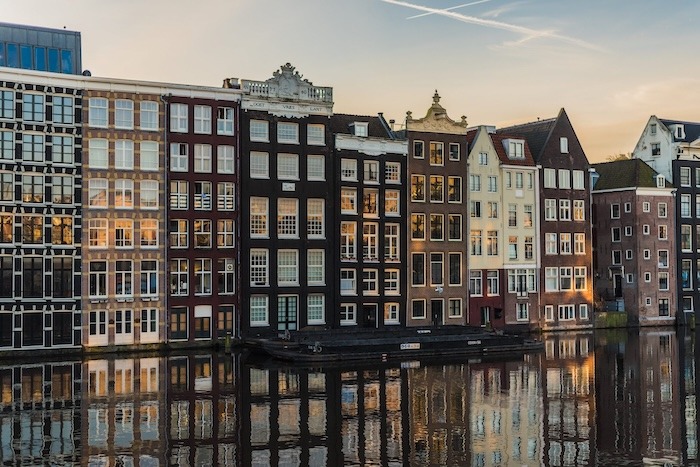
Stricter mortgage rules and limits
Mortgage rules are strict in Europe compared to the U.S., but the Netherlands is one of the most conservative countries. The rules attempt to prevent people from accumulating too much housing debt and also to stop real estate speculation.
Mortgages are only given based on fixed employment contracts. So yeah, it ultimately sucks if you are an entrepreneur or have significant assets but a variable salary.
Banks also require you to have an advisor tell you which term and interest are best for your situation — a service that requires an additional fee. You can pass an online knowledge test to be exempt from this rule, but otherwise, it’s required and for good reason. Banks don’t want borrowers to choose a fixed term for 10 years and a variable interest rate for the rest without knowing what that actually means. Otherwise, they could be shocked when the payment amount changes after 10 years.
Want to flip a house using a mortgage? Well, Europe (especially the Netherlands) is not gonna be your locale. The Netherlands has harder rules for second house purchases (they don’t qualify for standard residential mortgages), and they don’t like to lend money for houses you won’t live in.
Credit cards are pretty boring, not flashy
Low limits. Interest starts accumulating quickly. Fewer rewards. Little encouragement to carry a balance. Dutch credit cards feel almost useless if you’re used to the U.S. system, and that’s the point.
Credit cards are not given out like candy at a carnival, like they are in the U.S. As one example, the ABN Amro credit card requires a minimum net monthly income or a certain asset level to even apply. The basic card shows that you only have 21 days to pay interest-free, compared with the standard 30 or 31-day term in the U.S.
European regulators don’t want credit cards to become long-term debt machines. They’re short-term payment tools, not lifestyle financing to earn airline miles or cash points. If you can’t pay it off quickly, there’s a system in place designed to nudge you to stop using it.
Credit cards have lower interest and quicker grace periods
However, although they aren’t flashy, Dutch credit cards have better terms for consumers.
Have you ever had experience with trailing interest/residual interest on your credit card? This is what it’s called when you pay off your balance in full, but you keep paying interest the next month because you carried a balance the month before.
I recently learned that if this happens in the U.S., you usually have to stop using your credit card for an entire month in order to reset the grace period. Otherwise, this interest keeps on accruing based on your rolling balance. A sketchy business practice, if you ask me.
In the Netherlands, this usually doesn’t happen. The terms are often clearer, the grace periods are reset sooner and the interest rate is lower.
Currently, U.S. interest rates average around 19.6 percent, while the Netherlands has a maximum interest rate of 15 percent that credit card providers can charge, a rate that hasn’t been updated since the beginning of 2024.
All of this means that, in the Netherlands, debt is meant to be paid down, not dragged out.
Bans misleading financial advertising
Mislead a consumer in your advertising? Well, you might get fined.
Look around the Netherlands, and you will quickly see these signs everywhere you look:
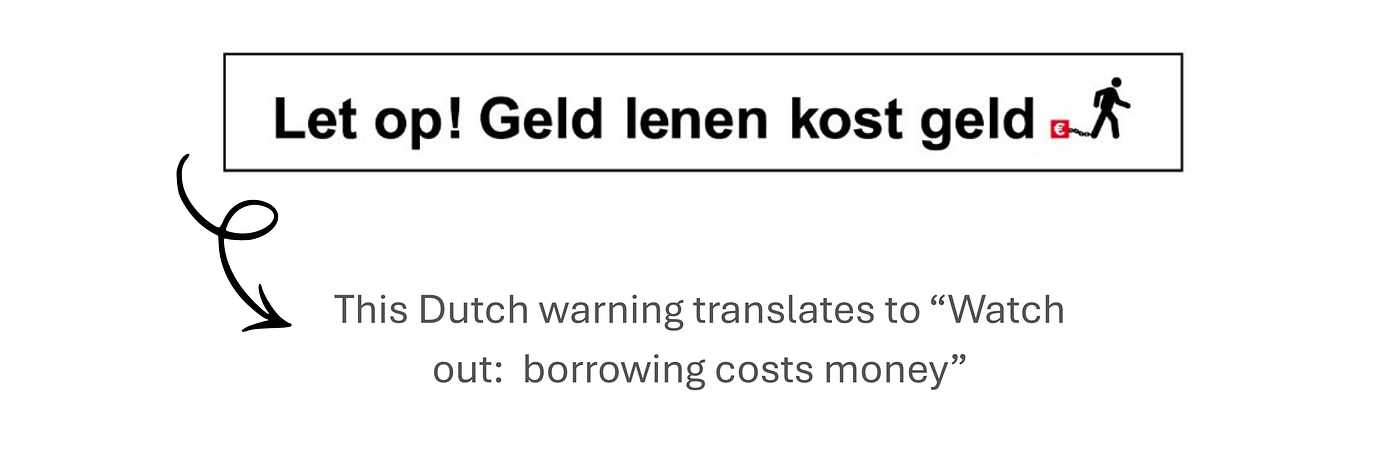
It means that borrowing costs money. For any advertisement — print or online — this warning must be present. The rules even get super specific. In print advertisements, the warning must be centered at the bottom, and on websites, it must be centered at the top of the advertisement. There are detailed rules on this. It must also be said in relevant radio or podcast advertisements.
Contract cooling-off periods
In the Netherlands, you get time to change your mind. When my partner and I signed our mortgage, we had a period of time to walk away. This cooling-off period is usually 14 days and applies to many financial contracts and purchases.
Think mortgages, new energy contracts, subscription services, insurance policies and more.
If you sign something and rethink it, you can walk away within days — no tricks, no penalties. It isn’t hidden in the fine print; it’s a commonly known practice. And it’s not just a Dutch practice, it’s a European policy. While some U.S. states also have cooling-off periods, they are generally shorter, such as 3–5 days. The cooling-off period is meant to change the behavior of the lending institutions as well. The thought is that companies will sell more cautiously because consumers have an exit. It’s not just about fast talking to get to a quick signature.
These are just a few of the ways that the Netherlands and Europe protect consumers from debt and sketchy financial schemes. Yes, sometimes the rules are frustrating, but one thing is for sure: the population is better protected.
Having seen the shady practices of credit card companies, it’s clear that American companies monetize debt spirals and the misery of people living month-to-month.
While the U.S. system says, “Here are your options. Read the fine print and choose wisely,” the European system says, “Some options should never exist.” And now that I’ve lived in both the American and European financial systems, it’s hard to unsee the difference.
–––––––––––
See more about the Netherlands here in Dispatches’ archives.

Lane Henry is an accidental long-term expat. She is an American who came to the Netherlands for two years—or so she thought. She has now lived in the Netherlands and explored Europe for over a decade.