
(Editor’s note: This post on Lithuania is part of Dispatches’ Tech Tuesday series. Dispatches covers tech because so many of our highly skilled internationals are engineers, entrepreneurs and investors.)
Lithuania has fewer than three million people, yet it has produced six tech Unicorns in less than a decade. With just 2.9 million inhabitants, Lithuania ranks among Europe’s highest-performing startup ecosystems, alongside countries such as the United Kingdom, the Netherlands, Germany and France. By comparison, the Netherlands, with 18 million people, has produced 18 Unicorns in the past 10 years.
The latest addition is web intelligence company Oxylabs, which joined the Unicorn (a $1 billion valuation) ranks last month after a 113.6 euro million investment that valued the company at 3.1 billion euros. Oxylabs developed web scraping tools, proxy networks and AI-driven data collection services.
Oxylabs joins a growing list of Lithuanian startups that have crossed the billion-dollar valuation mark. The first was Vinted, a Vilnius-based platform for second-hand fashion and pre-loved items. In 2019, the company raised 128 million euros in a funding round, making it Lithuania’s first tech Unicorn. Available in countries such as France, Germany, Belgium, Spain and the
Netherlands, the company launched in Australia on 1 July 2026. NordVPN and women’s hormonal health app Flo are two of the unicorns that were born in the country. Cast AI, a cloud infrastructure automation and cost-optimization startup, reached Unicorn valuation in January.
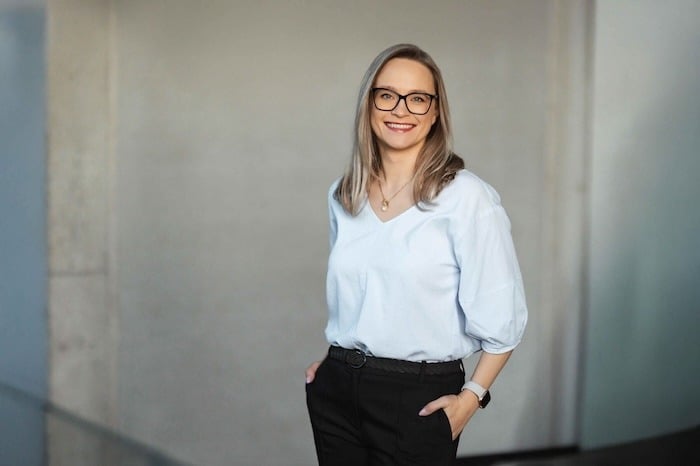
What makes Lithuania so special that some of the world’s most popular digital startups originate from it? According to Gintarė Verbickaitė, CEO of Unicorns Lithuania, the largest startup association in Lithuania, the agility of the country and the fact that the community has embraced technology are some of the key drivers of Lithuania’s startup ecosystem.
“In Lithuania, it’s quite simple to set up a company,” said Verbickaitė. “You can hire people easily, and there is really good talent with international experience.”
Community driven ecosystem
One of the main reasons behind Lithuania’s thriving startup ecosystem, Verbickaitė pointed out, is the community, which is very close-knit and supportive of new entrepreneurs. “Founders who have built companies successfully are becoming investors and mentors,” she said. “They keep the know-how and keep building the ecosystem with their experience and resources, so we see second or third generation of founders further developing the ecosystem, which is really inspiring.”
Successful founders are recycling not just capital but also experience, putting time and effort into new generations of startups. Former entrepreneurs become mentors and advisors to help younger founders avoid mistakes and access international networks.
Thinking globally
In Verbickaitė’s view, another key driver of the success of companies founded and developed in the Baltic country is its small size. “Very few companies would operate only in the Lithuanian market,” the CEO said. “Most of them are focused internationally, so the employees already have the experience of building, promoting, and selling a product that would be globally competitive.” The small market, however, is a double-edged sword. While it offers limited opportunities for entrepreneurs to grow on a local level, it pushes them to think on a larger scale from the early stages of the company.
If an entrepreneur sets up their company in a market such as France or Germany, there is a chance they’re happy with the local market. “Then you don’t have to think globally,” said Verbickaitė. In Lithuania, on the other hand, founders understand that they need to compete with the rest of the world. “This changes the mindset of a founder and helps to build the type of companies that succeed.”
Financial incentives
Lithuania also offers generous financial incentives for startups. For example, Verbickaitė noted that there is a “very generous” tripled tax deduction for R&D expenses. Additionally, as of 1 January 2026, newly registered small companies in the country pay 0-percent corporate income tax for their first two tax periods. Corporate income tax in the country operates on three levels.
The standard rate is 17 percent, while small companies with annual revenue below 300,000 euros pay 7 percent.
Dividend income is taxed at 15 percent, making the country competitive in comparison to other European jurisdictions where dividend tax can be more than 20-30 percent. Verbickaitė also highlighted the favourable taxation of employee stock options that Lithuania offers, namely at 15 percent, to attract top talent.
International talent pool
Another ingredient in the success of the Lithuanian startup ecosystem is its international talent pool. “English is the business language, and pretty much the workforce in the tech sector is fluent,” Verbickaitė noted. She added that he tech skills in the country are “really strong.” For Verbickaitė, Lithuania offers not only a good talent pool with international experience but
also a “really good quality of life.”
According to the European Commission’s Education and Training Monitor 2025, Lithuania continues to prioritize STEM education, especially because employers face a shortage of STEM professionals. Despite this, STEM programmes completion rates are 61 percent, with relatively low dropout rates (9 percent).
Startup visa
Lithuania is also a good place to start a company, even for international entrepreneurs outside of the EU. The country offers a startup visa, aiming to attract non-EU talent. The scheme offers a temporary residence permit for two years with a chance to extend it to five years, as well as residence permits for family members.
Additionally, those who receive it meet lower initial capital and hiring requirements compared to other migration pathways for business. All in all, a winning formula in the war for talent.
–––––––––
Read more about Lithuania here in Dispatches’ archives.
See more from Polya here.

Polya Pencheva
Polya Plamenova Pencheva is a young Bulgarian journalist based in Brussels, Belgium. Polya holds a Master's degree in journalism from Rijksuniversiteit Groningen and loves writing and telling the untold stories of interesting people. You can find her dining at cute café, shopping at markets, scouting second-hand shops or just chillin' at home with something great to read.