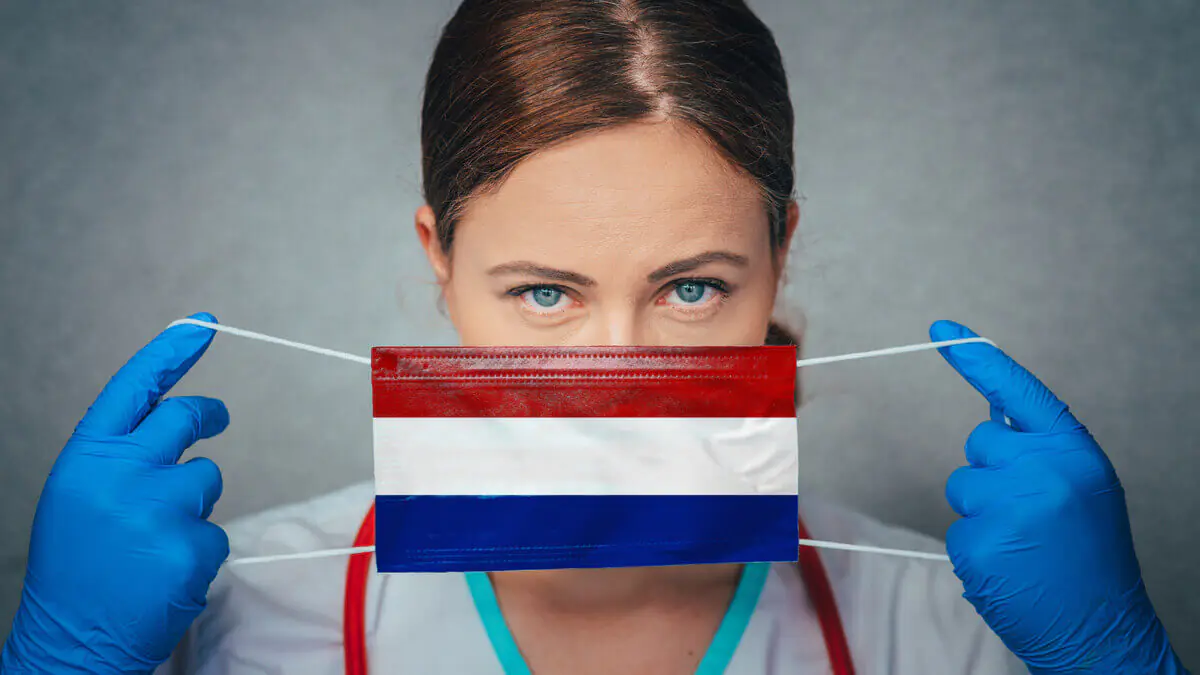
Dealing with medical issues and healthcare in an adopted country is very like the feeling you have when you first move as an expat.
· You don’t speak the language.
· You don’t understand the customs.
· You are not oriented to the geography.
· You yearn for support from family and friends
Unfortunately, this is a situation that my husband and I have very recently become acquainted with.
We are so grateful we live in the Netherlands where English is widely and easily spoken.
Many expats also have this health experience in countries where English is not spoken so fluently by the locals. The Netherlands fluency in English is enormous help, as our Dutch is embarrassingly below average. But even friends who are fluent in Dutch admit they deal with medical issues in English. Duolingo and Dutch classes rarely cover medical terms like “mond-, kaak-, en Aangezichtschirurgie” (Oral and Maxillofacial Surgery).

In your face
The Dutch are a pragmatic people and there is a level of surprise as you experience the locals “bedside manner.” Of course, they are kind and friendly but also brutally honest, which if you have not lived here long can, I am sure, be a little surprising. We have lived here more than 10 years but have still found the “in your face” conversations about very personal issues uncomfortable. For example, hormone therapy (ADT) for prostate cancer is known as “chemical castration” here. This is a correct term, but a shocking phrase to have thrown at you when discussing treatment, even when delivered in a kindly way.
The openness extends to hospital etiquette, so don’t expect superfluous privacy such as gowns in clinics. The first time I had a mammogram and breast ultrasound here I was surprised there wasn’t a gown in the cubicle. But I did as instructed and took “everything on top” off and waited, rather uncomfortably, to be called. I was even more taken a back when a male technician came to collect me and shook my hand as he introduced himself as I stood there exposed.
My husband has also experienced this “openness” in his dealings with the urology department. Luckily, we both have a sense of humour and have covered our awkwardness with witty remarks such as mine to the male technician, “It seems awkward that I am here with my boobs showing and you still have your trousers on!”
It’s a good job the Dutch share a similar sense of humour to the Brits.
The details
The Dutch healthcare is a hybrid system balanced between public and private. A kind of functioning mish mash of healthcare in the United Kingdom and the United States.
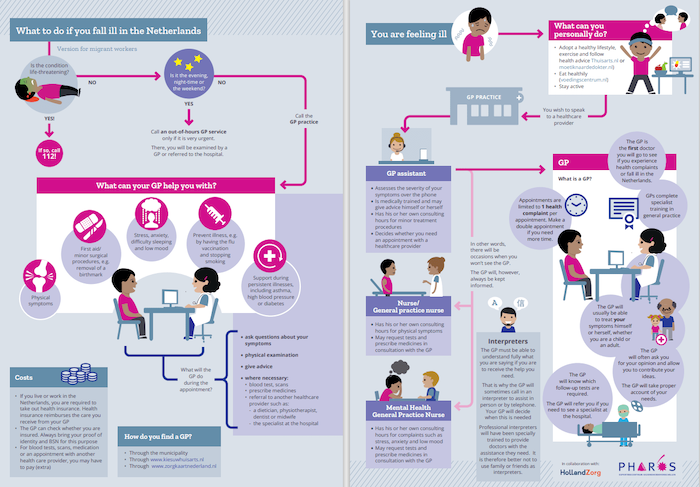
Every resident is required by law to have basic Dutch health insurance with no refusal for “pre-existing conditions.” Kids under 18 years old are insured for free. This insurance covers costs for visits to your general practitioner, medication and visits to the hospital and everyone with the same policy pays the same amount regardless of age or health. You can also add extras such as dental, physiotherapy, eye and travel healthcare if you wish. If your income is below a certain level, you can apply for a government subsidy.
Your “huisarts” (primary care or general practitioner) are the gateway to all treatments and referrals, including mental health. The joke from expats is that the Dutch GP’s first response to many visits is “Take two paracetamol.” This can be true, but they are, in our experience, open to listen and will be honest. Maybe we are lucky but our GP has checked in frequently with us during this health crisis. If you need help outside regular hours then you visit your local “huisartspost,” an on-call GP. Going to the ER is strongly discouraged unless it is a life-threatening situation.
Dutch hospitals will use private clinics for routine procedures which keeps wait lists down and – as long as the clinic has a contract with your insurer – it is covered by your health insurance. If your local hospital has long waiting times for a procedure the insurance company is also obligated to find somewhere else for you.
Blessed to be here
Being a Brit who has lived in the US, the healthcare here in the Netherlands is a breath of fresh air. Care is excellent, you are not constantly negotiating with your insurance company, and, in our experience, the hospitals are well managed and modern. It constantly surprises us, in a good way, when there is access to free coffee while you wait and the hospital doesn’t resemble a Dickensian workhouse!
The Netherlands health system consistently ranks as one of the best in Europe and healthcare spending is higher per person than many EU countries and this is definitely reflected in the “well-being” rankings. So, as an expat living in the Netherlands, I would say our medical experiences have been far less stressful than they would have been if we were still living in the UK or the USA, for which we are so grateful.
Despite the language issues and unexpected nakedness, we do feel blessed to be in a country with a functioning healthcare system.
–––––––––
Read more about healthcare here in Dispatches’ archives.
See more from Jackie here.

Photographer/writer Jackie Harding was born in the United Kingdom. As a long-time expat, she lived in Boston for 12 years and in the Netherlands for the past 10 years.
Trained as a nurse in the U.K., she worked for nine years in the United States as a special education teacher’s assistant. Since moving to the Netherlands, she has discovered writing and photography.
Contributing to Dispatches since 2016, Jackie has written about her travels around Europe as well as about expat life and issues.
She also covered the Women’s March Amsterdam.
She’s married to British businessman Martin Harding and is the mother of two international adult children.