
Hello fellow travellers and kimchi aficionados. Are you dreaming of cherry blossoms, neon-lit nights, more side dishes than you can count and a plethora of face masks and 28-step skincare routine? Lucky you … I just got back from South Korea, and I’m here to help you avoid the classic tourist blunders. Like,
for instance, relying on Google Maps and ending up 300 metres from your actual destination.
Every.
Single.
Time.
This is the guide I wish I had in my pocket, complete with transport hacks, cultural tips, language basics, and a few lessons learned the slightly hard way. Let’s get into it.
Getting there
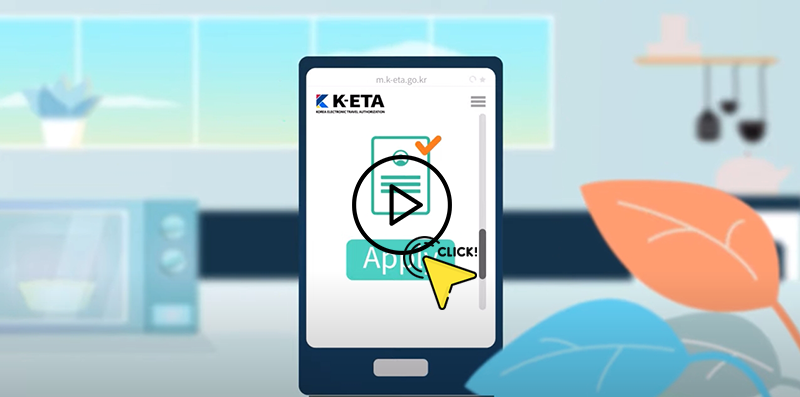
Most travellers need to apply for the K-ETA — that’s the Korea Electronic Travel Authorization – before flying. It takes about 10 minutes to fill out online and costs 10,000 won, which is about 6.80 euros (who the hell knows anymore with currency conversion rates? Trump, please stop messing the world up).
There are a lot of websites trying to scam you into paying four times that amount for the same thing, so make sure you use the official K-ETA site. If the website looks a bit like it was built in 2006 and doesn’t offer “premium assistance,” you’re probably in the right place. Here’s the link.
Getting around
Once you land in South Korea, you’ll quickly learn that Google Maps is basically decorative.
It doesn’t show walking paths properly, and public transport times are a mess. Instead, download Naver Map or KakaoMap. They’re made for Korea and actually tell you how to get from point A to point B without accidentally entering a parking lot.
A quick tip: They work best when you search addresses in Korean. You can usually find these by looking up the place on Instagram or using Google to get the Korean spelling.
To use public transport, which is fast, frequent and very clean, you’ll need a Tmoney card. You can get one at any convenience store, such as 7-Eleven or CU. The card itself costs 2,000 won, or about 1.36 euros, and you top it up with cash – no cards accepted. A standard subway ride in Seoul costs 1,500 won, roughly 1.02 euros.
To get from Incheon airport to central Seoul, you’ve got options. Taxis are expensive, trains are fine, but the best cost-to-comfort ratio is the Airport Limousine Bus. It costs 17,000 won – that’s around 11.56 euros – and takes about 70 minutes, depending on traffic. The stops are conveniently located near the areas where most tourists stay: Hongdae, Myeongdong, Gangnam, Insadong, you name it. There’s space for luggage and you don’t have to wrestle it up subway stairs.
If you’re planning to travel between cities (which you should!!) take the KTX — South Korea’s high-speed train. It’s fast, comfortable, and refreshingly punctual. I paid 48,000 won, which comes to about 32.60 euros for a one-way ticket from Seoul to Busan. The trains are quiet, clean, and the seats recline far enough for a very respectable nap.
Don’t buy your tickets from third-party websites that overcharge like RailNinja; use the Korail website or the official app.
Trains can book up quickly on weekends and holidays, so plan ahead.
Your boots are made for walkin’ (and slippin’ off easily)
You’ll be walking. A lot. South Korea is built for pedestrians. Between palaces, cafés, street markets, and spontaneous karaoke detours, your daily step count will double. Also, many places – including traditional restaurants, temples, some guesthouses, and homes – require you to take your shoes off. So bring shoes that are comfortable for walking and easy to slip on and off, and socks without holes in them. If you try to live your best Doc Martens life here, you’ll spend more time lacing and unlacing than sightseeing.
A few language basics
Language-wise, English is not widely spoken, even in major cities. But people are friendly and will often try to help you anyway. Learning a few phrases goes a long way.
• Hello is “annyeonghaseyo” (안녕하세요),
• thank you is “kamsahamnida” (감사합니다),
• and excuse me or sorry is “joesonghamnida” (죄송합니다).
Download Papago — it’s a translation app made in Korea and works better than Google Translate. When all else fails, mime enthusiastically and smile … it works surprisingly well.
Toilets, tissues and tiny surprises
The public toilets are generally clean, free and surprisingly high-tech – think heated seats, mysterious buttons, and auto-flushing. However, not all of them have toilet paper or soap. Some even require you to throw paper in a bin rather than flushing it.
Your best bet is to carry tissues and hand sanitizer with you at all times. It’s not glamorous, but it is essential.
Plugs are the same as in most of Europe (type C and F, I looked that up on Google, you’re welcome), and 220 V, which was a very pleasant surprise.
Eating your way through Korea
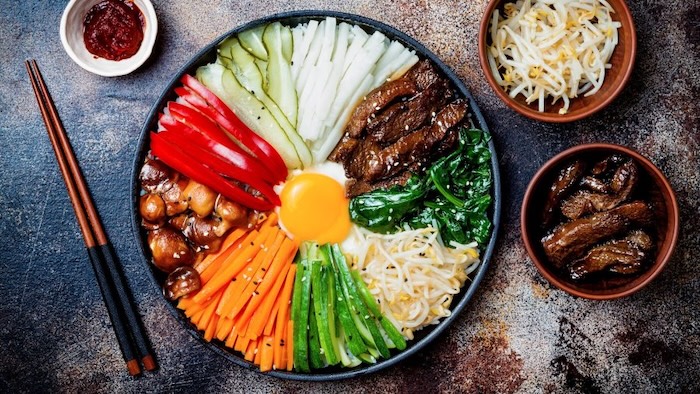
Food in South Korea is a national sport. From sizzling BBQ to bubbling stews, triangle kimbap from convenience stores to Michelin-starred kimchi, you’re in for a treat. A few things to know: tipping is not expected and can even be confusing. Side dishes are included and usually refillable, so don’t be shy about asking for more pickled radish. Water is self-service in most places, and metal chopsticks are the norm, which are beautiful, elegant and slightly slippery. You’ll either master them or quietly ask for a spoon.
Convenience stores in Korea are nothing like their sad counterparts elsewhere. They sell actual hot meals, cold beers you can drink at picnic tables outside and the best snacks you’ll ever try at 2 a.m.
Make sure to try banana milk (although I hated it but it’s a must-try apparently), spicy ramyeon and those frozen tubes of yoghurt that somehow taste like childhood joy.
Shopping and VAT refunds
When it comes to shopping, Korea is a skincare lover’s paradise. Olive Young is the go-to spot for all things beauty, from snail creams to serums that promise glass skin in 48 hours. I’ve heard that many of the other skincare shops sell dupes, so just to stay on the safe side I only shopped at Olive Young.
Daiso is great for quirky home goods, and the street markets are packed with trendy clothes and cute accessories.
If you spend more than 30,000 won in one go – around 20.40 euros – keep your receipt and passport handy for VAT refunds at the airport. The process is a bit of a faff, but it’s worth it if you’ve gone full retail therapy mode.
What not to do
A few unspoken rules to keep you out of social trouble:
• don’t talk loudly on public transport – it’s considered rude.
• don’t jaywalk unless you want to be stared at by every law-abiding citizen within a 20-metre radius.
Don’t worry if you get lost or mispronounce things, Koreans are generally kind and understanding, and a genuine smile works wonders.
South Korea is a fascinating mix of tradition and innovation, temples and tech, quiet forests and bustling cities.
Honestly, South Korea is the only country I’ve travelled to where every single meal, from street snacks to sit-down dinners was a home run. Not one dud. Just pure, unrelenting deliciousness. Show up with curiosity, a willingness to eat everything, a few key phrases, and shoes you can take off in under five seconds, and you’re bound to have an unforgettable trip.
When in doubt, bow slightly and say “kamsahamnida.”
–––––––––––
Read more about Korea here in Dispatches’ archives.

Charlotte Laborie grew up in England, Belgium and Switzerland. Charlotte then moved to Paris and graduated from Sciences Po Paris. She is still based in Paris, where she works in marketing.