Greek islands are the kind of holiday destination that doesn’t overcomplicate things but has everything it takes to keep you coming back for more. You find the one that suits you, and it becomes a perfect escape for the moments when you need a reset but don’t want to plan a trip from scratch. For me, that island is Rhodes. This spring I went back for the third time after a four-year break, and I have to admit, it has changed a bit too much for nostalgia to smooth some of the things over. Still, I don’t mind the imperfections — they only make your history with a place more honest and add another layer to the experience. So, here it is: my opinionated Rhodes guide for your 2026 trip.
When to go
The season in Rhodes starts in April and ends in late October, but the right timing really depends on the kind of holiday you’re longing for. I tried all options in between: early May, mid June and early to mid-September, and, I have to say, the weather difference can be drastic. If you seek a quiet escape and don’t mind wind and occasional rain, spring will do just fine, but for proper beach holidays it’s wise to aim for summer or early autumn.
However, the weather is not the only factor: depending on when you go, you’ll see a significant difference in crowds and hotel prices.
My latest trip was in the beginning of May, and despite a couple of fresh (and rainy) days, it might so far be my favorite. I’m not a beachgoer, I neither tan nor fancy heat, and I definitely don’t appreciate crowds, so for that kind of preference the setting was perfect. But if it’s not your thing, go later in the season.
What to see and do
Rhodes is a relatively small island, but it has no shortage of activities outside of chilling on a beach. Here’s my short list of must-visits for day trips:
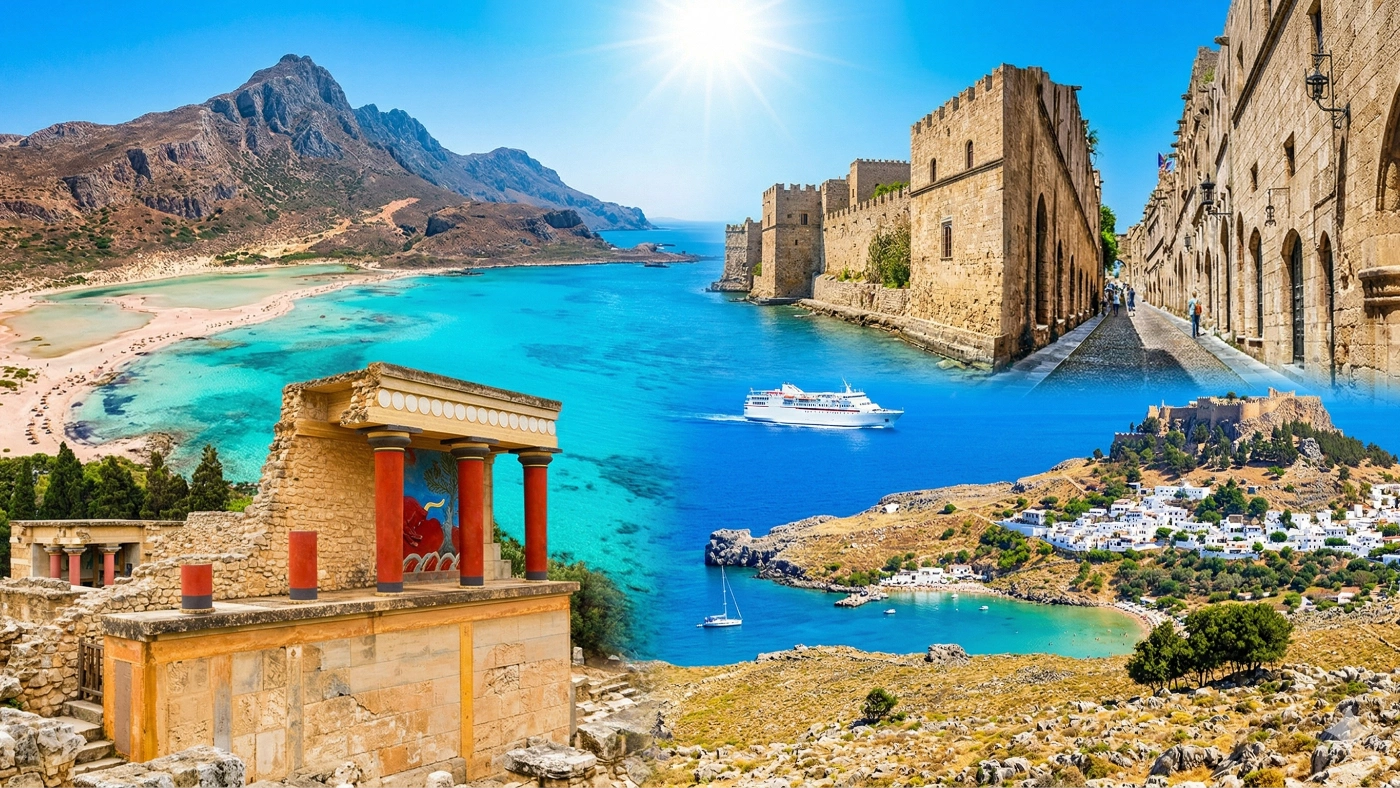
- Rhodes Town — particularly its old part, which happens to be one of the best preserved medieval settlements in Europe and a UNESCO World Heritage Site, and the harbor that used to host one of the Seven Wonders of the Ancient World — 33-metre-tall Colossus of Rhodes statue.
Make sure to carve out an hour to stop by the Archeological Museum of Rhodes, housed in the former Knights’ hospital. They don’t provide guided tours, but you can scan the QR code at the entrance to download a free app or book an external accredited guide in advance.
From my experience, not too many people actually go inside, so for 10 euros per person you’ll have the museum’s stunning medieval architecture and peaceful inner garden just for yourself. Trust me, after walking around the Old Town for 20 minutes, you’ll very much appreciate it.
- Lindos
The White Village – for charming pebbled streets, rooftop restaurants and hundreds of shops per square meter. It’s very touristy – especially in high season – and the service gets intrusive at times. But if you steer away from the main streets, you can enjoy the beauty of this place in peace.
St.Paul’s Bay – for a picturesque beach day, snorkelling or just eating out.
The Acropolys – for an ancient citadel on top of a cliff with the ruins of the Hellenistic Temple of Athena Lindia and gorgeous panoramic views.
Essential tip if you go by car: Come early in the morning to secure a parking slot. In the afternoon, the mission becomes practically impossible.
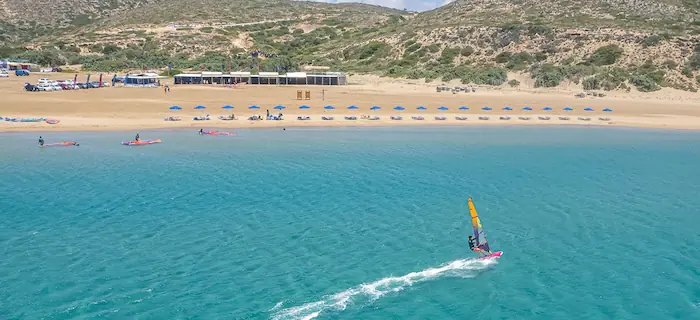
- Prasonisi – a spot where the Aegean Sea meets the Mediterranean. If you’re into water sports, this is your stop for wind- and kitesurfing.
There are many more things to do depending on your areas of interest — from visiting famous religious sights and monasteries to joining boat tours.
My favorite way of getting to know the local culture and life is by booking hands-on experiences led by small family-run businesses. Cooking classes have so far proved to deliver the best outcome. The one I had in Rhodes was hosted by a family of four and held in a 1952 traditional farmhouse carefully restored with artifacts from that period. It was more cultural than purely gastronomic. The hosts taught me more about Rhodes’ life and history than the two previous trips altogether, so I’d highly recommend it. You can book the class here.
Where to stay
There’s no shortage of accommodation, and it can genuinely match any budget, but the higher end is where things get the most interesting. You’ll find plenty of hotels offering rooms with swim-in or private pools and any facilities you can imagine. Many also offer all inclusive stays, but I personally never go for this format. No matter how amazing the in-hotel restaurants are, eating only there steals the chance of experiencing authentic local cuisine.
Here’s my biased advice (ignore it if you’re travelling with children): Book a hotel with breakfast only. They tend to be really good here, but have lunch and dinner in small family taverns. My all-time favourite is Taverna Ouzaki in Kolympia.
And if you want hotel recommendations, here they are: I stayed once in Lindos Aqua Terra and three times at SENTIDO Port Royal Villas & Spa, and liked both of them. But if I returned to Rhodes, I’d stay in the second one again, because it meets all of my requirements: adults-only, amazing breakfast, tennis court, spa centre and a private beach.
Rhodes isn’t the kind of destination that tries too hard to impress you, yet somehow it still does, unfolding differently to everyone. It’s not always perfect, but perhaps that’s exactly why it feels real. It can be windy, crowded, packed with tourist traps.
But despite all the imperfections it still has a lot to offer, so I’d definitely come back again.
––––––––––
See more about Greece here in Dispatches’ archives.
Read more from Oxana here.

Oxana Skibun
Oxana Skibun is a fashion and lifestyle editor who has crafted her stories for print and digital media outlets across Europe, the Middle East and Russia. Raised in Moscow, she now lives in Amsterdam, where she continues writing for international audiences.