

Global happiness reports list Finland, Denmark, Iceland, Norway, and Sweden at the top year after year. But why is that? Long, dark winters, high cost of living, lower salaries than places like the United States and famously cold, reserved people: these don’t seem like a recipe for joy. Yet, the Nordics continue to outperform other nations in measures of life satisfaction.
The explanation: a systematic emphasis on public welfare and a feeling of security and support.
Lower chance of life falling apart
The key to Nordic happiness lies in the strength of social safety nets. Universal healthcare, heavily subsidized higher education, generous parental leavea nd easily accessed unemployment protections reduce the fear of worst-case scenarios. In many countries illness, job loss, and having a child can cause severe financial stress. But in the Nordics, these risks are softened, creating a psychological buffer; people don’t have to live in constant fear of things falling apart. Research consistently shows that perceived security, even above income, plays a major role in life satisfaction.
Closely related is the unusually high level of societal trust. Nordic populations tend to report strong trust in government institutions, public systems and other humans. This trust reduces daily friction; people are less worried about corruption, scams and unfair treatment. Public services are widely used because they are widely trusted.
This feedback loop reinforces social stability; when systems work, people believe in them, and when people believe in them, systems work better.
Fulfilling lives
In Nordic countries, there are smaller income gaps and higher social mobility than in most other developed nations. Studies show that relative inequality affects happiness more than absolute wealth. In layman’s terms, people compare themselves to those around them, and large disparities can erode social cohesion. By compressing the gap between the top and bottom, Nordic societies foster a stronger sense of fairness and shared fate.
Work–life balance is another prominent factor. Cultural norms in the Nordics emphasize time over productivity. Shorter workweeks, long vacations, flexible schedules, and strong labor protections allow people to maintain fulfilling lives outside of work. There is less pressure to equate self-worth with career success. This creates space for family, hobbies, and rest; areas strongly associated with long-term well-being.
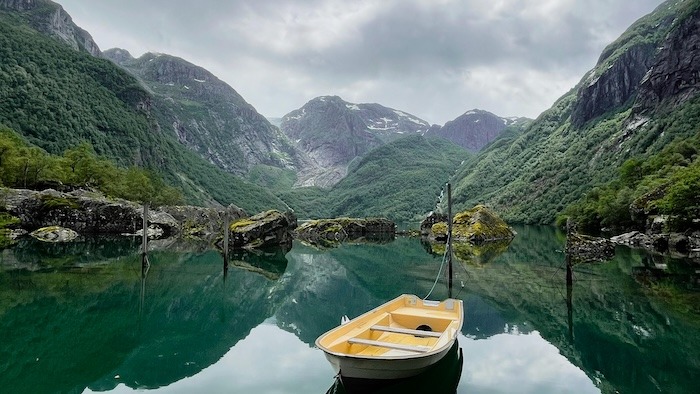
Access to nature shapes daily life. Even in urban areas, green space is abundant, and outdoor culture is deeply embedded. Scandinavia encourages time spent outside year-round. Regular exposure to nature has been linked to lower stress, improved mood, and better physical health. In the Nordics, this is a cultural default, not a luxury.
Something to understand is that Nordic happiness is not about constant positivity. In fact, these cultures value emotional realism over forced optimism. There is less social pressure to appear cheerful or successful. People are more comfortable with silence, solitude, and understated expression. This may actually contribute to a quieter, more stable form of happiness; less exuberant, but more durable.
Family policy also plays a significant role. Affordable childcare, paid parental leave for both parents, and child-focused public policy reduce the enormous stress that parenting can bring elsewhere. When raising children feels supported rather than precarious, overall life satisfaction rises, especially among women and equal rights to men.
Imperfect perfection
Before you start planning to move, know that the Nordics are not without flaws. Winters and darkness are long, leading to widespread seasonal depression, there are major immigration and integration issues, cost of living is the highest in Europe and in many places the salaries have not caught up.
But the broader lesson is clear; happiness at a societal level is less about individual mindset and more about collective design. When people feel safe, supported, and able to trust the systems around them, life feels more manageable and ultimately, more satisfying.
In the end, Nordic people are not constantly smiling (unless it’s sunny!). Instead, they have built environments where stability, fairness and balance are the norm.
And in the long run, that may be what happiness really looks like.
–––––––––––
Read more about Sweden here in Dispatches’ archives.

Jess Bretin
Jess Bretin is a communications and content specialist, and an American living in Gothenburg, Sweden. While in the states, she spent 2 years on the road living in a van and visited every state. She then married a Frenchman, so she has spent alot of time in France. Jess is also a singer/songwriter in a rock band and loves to cook and stand-up paddle board.
See her posts here:
• Walk like a Swede, talk like a Swede: How to make friends in Sweden
• Chistmas in Sweden: Tradition, light and togetherness
• The cost of living in Sweden 2025: What's actually going on.