Sweden’s summer music festivals represent a lively piece of the country’s cultural events, mixing striking natural settings with a strong music tradition and a distinctly forward-thinking outlook. Even with a smaller population, Sweden has long had an outsized influence on global music, and its festivals reflect that same confidence and creativity. They range from large international events to smaller gatherings with a more focused identity, but they all share a certain sense of purpose and ease.
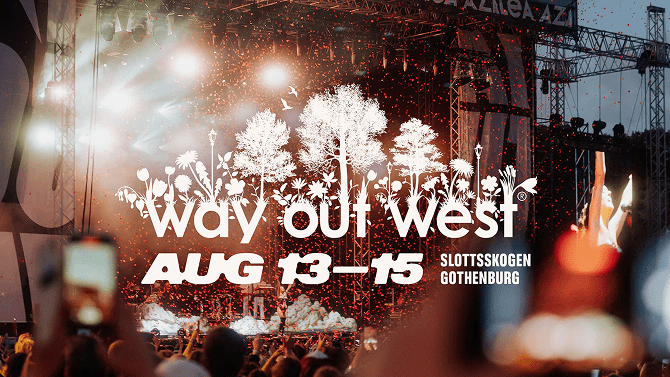
Way Out West
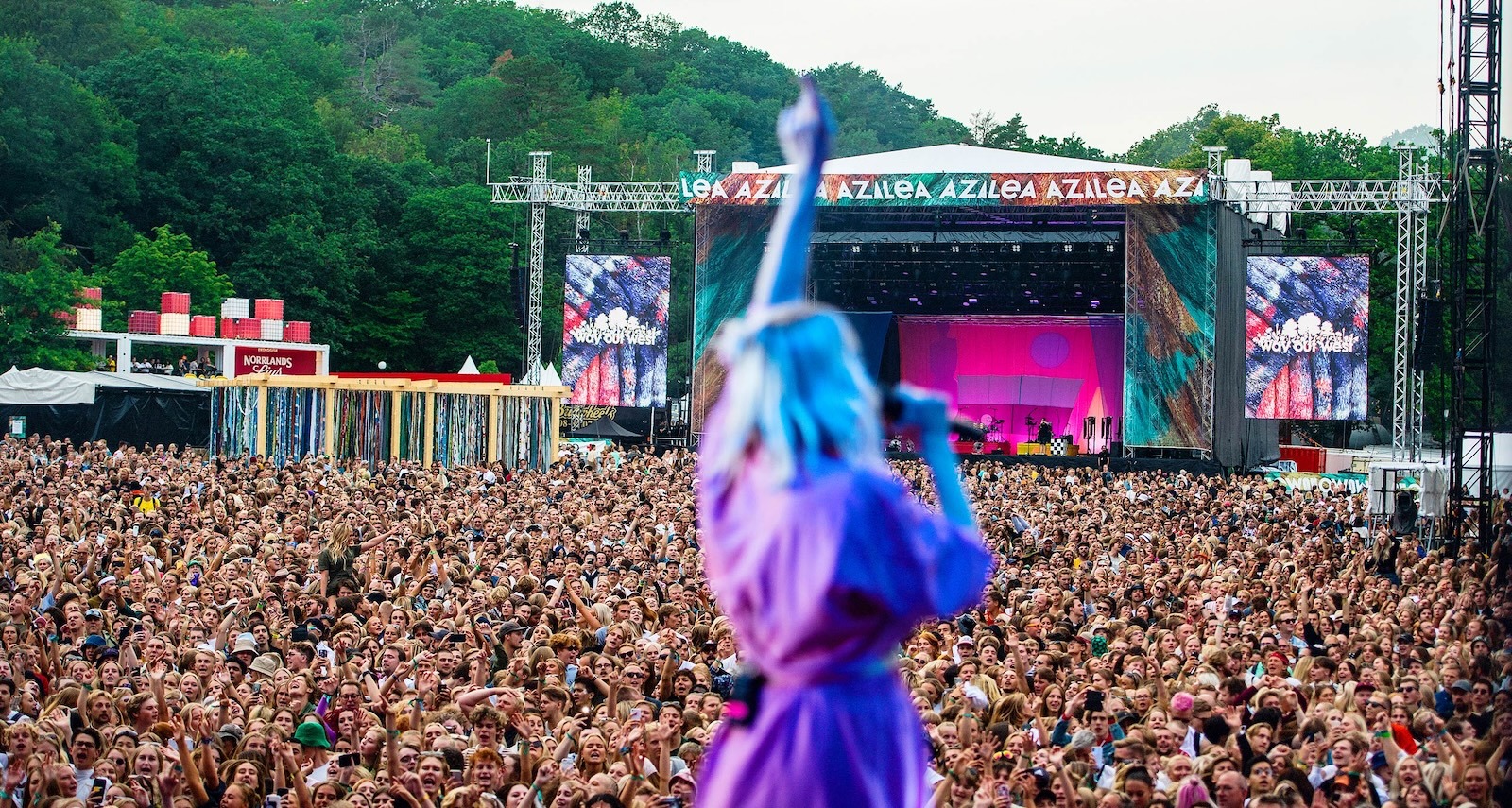
One of the best-known is Way Out West in Gothenburg, which runs from 13 to 15 August. Its carefully curated lineups move between indie rock, hip-hop, electronic dance music and alternative pop, drawing both major international names and emerging Scandinavian artists. This year’s lineup includes The Cure, Gorillaz, Nick Cave and Lorde.
Way Out West is also known for its sustainability focus, most notably its long-running commitment to a fully vegetarian offering. That detail has become part of its identity, fitting neatly into Sweden’s broader environmental awareness.
Sweden Rock Festival
Farther south, Sweden Rock Festival – 3 thru 6 June – in Sölvesborg takes a very different approach. It’s a pilgrimage site for hard rock and metal fans, bringing together legendary acts and newer bands in a campsite setting that feels both high-energy and oddly close-knit. This year’s lineup includes Iron Maiden, Bring Me the Horizon and Joan Jett.
Many attendees return year after year, and that continuity gives the festival a strong sense of community that goes beyond the music itself.
Into the Valley
Into the Valley, 17 and 18 July, offers something more experimental. Held in a former limestone quarry, it leans into its setting rather than working around it. The raw, industrial landscape becomes part of the experience, especially when combined with forward-looking electronic music and large-scale visual installations. It’s less about separation between nature, music, and design, and more about letting them blur together. And it’s a family friendly festival, unlike those in Molly-heavy festivals in the Netherlands and the UK.
Most of the acts this year fall into the dub step/rave category including DJ Phil Hartnoll. There are more than 100 acts across four stages.
Bråvalla Festival
Bråvalla Festival, during its run, was one of the largest in Scandinavia and reflected a more mainstream, all-genre approach. Pop, rock, EDM, and hip-hop all shared the same space, attracting a broad audience. Although it has been paused in recent years, it remains a reference point for the scale Sweden is capable of when it comes to live music events.
Smaller festivals
Alongside these larger festivals, there’s a strong network of smaller ones with more specific identities. Stockholm Jazz Festival continues to highlight both established and contemporary jazz musicians, while Umeå Open in the north keeps a focus on indie and alternative music, often blending local and international acts in a more intimate environment.
Timing is part of what makes all of this work so well. Most Swedish festivals take place in the summer, when long daylight hours stretch the evenings and, in the far north, the sun barely sets at all. That constant light changes how the events feel; less rushed, more fluid, almost suspended.
There’s also a practical side that stands out. Transport links are reliable, sites are generally well organised, and safety standards are high without feeling overbearing. Combined with a generally respectful festival culture, this creates an environment that tends to feel easy to navigate even for first-time visitors.
More recently, there has also been a clearer push toward inclusivity and balance, especially around representation on lineups and creating safer spaces for attendees. That shift mirrors wider cultural priorities in Sweden, where equality and accessibility are often treated as baseline expectations at the forefront of the experience.
Taken together, Sweden’s summer music festivals feel like extensions of the country itself; creative, structured, environmentally aware, and deeply social. Whether set in city parks, coastal fields, or unexpected industrial spaces, they share a consistent sense of atmosphere; music as something lived.
––––––––––
Read more about Sweden here in Dispatches’ archives.

Jess Bretin
Jess Bretin is a communications and content specialist, and an American living in Gothenburg, Sweden. While in the states, she spent 2 years on the road living in a van and visited every state. She then married a Frenchman, so she has spent alot of time in France. Jess is also a singer/songwriter in a rock band and loves to cook and stand-up paddle board.
See her posts here:
• Walk like a Swede, talk like a Swede: How to make friends in Sweden
• Chistmas in Sweden: Tradition, light and togetherness
• The cost of living in Sweden 2025: What's actually going on.