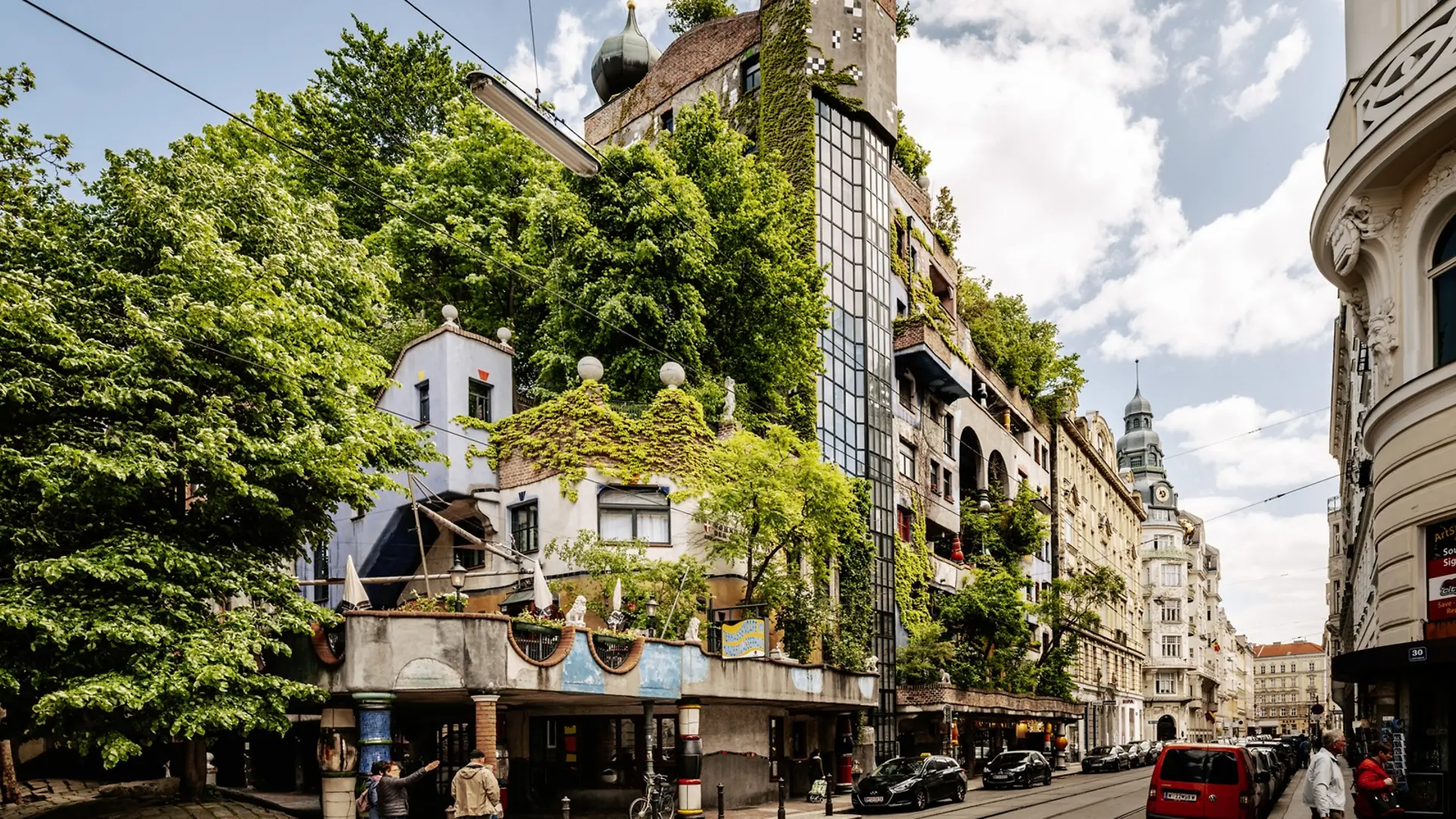
Vienna is green. The city is consistently ranked one of the greenest cities in the world, both in measure of it’s large amount of natural spaces, it’s fantastic public transport system and it’s use of renewable resources. Half of the footprint of the city is natural space and contains omore than 1,000 parks. This creates many options to escape the feeling of a capital city while staying within the metro limits, and I have yet to visit another city where the public transport is as useful and wide-spread as it is here.
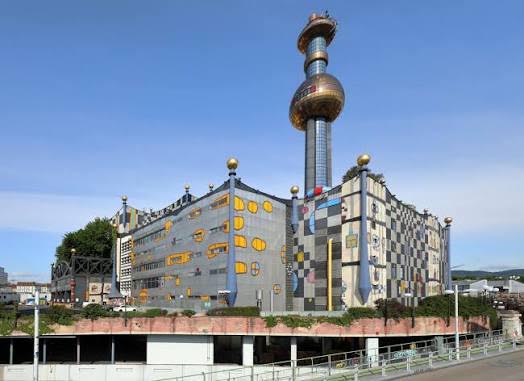
One of the most iconic buildings of Vienna is the waste incinerator in Spittelau, designed by Hundertwasser in the 1960’s, which provides energy for 50,000 homes in Vienna and heating and warm water for 60,000 more. However, the heat waves across Europe over the past few summers have prompted a more serious look at climate change and how we can reduce the impact and temperatures of our biggest cities. This summer was scorching in Vienna, with temperatures rising above 40 degrees.
An ‘act now’ mindset
While Vienna has always been sustainably-minded, the indisputable fact of higher temperatures has pushed the conversation away from ‘How-do-we-prepare-for-the-future’, into the realm of ‘How-do-we-act-now’. Fortunately, Vienna has a plan. Anyone living in Vienna over the past two years has surely noticed a slew of construction work across the city. Much of this is tasked with keeping the city cooler, reducing the carbon footprint and focusing on keeping life comfortable as temperatures rise.
There are a few different programs and strategies that Vienna is following to achieve these goals. The Smart Climate City Strategy is an initiative tasked with helping Vienna achieve climate-neutrality by 2040. The program was conceived as early as 2014 and anchored by government agreement in 2020. Working hand-in-hand with the Klima-Fahrplan (Vienna
Climate Guide) and the Klimarat (Climate Council), the SCCS is working towards not only sustainability but also livability.
This is being achieved through many different ideas. While many tackle problems such as recycling, reducing energy consumption and controlling the material footprint of the city, many ideas are more easily seen with the naked eye. A big part of the change can be seen easily by looking at how many trees and small planting beds are being added to the city. Vienna is in the middle of adding 22,000 trees to an already green landscape, and while moving around the city it is heartening to see small traffic islands or street corners being transformed from dead, dusty and forgotten spaces into mini-oases.
So many projects big and small
The Urban Heat Islands Strategy plan is being implemented to reduce ‘heat islands’ around the city, areas in which heat is trapped by buildings and concrete areas. With more than 350 projects spread around the city, from small road-side plant beds to vertical gardens covering the walls of buildings, 85,500 m2 (920,000 square feet) have been added so far. The city is planning on adding 500,000 m2 (5.38 million square feet) of green space to the city overall, which not only reduces ambient noise and dust in our neighborhoods but can also cool surrounding areas by up to 3-degrees in the summer and retain water and CO2 while releasing oxygen.
The re-management of this urban space also means unsealing 90,000 m2 of concrete and asphalt.
This lets soil breathe and remain healthy, while also allowing the ground to absorb rainwater creating a natural sub-layer ‘sponge’.This naturally manages the water table just below the city which aids in the management of flooding and water distribution.
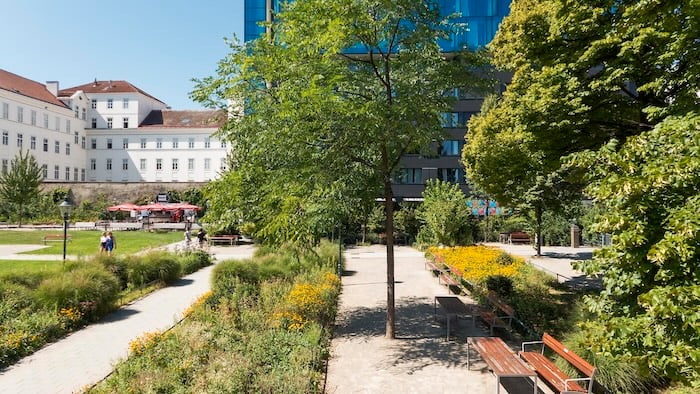
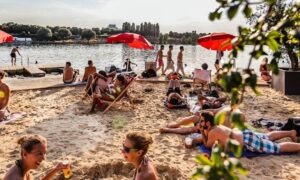
Apart from the environmental benefits, these green spaces also provide areas for the community of Vienna itself to gather. While smaller spaces in discrete corners are more ornamental, areas along the Danube Canal or in parks that have been freed from concrete have also been provided with new benches or seats, structures to spread out or sunbathe or simply flat grass zones to sit with friends.
Not only is this a massive benefit for the environment, it brings back spaces to socialize and meet with friends in our increasingly isolated lives.
Lastly, Vienna has been busy updating and renewing old tram lines around the city, and is inching it’s way closer to the new U5 subway line which will extend to neighborhoods in the northwest of the city. On top of the fantastic public transport in Vienna, new bike lanes are being constructed all the time. While some more popular parts of the city such as the ring around the 1st district have had isolated bike lanes (not sharing space with the general traffic) for a long time, the city is busy creating newer and safer lanes for cycling. Not only does this reduce traffic and emissions, the new bike lanes make it very quick to move around the city, as most areas you are moving between are not far apart, and biking is often the quickest and easiest way.
Nearly 85 percent of newly constructed bike lanes in the last year or two are structurally separate from general traffic, making it both safer and easier. The city is actively changing bike routes and bike lanes to make them more convenient and easy to use without having to compromise by sharing the road with automobiles.
Another 11 percent are painted lanes on regular roads, and the remainder are using quiet one-way streets that make it quick and easy to move around. I have been cycling much more in the city over the past two years, and it is clearly becoming easier and safer each time I venture out. For more information on the cycle networks in Vienna, you can
check out the Vienna cycle network here,
Understanding how the city is planning for the future not only helps us think more environmentally ourselves, but underscores how lucky we are to live in a city with a future and resident- focused outlook. The environmental benefits are clear when you see the ambition of Vienna’s plans to make one of the world’s greenest cities even more green, but the effort being made to use that space to return the city to it’s residents for socializing, commuting or simply enjoying the space is admirable.
To make a city more sustainable is vitally important. But to live in a city that is striving to go above and
beyond to make an already green city better for everyone, is a blessing.
–––––––––––
Read more about Vienna here in Dispatches’ archives.
See more from Thom here.

Thom Harding was born and raised in the UK and USA, sharing his time between Bath and Boston. Upon completing his studies in Art History and Painting in Florence, Thom travelled around Mexico and India before moving to New Mexico to start his career as a Primary school teacher.
After completing his MA in Education, he now lives and works in Vienna, Austria and enjoys spending his free time hiking, reading, travelling and exploring around Europe.
See more of Thom’s work here in the Dispatches archive.
You can read more about Vienna here in the Dispatches archives.