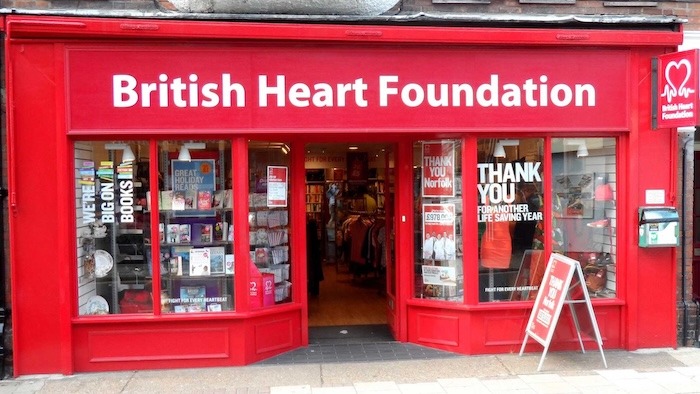
If there’s one thing I’ve learned from my life in the United Kingdom, it’s this – the British love a bargain even if that means buying used. Recent studies back me up on this. In the UK, second-hand shopping is expected to hit £4.8 billion for 2025. The country also frequently ranks among the Top 3 biggest exporters of used clothing in the world.
Beyond mere statistics, smartphone apps and social media groups for reselling used items have been thriving for years. Obviously, nowadays, for many people, buying used can be down to economic constraints, but that’s not the whole picture. In other European countries, people either throw stuff away or hoard it. In England, when something is usable, be it a novel, a pair of stilettoes or a whole wardrobe, people do not chuck it in. Instead, they either resell it, leave it by the side of the road for anyone who wants it to pick it up, or donate it to the charity shop.
The latter is by far the most popular place for second-hand shopping in the UK and probably the most commonly visited venue after the pub.
Every single street in every British town and every neighbourhood in every large city features at least one, and sometimes multiple, charity shops. And the most intriguing thing of all is that Brits from all walks of life and income levels love it.
There’s no social stigma around buying second-hand.
When my friend and I moved to the UK as postgraduates back in the 2010s, our incomes were tight. At the time, my friend worked as a live-in assistant for an upper- middle-class family who had a huge house, a sports car and ran their own company out of a posh London village. My friend’s favourite spot for shopping was the charity shop, but oddly enough, so was her boss’s.
This is where I should add that the more affluent the area, the more likely you are to stumble upon expensive items in your local charity shop. For some people, that’s part of the thrill. Kent native Jaye Nolan says, “There’s always a chance that you’ll find a load of great stuff where someone clears out their designer wardrobes and donates it all.”
The charity shop kills many birds with one stone
Buying second-hand saves you money while keeping high-quality or simply useful, usable items from ending up in landfill. In that respect, the charity shop is a real-life closed-loop model in action.
And if that’s not enough, all proceeds go to charities!
As former filmmaker Lani Holmes puts it, “The benefit is that we’ve got somewhere to donate all the stuff we buy that we don’t want anymore, and that helps raise money for charities that we care about. I give my stuff to the Isabel Hospice shop; they were a great charity that gave me a free year of professional grief counselling after my mother died.”
All major British charitable organisations operate entire chains of stores that help them fundraise by reselling second-hand goods. Oxfam and the British Heart Foundation are among the most recognisable names that you can spot on every high street. Money spent at one of these stores raises funds to either help people in need or to finance life-saving research into various health conditions.
While you can buy second-hand books in almost any charity shop, Oxfam have created a separate chain that’s dedicated to books and stationery only – and it’s a great spot for all kinds of titles and quaint vintage postcards.
Fertile ground for second-hand creativity
Over the many years I’ve spent in the UK, I have also noticed that people find sources of inspiration in charity shops. Be it collecting rare items, hunting out-of-print books, upcycling furniture and clothes, or practising arts and crafts, the charity shop provides low-cost supplies for any hobby.
“One of my aunts has a spectacular collection of around 150 Russian Gzhel figurines, all picked up one by one for a couple of quid here and there,” Lani Holmes says. “She decorated her mantlepiece with them in her quite posh house.”
When I attended a group exhibition in Shoreditch, London, in early 2024, I stumbled upon Danic Lago, whose work had appeared at the Saatchi. I was stunned by her elaborate 3D collages featuring rich, intricate details. When I asked her husband, who was hosting, how she created them, he shared that she got all her materials in charity shops.
Talk about environmentally conscious art!
A year before the pandemic began, I rented a quaintly furnished house that came with fireplaces, chandeliers, artwork and a piano, among other things. The place was lived-in, and almost everything in it – from sofas and cushions to vases and paintings – had been picked up in the local charity shops. I never asked my landlord, a lawyer who owned two homes, whether this was his way of cutting expenses on his rental property or whether his parents, from whom he had inherited the place, had chosen to furnish it cheaply.
Either way, that was the most beautiful home I had ever rented – and at a rate below market average. It was also proof that the British do not just know how to save money and the planet, but they can also do it with style. Obviously, for the cost-conscious nomad or international student, charity shops can be a lifesaver, and if that’s your case, there’s literally no shame in buying second- hand.
Everyone in the UK does it, even people who drive sports cars.
For 15 years Teodora Gaydarova has been covering culture, travel, hospitality and other beats for different publications and global brands. A Bulgarian by birth, she has lived all over the United Kingdom and parts of Spain, and she writes about the experience of navigating life across different countries and cultures on her blog, The Local Insider.
Receive the latest news and updates from Dispatches Europe. Get lifestyle & culture, startup & tech, jobs and travel news dispatched to your inbox each week.