(Editor’s note: This post on Ljubljana is part of a series of quick-trips we believe better reflect the expat lifestyle in Europe.)
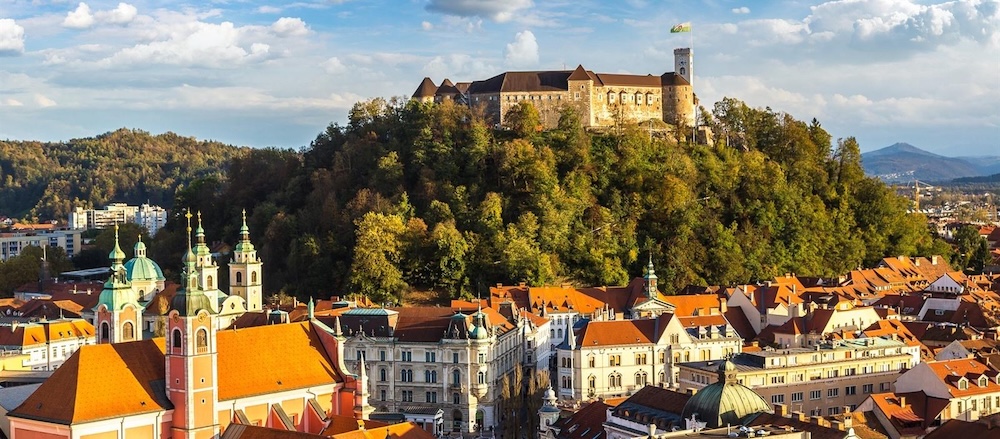
I highly recommend a trip to Ljubljana, the capital of Slovenia. First and foremost, it is an architecturally beautiful city with the historic part of town being a large pedestrian zone, carved in two by the Ljubljanica River. It is worth a trip for the history, sight-seeing and food. I would suggest a two-night minimum for the city itself. You can also stay there longer as a jumping off point for popular Lake Bled and its medieval castle as well as for a visit to the world-renowned Postojna Cave. I know a family who stayed for a week to enjoy all of the above.
Architecture and poetry: Plečnik and Prešeren
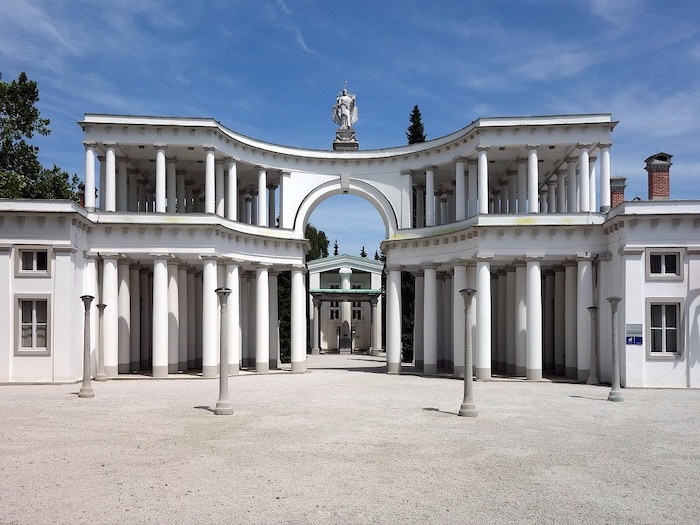
Ljublana’s most famous and visionary architect was Jože Plečnik. You can see his neo-classical buildings and bridges sprinkled throughout the capital city (in addition to in Vienna and Prague in case you are there). If you want to find out more about the Plečnik, you can sign up to tour his actual house. However, it is important to note that since the rooms in his home are very small, they limit the number of visitors on the tour to seven at a time. So, you should try and book in
advance.
I thoroughly enjoyed Ljubljana’s 2-hour Classic City Tour where, as you stroll through the streets, you will receive a fantastic overview of the city and some of its most famous residents. On the Classic City Tour, you will also find out about Slovenia’s most famous poet, France Prešeren, who gave currency to the Slovenian language, as well as wrote what would later become their national anthem.
Sights and sightseeing
The main attractions in Ljubljana are the old town with its lovely bridges, meandering river, gorgeous buildings, churches, town hall, pedestrian zone, outdoor market and hill-top castle. A guided walking tour is an easy way to see the sights and learn about the history. You can also take an hour-long boat ride through the centre of the capital, but it is not necessary. For me, it was just a nice break from walking around when it was raining one afternoon.
History
I recommend taking a funicular ride up to Ljubljana Castle (Ljubljanski grad), which overlooks the city, and spending some time up there. There is a café, restaurants, and museums, and you can wander around the complex or pay to enter the museums. During high season, in addition to the Classic City Tour I mentioned above, you can also do a City and Castle Tour. We just did it on our own as we were off
season. The castle area was settled a very long time ago as it was once even inhabited by the Romans.
As you may remember from your school days, Slovenia was part of former Yugoslavia from 1945 to 1991, before declaring independence in 1991. To further your knowledge of that time, you can even do a Communist Tour, to find out about life under Tito and Communism.
Eating and drinking
Because historically and geographically, Ljubljana has been at the crossroads of Slavic, Austrian, and Italian cultures, there are many types of cuisine and drink to indulge in. For traditional inexpensive eats, you can go to the Klobasarna stand and try their Carniolan sausage sandwich or enjoy a bowl of goulash
For sit-down Slovenian fare, I suggest dining at Gostilna Sokol, both for the old-time building and décor itself together with the food and beverages. I had a goat cheese and pear salad and a delicious dark beer, but you can try their farmer’s plate or a number of meat and potato or other dishes.
Basically, in any direction you look you will find eateries, restaurants, and cafés. While in Ljubljana, I also had a lot of Italian food, sampling different kinds of pizza and panini, tasted local wines and liquors, had some excellent beer, in addition to drinking delicious coffee and tea.
For my final dinner in the city, the high point was a neighbourhood restaurant called Julija’s. It was jam packed, elegant yet homey.
Where to stay
I stayed at The Hotel Ljubljana, a four-star hotel, which was wonderful and centrally located. If it is in your budget (rates start at 116 euros in low season), it is a really nice hotel with an amazing select-from-the-menu breakfast that is included, plus an excellent location for sight-seeing, around 20 minutes on foot from the train station. (Staying at a fancy hotel feels ridiculous for me to say when I think of the all the hostels, pensions, convents, etc., I stayed at when I was on a student budget – bathroom down the hall, no hot water, etc.)
Ljubljana pro tips:
• Since the Old Town is a large, long pedestrian zone, it is a very relaxing place to visit.
• The city also provides a free shuttle to and from the train station, which can sneak you into the primarily car-free zone. If you have lots of bags or don’t feel like walking, call 031 666 331 (or 332 or 299). I hoofed it but thought about taking the shuttle.
• Another cool thing is that there are free walking tours in Ljubljana. The 2-hour version I took was fantastic – Ljubljana Free Tour – but tips are greatly appreciated. Most people pay 10 or 20 Euros each, which is a great bargain in my opinion for so much information and a local guide who can answer your questions.
Quick trip
Ljubljana is about two and a half hours by train from Zagreb, Croatia, four hours from Salzburg, Austria, 90 minbutes by train from Villach in southern Austria, and three hours from Trieste, Italy.
Na zdravje! Cheers!
––––––––––
Read more about Slovenia here in Dispatches’ archives.
Mary Porcella is a Europhile who has lived in Germany, Norway, Italy, and the U.S. She is a writer, editor, and photographer who loves seeing new places, returning to old haunts, and meeting up with family and friends. Her travels have taken her to more than 20 European countries, and she hopes to visit the rest in the not-too-distant future.