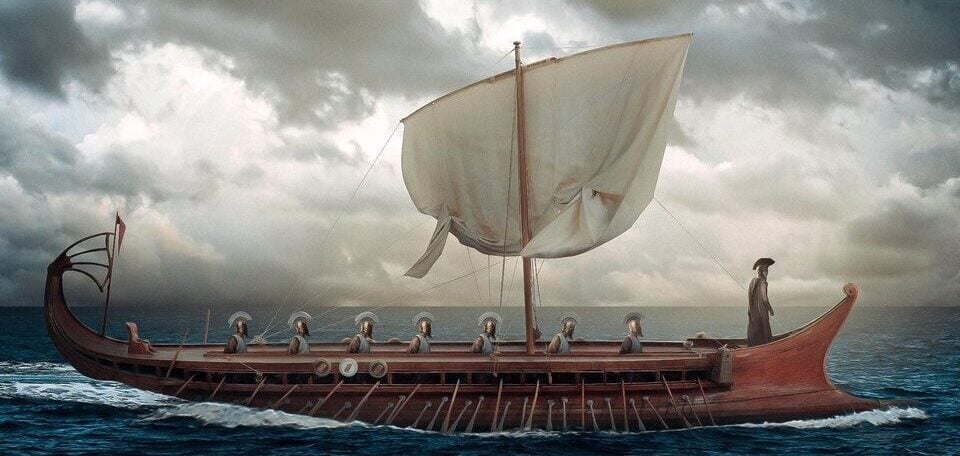
For nearly three millennia Homer’s epic poem “The Odyssey” captured the imagination of sailors and the adventurous at heart. Taking place on the wine-dark waters of the Mediterranean, the sea is more than a setting, it is part of the story.
What might sailing those waters today tell us in order to understand and appreciate the Odyssey even more?
It begins, like sailing itself, with winds so capricious that it is no wonder a voyage that should have taken Odysius three weeks, would spread out into a 10-year odyssey. For a sailor, the winds of the Mediterranean are maddenly fickle.
In an age before weather forecasting, it would have been impossible to know where and when the winds would take you.
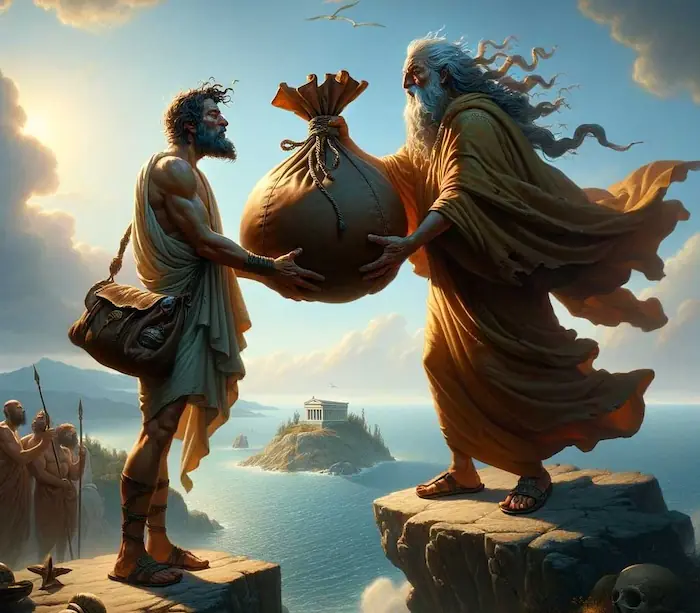
The capricious Mediterranean
Such erraticity was attributed to the whims of the gods. One episode of “The Odyssey” sometimes overlooked tells how the god of the four winds — Aeolus — took pity on Odysius and gave him a bag with three of the four winds, leaving the gentle westerlies free to send him quickly home. With the gift of steady winds Odysius was soon approaching his homeland, so close he could “smell the baking bread” according to Homer. But before they could land, his crew, thinking the bag held gold that was being withheld from them, opened the bag, releasing the swirling winds and sending them back out to sea and to many more years of wandering.
Every person hearing Homer’s original poem would have easily understood how a sailing trip set in the Mediterranean’s whimsical winds could quickly go wrong. Even today experienced Mediterranean sailors wonder that anyone in a prior age could manage the frustration. The capricious Mediterranean winds are at play in every nautical mile of Odysius’ journey.
Secondly there are the maps — or more specifically the total lack of any during the Homeric age. Charts define the daily life of a modern sailor. They place your boat in relation to where you have been and where you want to go, also revealing any obstructions in the way.
Not only did Odysius have no charts — he had no concept that such a thing might exist.
The world waited nearly two centuries after Homer before the first crude map was created trying to outline the shorelines of the Aegean Sea. It would be another 15 centuries before there was anything that begins to display what does – and what does not – exist in the vast waters Odysius sailed.
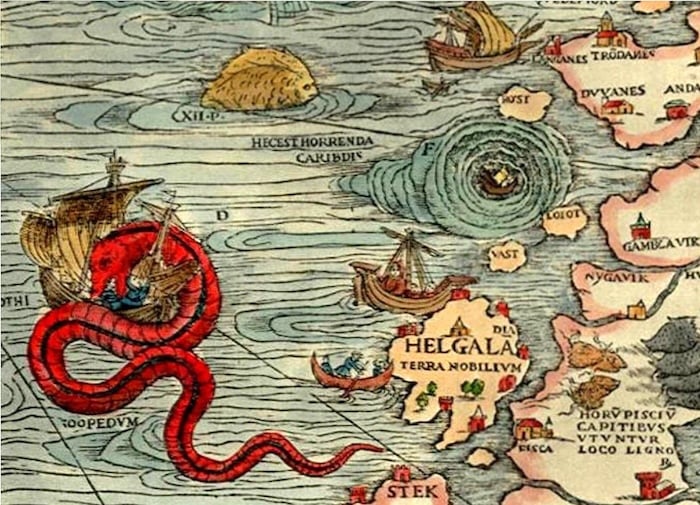
Filling the knowledge void with imagination
What does this do to the late Bronze Age mind? It makes it ripe for mystery — for when nothing is known, anything is believable. Homer gives us a landscape with floating islands, great swirling sinks and people who sing sailors to their deaths and others with only one great eye.
With no maps to say those places didn’t exist, they became as real as the winds and as vivid as Homer’s words. His stories were as possible to them as the speculations of astronomers are to us today as they write about strange galaxies far beyond our knowledge. They read “The Odyssey” like we might read “Project Hail Mary” (or watch the movie).
To open “The Odyssey” is to enter a time when all these things were possible because who knew?
Finally, to sail the Mediterranean today is to be keenly aware of just how dangerous it has always been to live along this coastline. It was life on the world’s major highway, and the same waters that brought a livelihood, seafood and trade, also brought death and enslavement.
Sailing along any coast in the Mediterranean, one constantly sees the relics of fear: the ruins of old fortresses and lookout towers. Those who lived on these shores never knew when the horizon might reveal an invading party of conquerors or pirates looking for plunder, or worst of all, looking for slaves.
Hearing this story about a man and his crew facing dangers was not a romantic fantasy or escapist, it must have served to give an often-frightened people comfort hearing that even a man as flawed as Odysius could prevail. Be clever. Never give up. Maybe you too could be a hero.
As we understand it, the Mediterranean Sea was created just over 5 million years ago with a catastrophic flood when the Strait of Gibraltar opened. In those millions of years it has changed and evolved, but what it is today is very much what it would have been in the age of Homer.
Sailing it will always be epic.
–––––––––––
Read more from Tom here in Dispatches’ archives.

Tom Hay