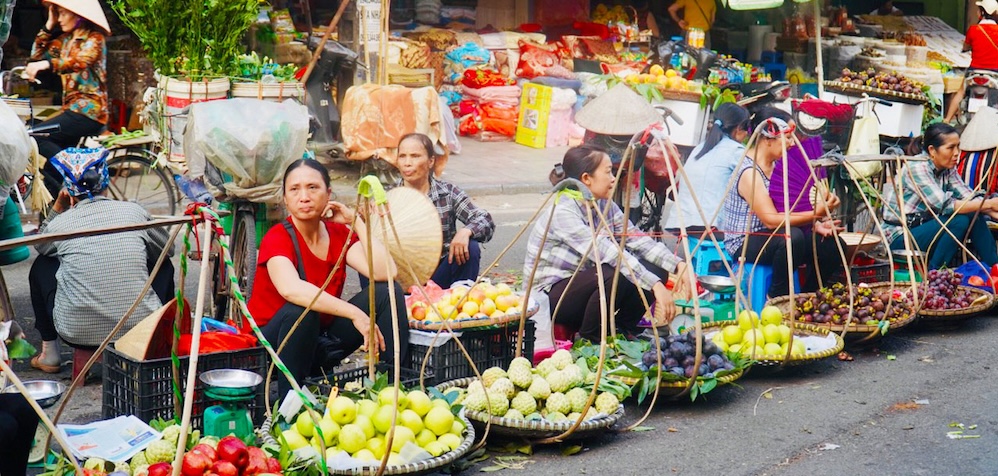
What gives Hanoi its heartbeat? For me, it’s the markets.
I grew up in one of Hanoi’s oldest market neighborhoods, where the hum of vendors and the aroma of morning broth became more familiar than any alarm clock. Markets are how this thousand-year-old city wakes up. At sunrise, Hanoi doesn’t stir with the buzz of modern life, but with something softer and more human: the clatter of soup bowls, the shuffle of fresh produce being unpacked, the casual greetings exchanged between neighbors.
There’s no glamour, no pretense – just a quiet, constant pulse that’s deeply real.
In Hanoi, markets are more than places to shop. They’re the social heart of the city. For centuries, they’re the place where people buy food, share stories and keep in touch with daily life. For newcomers, markets are also a window into the real Hanoi, where you can learn the language from real voices.
You might get cooking tips from aunties at the meat stall, or learn how to bargain with a smile. One market visit can teach you more about living in Hanoi than a week of reading about it. Whether you’re here for a few days or a few years, don’t just stop at museums or rooftop cafes.
Go to markets to feel the pace of life, and see Hanoi with its full of soul.
Key markets to explore in Hanoi
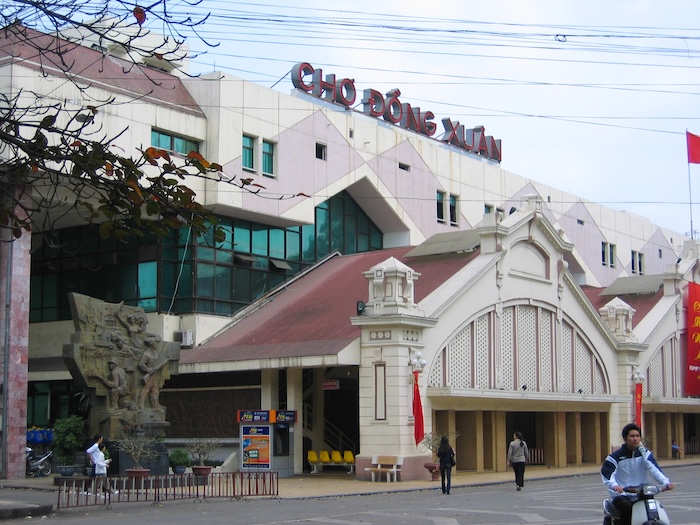
• Dong Xuan Market – Hanoi’s grand bazaar
Dong Xuan Market is the Hanoi’s largest – and among its oldest – markets. Built in 1889 during the French colonial era, it was designed as a central trading hub linking the Hanoi Old Quarter with surrounding regions. Through wars, fires, and countless renovations, it has remained the beating heart of wholesale commerce in northern Vietnam.
Today, the market hums from early morning to dusk. Outside, narrow streets pulse with hawkers, street food vendors and delivery carts. Inside, the three-story building is a sensory maze: fabrics, clothes, household goods, souvenirs – even phone chargers.
Set among famous Old Quarter streets like Hang Ngang, Hang Dao, and Hang Chieu, it’s both convenient and atmospheric. The surrounding area is also an attractive street-food heaven to enjoy.
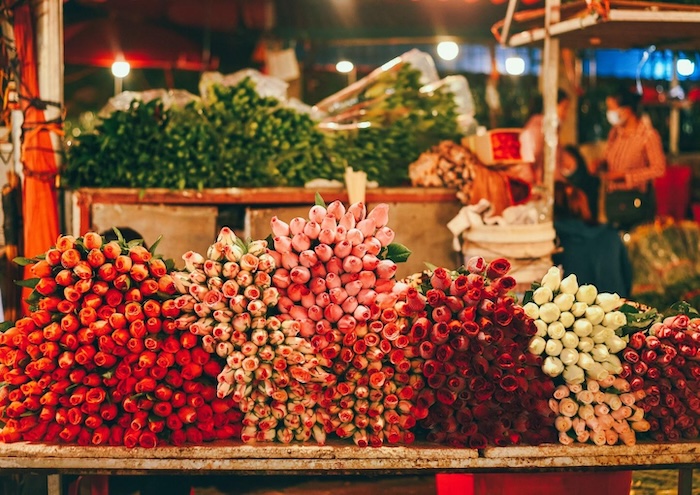
• Quang Ba Flower Market – Hanoi before dawn
Unlike Hanoi’s daytime markets, Quang Ba Flower Market blooms under moonlight. Born in the early 1990s to serve growers from nearby Nhat Tan village, it has since grown into the city’s main floral trading hub – linking farms from Da Lat, Me Linh, Tay Tuu, and Sapa to vendors across the capital. You’ll find roses, lilies, chrysanthemums, and gerberas spilling out of baskets.
The most enchanting time to visit is just before Tet (Vietnamese Lunar New Year), when the market transforms into a riot of color and anticipation. Peach blossoms, kumquat trees, violets, dahlias, gladiolus – all gathered in one heady, emotional place. People come not just to buy, but to feel the new year in the air.
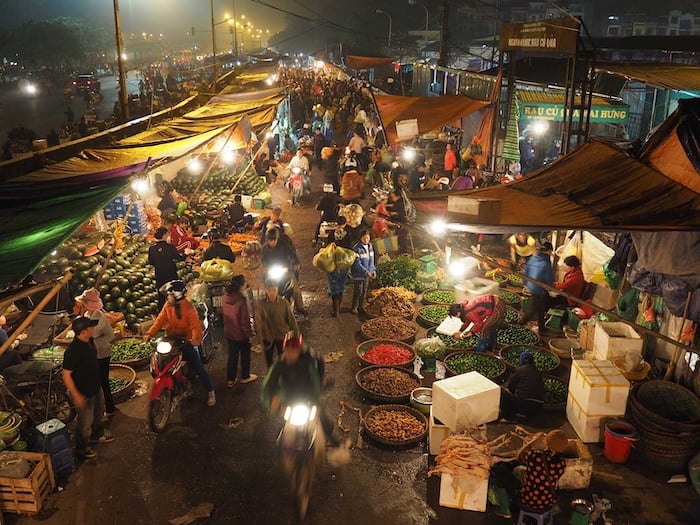
• Long Bien Market – Hanoi’s midnight engine
Founded in the late 1980s during Vietnam’s early economic reforms, Long Bien Market quickly became one of northern Vietnam’s largest wholesale produce hubs. Thanks to its location near Yen Vien railway, Long Bien bus terminal, and major roads, it’s been fueling Hanoi’s kitchens for over three decades – quietly, every night.
From around 11 p.m. – 6 a.m., the market becomes another world: dimly lit, packed with movement and sound.
Unlike other markets, Long Bien Market is raw, unfiltered, and untouched by tourism.
No English signs, no curated stalls – just real people doing real work. For those craving something authentic, this is where Hanoi’s invisible engine runs.
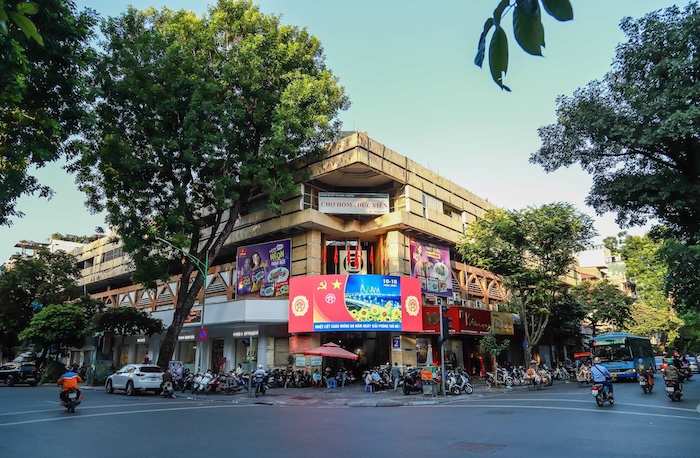
• Hom – Duc Vien Market – Hanoi’s kitchen pantry
Dating back to before 1954, Hom – Duc Vien Market is one of Hanoi’s oldest and busiest central markets. More than a place to shop, it’s a gathering spot for savvy homemakers, passionate cooks and anyone who loves Vietnamese cuisine. There are fresh herbs, vegetables, meats, seafood, dried mushrooms, wood ear fungus, fermented shrimp paste, toasted rice powder, sticky rice flour ….
The vendors here are friendly and full of know-how. You might learn the names of a dozen herbs, how to spot great fish sauce, or how to prep a local dish. If you’re learning to cook Vietnamese food, or just curious where a dish truly begins, Hom – Duc Vien Market is a must.
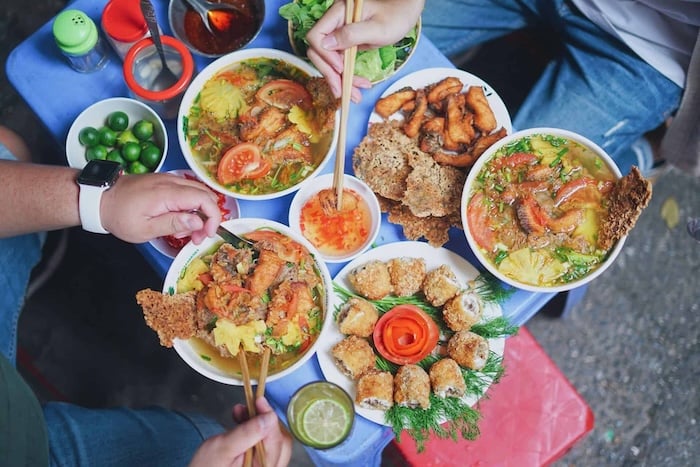
• Nghia Tan Market – A local favorite off the tourist map
You won’t find Nghia Tan Market in tourist guides, but for many Hanoians – especially those in the city’s western areas – it’s a beloved neighborhood staple. You’ll find everything here: fresh produce, meat, fish, dried goods, clothes, phone accessories, even mini potted plants. The market layout is clear: produce in one zone, seafood in another, dried goods and fashion in others. Vendors speak fast, smile often and once they know you, don’t be surprised if they throw in a little
extra.
Tips for exploring Hanoi markets – A guide for expats
Here are some practical (and cultural) tips to help you navigate the experience like a pro:
• Learn a few basic Vietnamese phrases, such as “Bao nhiêu tiền?” (How much?), “Có tươi
không?” (Is it fresh?) or “Giảm giá được không?” (Can you give me a discount?)
• Bring your own tote or basket
• Go early for fresh produce, more variety, and relaxed vendors
• Carry small cash (VND) for small buys
• Bargain kindly and with a smile
• Observe before you buy
• Talk with the vendors
• Try some street foods on the spot, or a glass of iced tea from a nearby stall
• Stay open and patient
In Hanoi, you don’t have to try hard to “live like a local.” Just step into a market with open eyes and an open heart, then the city will reveal itself.
–––––––––––
Read more about Vietnam here in Dispatches’ archives.

Huyen Nguyen Khanh
Huyen K. Nguyen is a freelance travel writer based in Hanoi, Vietnam, specializing in travel, food, and lifestyle. She spent eight years working in the international hospitality industry at five-star hotels before turning to writing full-time. Her articles and translations have appeared in several Vietnamese online publications. With a passion for storytelling, she brings cultural insight and personal experience to every piece. In her free time, she enjoys traveling, reading, and photography.