The first time I heard of housing co-ops, I was a single millennial living in London in the 2010s. At the time, I was fed up with sky-high rents and the impossibility of buying a home. Housing co-ops, although not widespread and not easy to get into, offered a more affordable alternative. Today, a decade later, both rents and property prices are times higher in London and in every European city I have lived in.
That’s why, when my Amsterdam-based friend, Boudewijn Van Den Breemer, tells me that he’s an expert in housing co-ops, I am instantly drawn to the topic. Boudewijn works with both PWA and Cooplink – the Dutch national organisation for cooperatives. His interest in the field was sparked while he was reading for a Master of Arts (MA) in Urban Management at the Amsterdam University of Applied Sciences. His studies into the systems and processes shaping the housing market convinced him that co-ops are more than just an affordable form of housing. He believes that, on a practical, day-to-day level, co-ops can help address the increasingly complex challenges faced by urban dwellers. In his words, co-ops “facilitate human collaboration and foster creative strategies that bring people together.”
The housing crisis has many layers
Throughout Europe, many different demographic groups are increasingly struggling to get on the property ladder. In the Netherlands in particular, the housing crisis is compounded by a severe shortage of homes – close to 400,000, according to data by ABF Research and the Ministry of Housing and Spatial Planning (Volkshuisvesting en Ruimtelijke Ordening). This has driven prices up and made it even more challenging for some people to buy or rent.
The question is, could co-ops provide a solution?
Boudewijn is convinced that the crisis cannot be solved through one measure – or even a handful of them. The underlying problems are too complex for simple fixes, and making one change usually triggers a domino effect of more problems. He points to the rent cap introduced by Hugo de Jonge during his tenure as Minister for Housing and Spatial Planning. While the legislation initially made housing more affordable, it also pushed many landlords to sell their properties, which in turn contributed to today’s shortage of rental homes.
Another factor worsening the crisis is that many retirees and senior citizens live alone in large, multibedroom family houses. Moving to a smaller apartment would often mean paying a higher mortgage, leaving them trapped in homes better suited for families with children, while the families cannot find suitable housing.
According to Boudewijn, cooperatives can effectively address issues like these. A cooperative can offer older residents more affordable accommodation, freeing up larger properties for the next generation of families. This, of course, is not the only allure of co-ops.
What makes co-ops attractive?
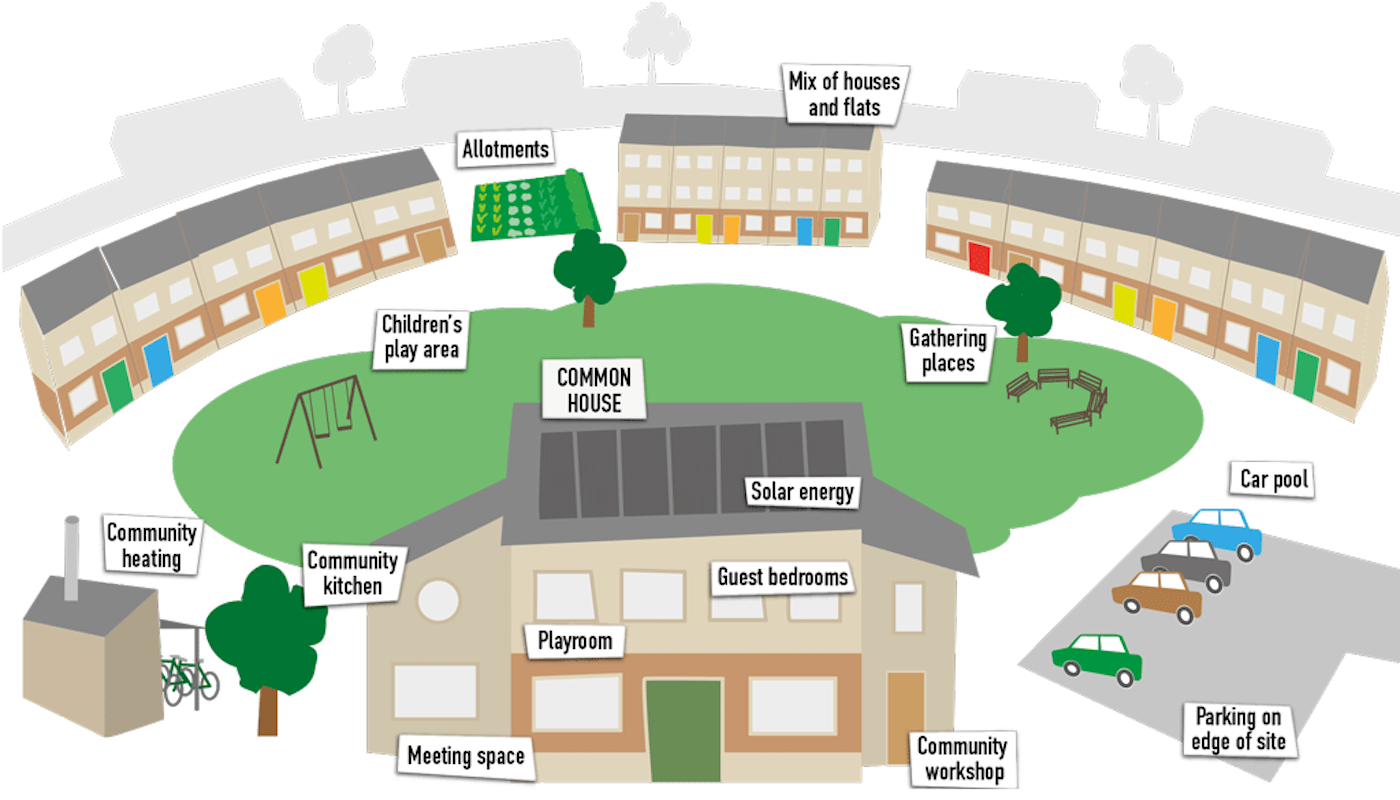
If you’ve never heard of co-ops — and many people haven’t — let’s take a moment to clarify what they are and what they offer. Put simply, a housing cooperative gives a group of people collective ownership of a property. Instead of each member owning an individual apartment, the group owns the property as a whole. As with buying or renting, moving in typically requires an initial down payment, followed by monthly payments.
The main advantages of this model are affordability and security. Since the property cannot be sold unless the cooperative goes bankrupt or gets dissolved, accommodation remains affordable in the long term. Your contributions are more or less fixed, which is why you’re likely to spend less than you would when buying or renting on the open market.
The other perk is that you cannot easily lose the roof over your head.
A landlord can kick you out for all sorts of reasons, a bank can repossess your house, but the co-op has your back financially and legally. Of course it’s not all roses. As with everything, there are downsides too. The biggest trade-off is you give up the profit you’d expect to make when you move out and sell your share. In some cases, you don’t even sell at all – instead, you transfer your
occupancy rights to the next tenant. Other trade-offs include giving up the freedom to rent out or to renovate however you like.
Your freedoms and restrictions get determined by how your co-operative is structured. Co-op models move along a spectrum from ownership to tenancy, whereby ownership cooperatives grant you rights over your home, rental cooperatives allow you to become a tenant, and leasehold (aka right-of-use) cooperatives give you a long-term right to live, sometimes for as long as a century or half a century.
Talk about the security of having a roof over your head!
Housing co-ops can address numerous issues beyond money
Boudewijn believes that co-ops offer a lot more than simply affordable accommodation. He is convinced that they are a sustainable model that can address numerous urban and social problems. In his own words, “co-ops put human relationships at the forefront and allow us to manage how we interact with each other.” Most systems have a financial goal of turning in a profit instead of benefiting the individual.
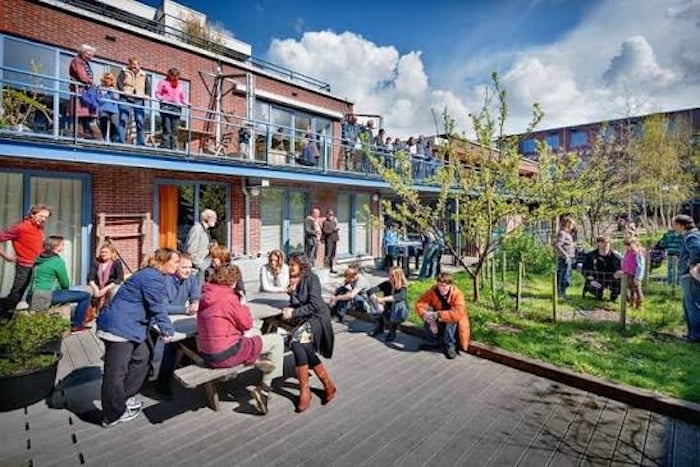
In a co-op, however, people look after each other, and this can manifest in a myriad of ways. For example, families who cannot afford a babysitter or nursery school can delegate and share the responsibility of caring for their children.
If co-ops are an end-all, be-all solution, why don’t we just create more of them?
All of this begs the question: if housing co-ops have so many benefits, why aren’t they more popular? Often, the reasons are purely financial. Turning existing properties into co-ops wouldn’t be financially viable because it’s far more expensive to buy than to build a new development. When it comes to building, however, it’s almost impossible for a co-op to compete with commercial property investors.
In the eyes of developers, co-ops are risky. Investors and developers tend to think strategically in terms of targets and money. This clashes with co-op management, which is focused on the social needs of its members, and with the group dynamics within the organisation.
Beyond the financial and organisational realities, there are social challenges as well. Designing for diversity can be a challenge. People in weaker social positions can feel threatened by stronger groups, and if they don’t fit the culture, they may not feel welcome. This makes inclusivity particularly complex in co-ops, and it takes extra work to make sure everyone feels included. Boudewijn offers as an example a Dutch co-op with a strong diversity programme that includes a group for immigrants and another group for formerly homeless people.
Some co-ops are also aiming to build housing for people with disabilities – another area where there is a severe shortage of housing units.
Furthermore, crucial decision-making can take time unless the collective is well structured. In case of disagreements or mismanagement, the collective can dissolve. In 2010, one particular co-op fell apart because tenants were not even aware they were part of a co-op – they thought they were just renting. Their rents, however, were too low to cover the cost of renovations, which were sky-high, and as a result, the co-op was dissolved.
Despite all of the challenges, Boudewijn is convinced that co-ops can thrive. After all, they are not a particularly new concept. The first ones appeared in the Netherlands at the start of the 20th century after being conceived in Victorian England decades earlier. Many co-ops have been around for decades, and new developments are in the pipeline. In 2016, Amsterdam was the only city in the Netherlands that greenlit a new wave of co-op development by granting permission for construction. Three housing properties have already been fully realised, and more are in the works.
Only time will show how many problems will be eradicated, and to what extent.
–––––––––––
Read more about housing here in Dispatches’ archives.
See more from Teodora here.

Teodora Gaydarova
For 15 years Teodora Gaydarova has been covering culture, travel, hospitality and other beats for different publications and global brands. A Bulgarian by birth, she has lived all over the United Kingdom and parts of Spain, and she writes about the experience of navigating life across different countries and cultures on her blog, The Local Insider.