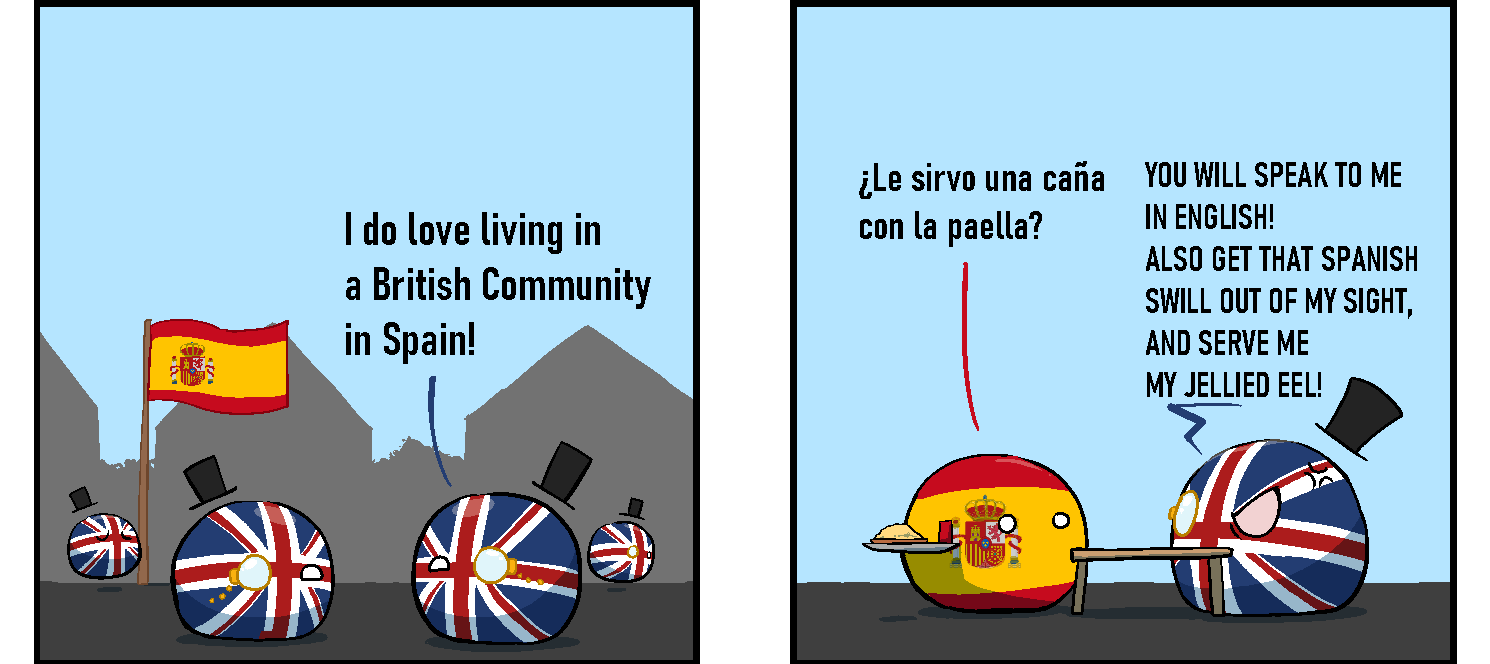
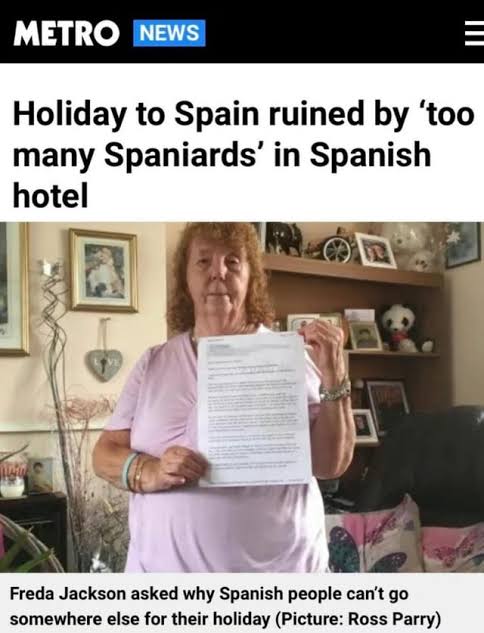
One evening, during my first year of living in Spain, I was sitting in an English bar and observed – or rather endured – a fellow expat complaining loudly and at length about foreigners who move to the United Kingdom and don’t learn the language or integrate. He had been watching a news item on immigration, and it sent him into a foamy-mouthed, expletive-ridden rage. Yet he had been living in Spain for well over a decade, and to be generous, his Spanish was non-existent.
The irony appeared entirely lost on him.
The expat bubble
In my experience, you’ll broadly come across two kinds of expats in Spain.
The first has been here for years, speaks reasonable, if not fluent, Spanish, has Spanish friends, keeps up with local news and politics and embraces siestas like they were born to it.
The second has also been here for years. However, they speak almost no Spanish beyond being able to ask for a coffee or a beer, socialise almost exclusively with people from their home country and have recreated mini versions of what they left behind. For Brits this includes British-style pubs and cafes serving full English breakfasts, and enough home comforts to make you briefly forget you’re living in a foreign country.
Both, of course, are perfectly valid ways to live, and no judgment either way is implied in this post. But living in an expat bubble means only ever seeing one side of Spain. I believe my life is richer for doing my level best to integrate and to make Spain feel like home rather than an extended holiday.
Finding my feet
I knew nobody in my area when I emigrated to Spain from the UK in 2008. So I did what many newly arrived Brits do, and that was to seek out the local expat bar and start making friends there. I met some wonderful people, many of whom had been living here for years. They had seen it, done it, made all the mistakes and were only too happy to help and share the wisdom of their experience.
The comfort of familiar faces and a shared language when everything is so bewildering at first, from grocery shopping to
bureaucracy, cannot be overestimated. But I was determined that a Brit enclave wouldn’t be the entirety of my experience.
Language was the key that unlocked everything.
And it’s not because the Spanish are unwelcoming to those who don’t speak it. I have found that on the whole, they are
remarkably patient. But it’s because so much of daily life happens in Spanish. If you’re British, you can easily get by on the Spanish costas and never have to speak a word of language, but it is rather limiting. So I jumped into learning the language and did everything from group classes, language exchanges and watching Spanish TV, which – if I’m honest,– isn’t very good much of the time. Some of the dramas feel like a barely competent amateur dramatics society has unexpectedly been handed a television
budget and told to make a series.
Once my Spanish became reasonably fluent, everyday life started to change in several ways. Conversations with neighbours that had once barely lasted thirty seconds stretched to 10, 15 minutes or sometimes more. My barber no longer saw me as “the English bloke” but someone he could chat with about village life. These are little things to be sure, but Spain stopped feeling like somewhere I just happened to live and started to feel like home.
That probably sounds like something you’d find embroidered on a cushion, but it’s true. There was another unexpected benefit. Everyday chores stopped feeling like arduous missions. Booking appointments, sorting out paperwork, speaking to tradespeople or
chatting to my doctor no longer meant arranging for a translator to come with me or hoping I could muddle through on my own. This sense of independence was something I had taken for granted back in Britain but had to learn all over again in Spain.
A different perspective
Looking back, one of the biggest signs I had integrated wasn’t that I spoke better Spanish or made Spanish friends. It was that I stopped comparing my new home with Britain. I found myself accepting Spain on its own terms rather than judging it by the
standards of the country I’d left behind. That still doesn’t mean I don’t get hacked off by the bureaucracy though!
To me, living in Spain without trying to integrate is a bit like going to the theatre and spending the whole evening in the bar. You’re technically there, but you’ve missed the best part.
–––––––––––
Read more about Spain here in Dispatches’ archives.
See more from Paul here.

Paul Arnold
Paul Arnold is a former BBC producer who worked on science, news and magazine programmes, traveling the world to interview Nobel Prize winners, politicians and celebrities. After 16 years, he left the corporation and moved to southern Spain, where he ghostwrites for publications across the USA, Canada and Europe.