Editor’s note: This edition of the Eindhoven Business Briefing – part of our Tech Tuesday series – is dedicated to tech Unicorns. Dispatches covers tech because so many of our highly skilled internationals are engineers, physicists and founders.)
You can feel it … the shift from pessimism about Europe’s tech ecosystem to a cautious optimism. There’s nothing like big investments and new Unicorns to shift sentiment. But will the European vacation/holiday mindset shift as well? Since we’re focused on the global mobility of talent, we see highly skilled internationals key to Europe competing on equal terms with the United States and China.
I just read the book “The Thinking Machine” about Nvidia founder Jensen Huang, born in Taiwan, raised in Kentucky and educated at Stanford. Yes, it’s a story of technical brilliance. But it’s also a story of the doggedness and work ethic that immigrants to American have in spades. In the early days of Nvidia, Huang and his core people worked non-stop.
The book confirms my conviction that the most successful tech startups are led by outsiders, which certainly is true in The Valley.
But it’s also true here in Europe and in Eindhoven in particular:
For every Peter Wennink, there’s a Fabrizio Del Maffeo from Italy
For every Sjaak Deckers there’s a Hamed Sadeghian from Iran.
For every Pieter van der Does there’s a Bernardo Kastrup from Brazil/Denmark.
Expats are critical to accelerating the Dutch tech ecosystem. There have been a lot more companies getting funded in the past year, and now we have a new Unicorn. It was only last February that we were touting Axelera for its $250 million raise, which was – for a few brief weeks – the largest AI semiconductor investment in Europe.
Then last week, Sadeghian’s Nearfield raised $380 million on a valuation of $1.6 billion.
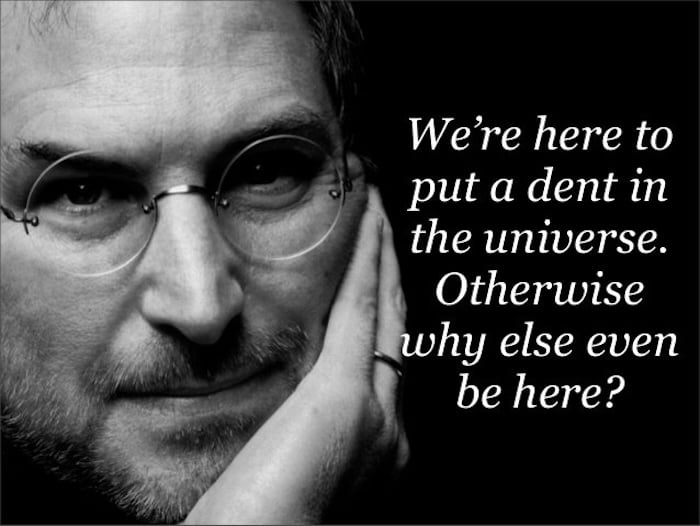
Are we on a roll? Sure seems like it. The Netherlands has had a sizable number of Unicorns over the years, including Booking.com, Adyen and Mollie. But consumer-facing digital companies rarely put a dent in the university, to quote Steve Jobs. To hold the U.S. and China at bay, Europe needs advanced computing technology and artificial intelligence. More success translates into more momentum, more risk capital and institutional investment shifting to tech and more pressure on bureaucrats to do something or get out of the way. Even if Europe and the Netherlands up their games, will our vulnerable Unicorns only become prey for the sharks in The Valley?
– Terry Boyd
Future Unicorns?
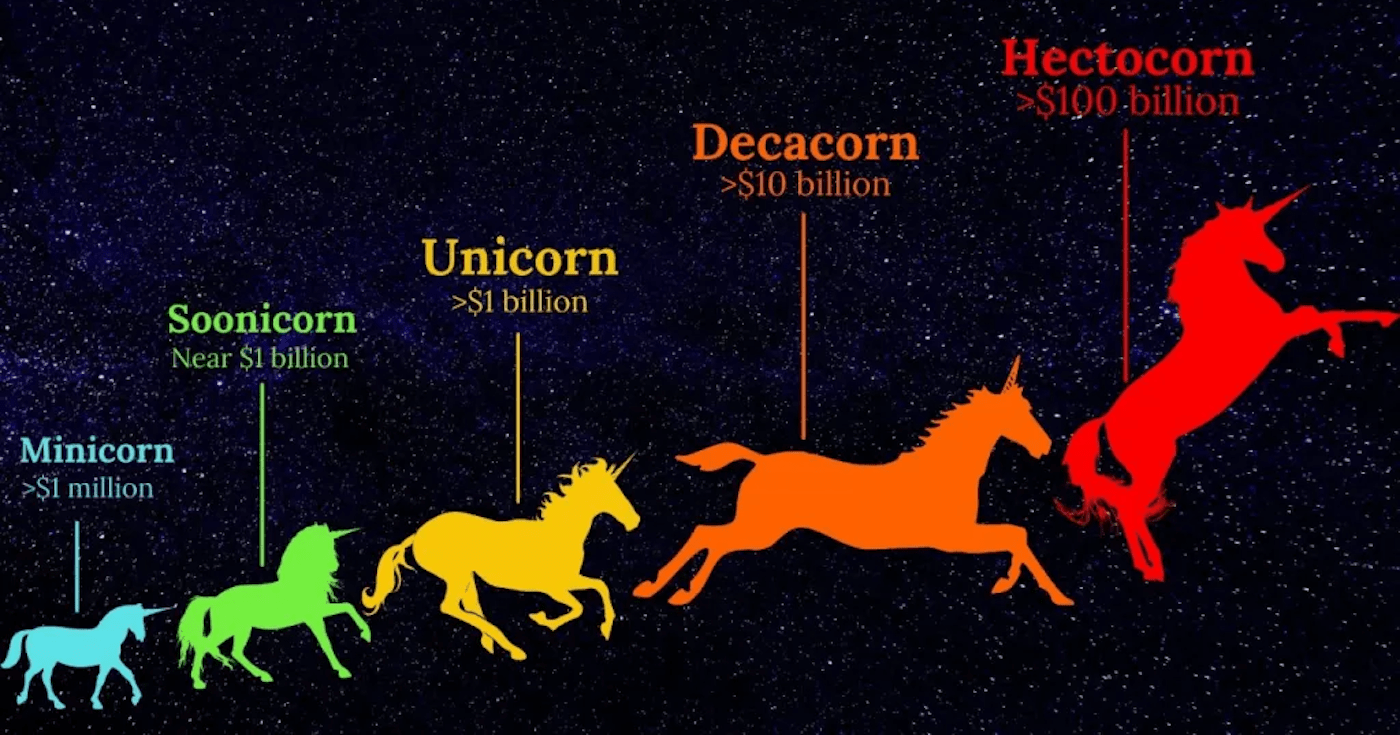
This is where we get greedy and start identifying companies likely to follow in the steps of ASML, NXP and Nearfield Instruments. Caveat: As a source we talked with last week on High Tech Campus pointed out, you never know when even the strongest young company will go sideways. A “Unicorn,” after all, is a construct based on a loose model of largely arbitrary valuations, fast growth, future revenue projections, the value of the total market and, of course, the willingness of VCs to invest millions in risk capital. It’s made up. But more times than not, Unicorns either go public or are acquired for stunning multiples. That happens really quickly in the United States. In Europe, it tends to take years.
Who gets to decide if a company is a Unicorn? Well, for this post, we do. We know the tech, we know the people and, well, we’re pretty good at sizing up teams and tech.
Here are our picks:
• We’re sticking our necks out, but the math works for us. Axelera AI, which makes chips for AI at the edge, has raised at total of $450 million-plus and has revenue. CEO Fabrizio Del Maffeo is mum on the subject of whether Axelera is a Unicorn. With that much capital, they gotta be. Plus, Axelera AI makes chips for inference, the process of running AI models in real-world applications. There is no hotter semiconductor category.
• Wonderful – Based in Amsterdam, Wonderful joined the Unicorn Club earlier this year after raising a $150 million Series B funding round for a total of $284 million. All in less than two years. Wonderful provides an AI platform for customer interaction automation across multiple categories including HR, sales, support and legal. The platform delivers natural conversations across voice, chat and email channels. It integrates with existing systems to personalize service and update records, according to the Wonderful website. The platform offers oversight, governance and compliance features built for enterprise standards.
Future unicorns
• XIVER – XIVER, based on High Tech Campus, is the only independent MEMS (micro-electric mechanical systems) foundry in Europe, has impressive international executives. While their Dutch founders don’t meet our “foreigners work harder” hypothesis, their CEO Wil van de Wiel fits the bill, Like ASML and NXP, they’re a spinout from Philips, which we think is a better model than two guys in a garage. Van de Wiel is credited as the inventor of ASML’s advanced Twin Scan technology. He was COO/CEO at Pallidus Inc. in Albany, New York and CEO of several companies in the U.S.
• Euclyd has some serious promise because it has some serious backing. And remember, the Sand Hill Road types don’t just look at technology. They invest in founders and the people who can actually do what they say they can do. Based on High Tech Campus Eindhoven, this data center hardware startup has an all-star, all-European team of founders and investors including Peter Wennink, the retired president and CEO who turned ASML into a chip tool monopoly. CEO Bernardo Kastrup oversaw strategy and M&A at ASML.
• Eyeo is a consensus favorite of our sources on High Tech campus. The Image-sensor startup eyeo announced a 40 million euro A round in May. The company is developing the next generation of image sensors through their proprietary color splitting technology.
From their release:
eyeo has developed the world’s most advanced nanophotonic color-splitting technology, redefining imaging for consumer, industrial, XR, smart city and mobile applications with color-splitting photonics technology that triples light sensitivity and breaks sensor resolution limits, delivering unprecedented picture quality, color accuracy and resolution.
The new capital will accelerate design capabilities, deepen its OEM partner ecosystem and “drive commercial deployment across a $30 billion global imaging market.” The round – led by Innovation Industries, with participation from existing investors imec.xpand, Invest-NL Deep Tech Fund, QBIC fund, High-Tech Gründerfonds (HTGF) and Brabant Development Agency (BOM) – pushes eyeo’s total funding to 55 million euros
• Avendar – Okay, Europe seeks AI sovereignty. We get it. This could be just the ticket. Avendar bills itself as the “Intelligence Platform for the Europe of Tomorrow.”Their mission is “to make Europe safer” with a trustworthy and transparent AI platform that strengthens high-stakes decision-making. By unifying complex data and insights, they help rganizations act faster, identify risks earlier and make decisions with greater confidence, according to their website. So, think of Avendar as Palantir with a moral compass and without all the creepy billionaires.
• Sendcloud – Sendcloud is not a startup, but it was early in the game of using SaaS and the cloud to assist e-commerce companies in shipping. They raised about $200 million, grew quickly during COVID, then struggled. So, this is a maybe ….
Holst Centre: Sparking new industries
(Editor’s note: This was posted originally on the High Tech Campus Eindhoven website. But it’s apropos to today’s EBB topic.)
For 20 years, the Holst Centre has done what few others can: transform complex R&D into thriving businesses. Founded as a unique collaboration between imec and TNO, Holst Centre pioneered Europe’s open innovation model and continues to translate breakthrough research into real-world impact.
Through spin-offs and ventures such as FononTech, LionVolt, Keiron, AIKON Health and Touchwaves, it has filled value chain gaps and created entirely new markets. Companies including Axelera AI, eyeo, Bloomlife and LifeSense Group demonstrate how this innovation ecosystem continues to generate the next generation of breakthrough ventures.
We are proud that so many companies that emerged from, collaborated with, or were inspired by the broader TNO, imec and Holst Centre innovation ecosystem call High Tech Campus Eindhoven home. This includes Nearfield Instruments, FononTech, Axelera AI, eyeo, Keiron, LionVolt, AIKON Health, Touchwaves, Bloomlife, LifeSense Group, Carbyon, Aircision and AMSYSTEMS; companies that started, grew and continue to innovate here.
The impact extends even further. Through investments by LUMO Labs at High Tech Campus Eindhoven, companies such as LinkSight, Scenexus and Aiosyn are helping shape the next generation of deep-tech innovation.
Key milestones
- 2004: Founded at High Tech Campus Eindhoven by imec and TNO
- 2005–08: First shared industry programmes in ultra-low-power wireless sensing
- 2009–12; Holst becomes a global reference for flexible electronics and organic OLEDs
- 2013–16: Strategic pivot to health & wearables: ECG patches, continuous monitoring, neural interfaces
- 2017–19: Batteryless, energy-harvesting sensors — zero-maintenance IoT becomes real
- 2019: flexible OLED research reaches the market
- 2020–22: Covid accelerates the health mission; remote patient monitoring validates years of investment
- 2023–25: AI at the edge + sustainable/recyclable electronics: the next chapter begins
Briefs
• ASML is crucial to the development of the new IBM nano stack that makes it possible to put 100 billion transistors on a chip the size of a fingernail. IBM claims its new chip is a sub-1 nanometer node chip — the smallest, most powerful chip technology in existence. Commercial nanostack is projected within five years and building it will require ASML’s High-NA EUV lithography, which IBM gets at the Albany Nanotech Complex later this year. ASML CEO Christophe Fouquet called nanostack “a prime example” of how advanced lithography’s tighter patterning unlocks new innovations.
• ASML joins TNO at High Tech Campus: Photonics is moving from promise to production. ASML and TNO are joining forces at the new Photonic Chip Pilot Line in Eindhoven, where lithography, process control and metrology will help determine whether chips that work with light can be manufactured reliably and at scale.
• Elon Musk falls in love with ASML: ASML will be a likely supplier for Elon Musk’s massive chip fabrication plant in Texas known as Terafab. Calling in virtually to ASML’s annual technology conference, Musk spoke in a fireside chat with CEO Christophe Fouquet. The event was only accessible to employees, but Musk’s appearance was confirmed by the company. It comes days after Musk wrote in a post on X that, “ASML should be treasured and supported. It is arguably the greatest company in Europe.” Should ASML shareholders be expecting a tender offer?