
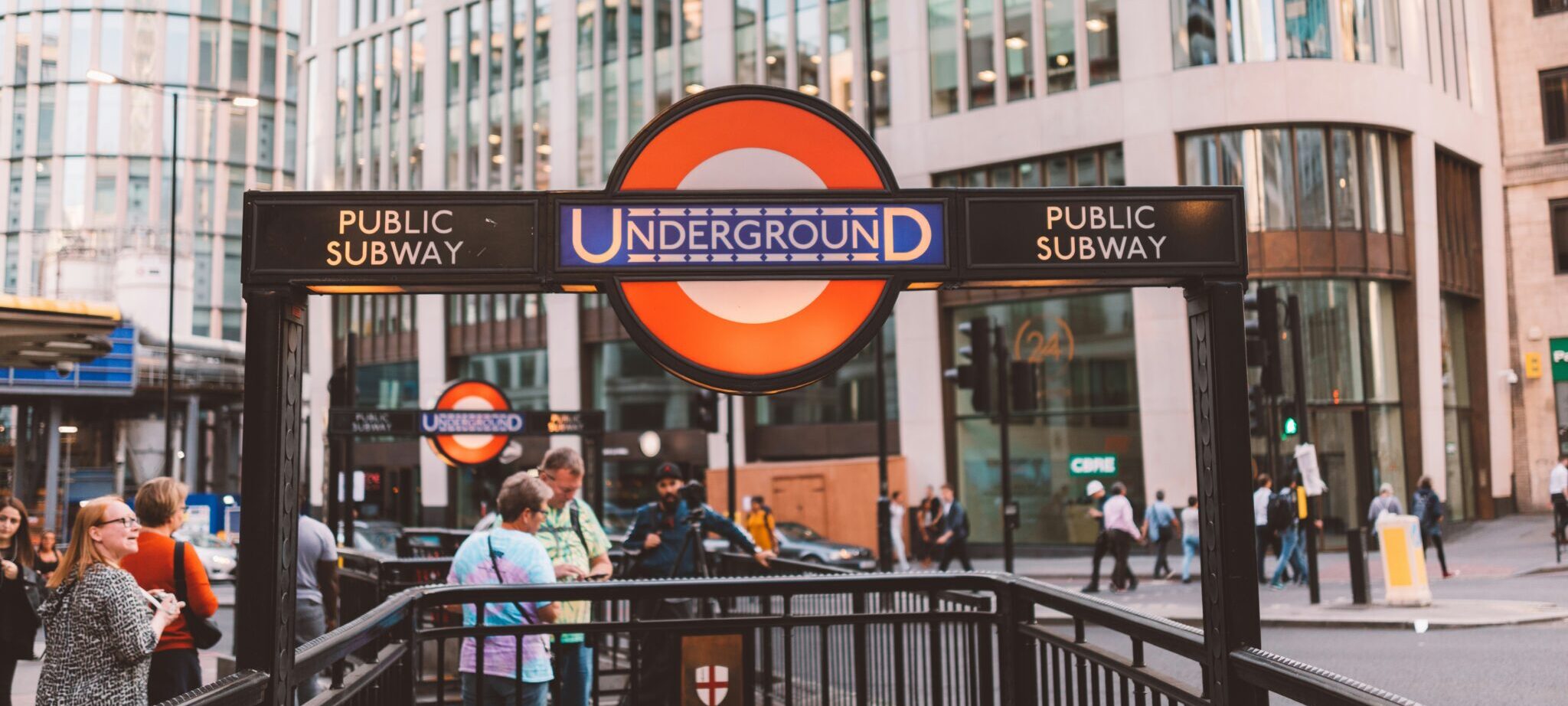
Did you know that there’s a limit on what you are charged for in a day when using London’s public transport, no matter how many times you travel? That’s the daily cap, one of Transport for London (TfL)’s tricks that not every expat knows.
How much does a daily journey cost, you may ask? The answer lies in London’s zones and the sooner you understand them, the better off you will be when getting around the British capital. So, let’s guide you through useful tips, apps and some fun facts about London’s transport.
London Tube and other transport options
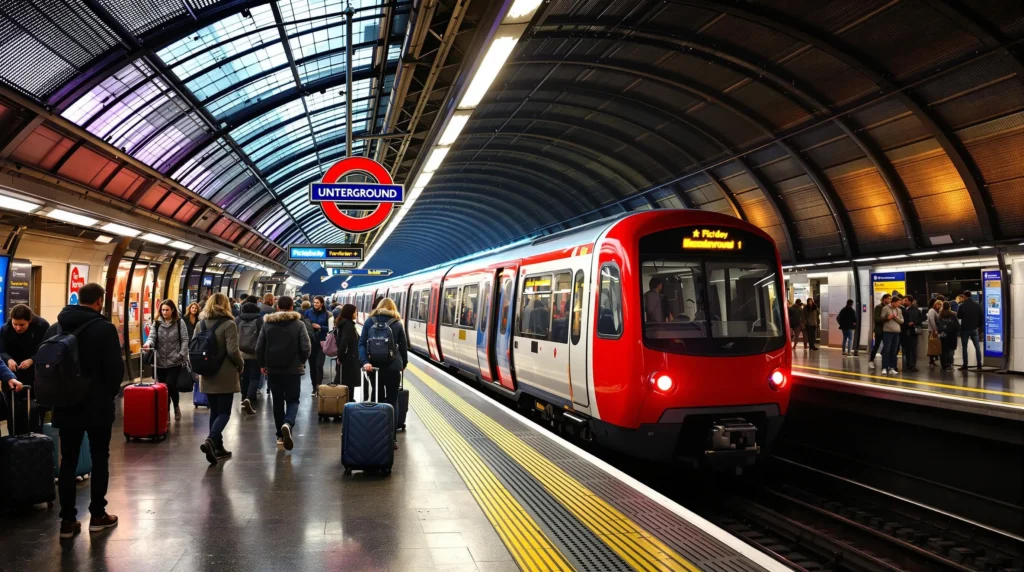
If you live in London, it is very likely that you are one of the 1.1 billion passengers using the London Underground each year. The Tube is the world’s first underground train line. It opened in 1863 and offers the most extensive metro network in Europe, totalling 470 kilometers in length. It is followed by Madrid, Europe’s second biggest metro, which is 291 kilometers long.
There are 272 stations and 11 lines circling, including:
- Bakerloo line
- Central line
- Circle line
- District line
- Hammersmith & City line
- Jubilee line
- Metropolitan line
- Northern line
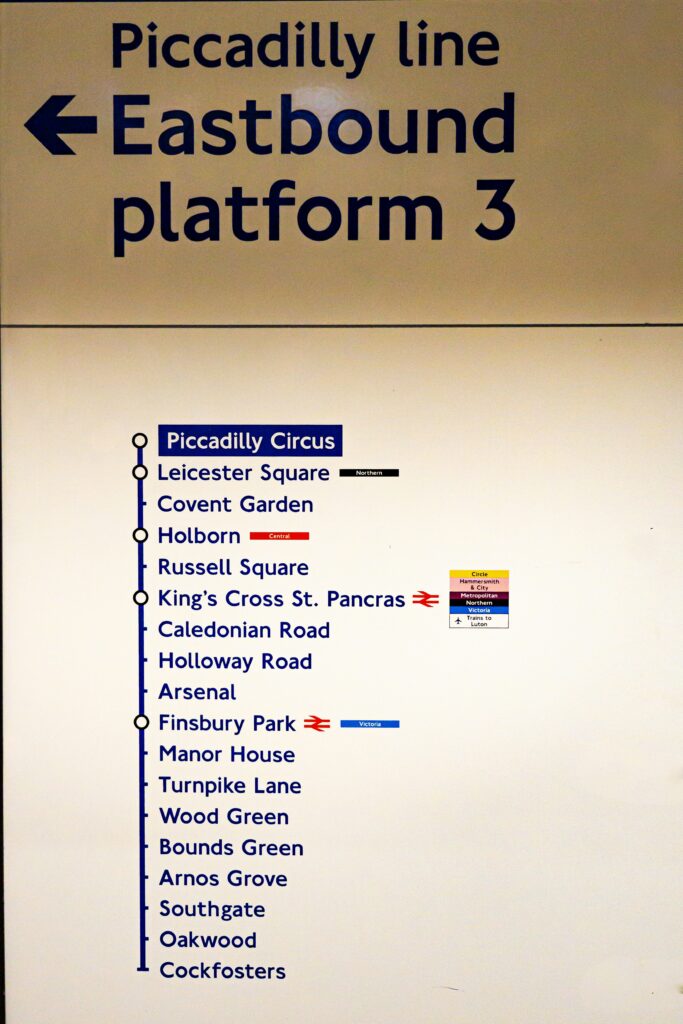
- Piccadilly line
- Victoria line
- Waterloo & City line
There are more lines than that are not strictly classified as part of the London Underground although it feels as if they are:
- Docklands Light Railway (DLR) – stops at London City Airport.
- Elizabeth line – one of the best options for connections to Heathrow Airport.
- London Overground – with new lines connecting all areas of London.
Other ways to get around London include:
- Buses
- Trams (mainly in South London, Croydon and Wimbledon)
- Santander Cycles (public bicycle hire scheme)
You can find more specific information about London transport on the TfL website.
How to save money on the London public transport
Besides cycling, the cheapest transport option in London is the buses. £1.75 for a flat rate fare as of October 2025, meaning that you pay the same whether you ride for one stop or the whole route. There are many night buses too. The downside of taking the bus is that it may take much longer due to the traffic, time of day and where you need to go. With that in mind, the London Underground is one of the best ways to get around the city.
The way your Tube fare is calculated depends on the beginning and end of your journey. So, “remember to tap in and out” is a rule that you will constantly hear and see around the London Tube. This means tapping your contactless bank card or oyster card to the yellow circle when entering and leaving the station because that’s how TfL will calculate how much you’ll pay.
London Zones go from 1, the most central, to 9, the most distant. Let’s say you live in Zone 2, two of your colleagues live in Zones 3 and 4 and you all travel to the office in Zone 1 for 8 am. You will pay a lower Tube fare due to the shorter distance:
- Zone 1–2: £3.50
- Zone 1–3: £3.80
- Zone 1–4: £4.60
This is why whenever possible and feasible, some people walk to another Tube station in a zone closer to their intended destination and save a little money.
Another layer to this spending scenario is the time of your journey. To save on Tube fares, the best bet is to avoid peak hours which run Monday to Friday between 6:30 a.m. and 9:30 a.m, and between 4 p.m. and 7 p.m.
How to save on multiple trips in a day
The top saving tip for London public transport is to always use the same payment method, whether it’s the Oyster or your bank card. In other words, if you started the day using the Oyster card (the official London transport card) carry on with it in every journey. The same advice goes if you begin your day’s travel with your contactless bank card or your phone.
If using your bank card, at the end of the day – or rather, in the middle of the night – you’ll probably get a TfL payment notification of how much you spent on that particular day. If you add your bank card to your TfL account you will be able to check your history and see that one or more journeys were “free” because you reached the daily cap.
As of October 2025, the daily cap is:
- Zones 1-2: £8.90
- Zones 1-3: £10.50
- Zones 1-4: £12.80
- Zones 1-5: £15.30
- Zones 1-6: £16.30
- Zones 1-7: £17.80
- Zones 1-8: £21.00
- Zones 1-9: £23.30
Useful travel apps in London
To get around London, Google Maps is very likely one of the apps you’re probably already using. Yet, many Londoners prefer Citymapper, considering it more precise in terms of the journey cost and the best section of the train to get on depending on where you’ll need to change. The TfL Go app is also useful. As a good Londoner, you can have tons of travel apps on your phone.
Sightseeing tips using London public transport
One of the most meaningful ways to get the “I’m in London” feeling is to get off at Westminster Station and climb the stairs to see Big Ben right in front of you. Although Londoners are not big fans of the area due to mass tourism, it’s undoubtedly a memorable experience. If you have family and friends visiting you that’s very likely to move them.
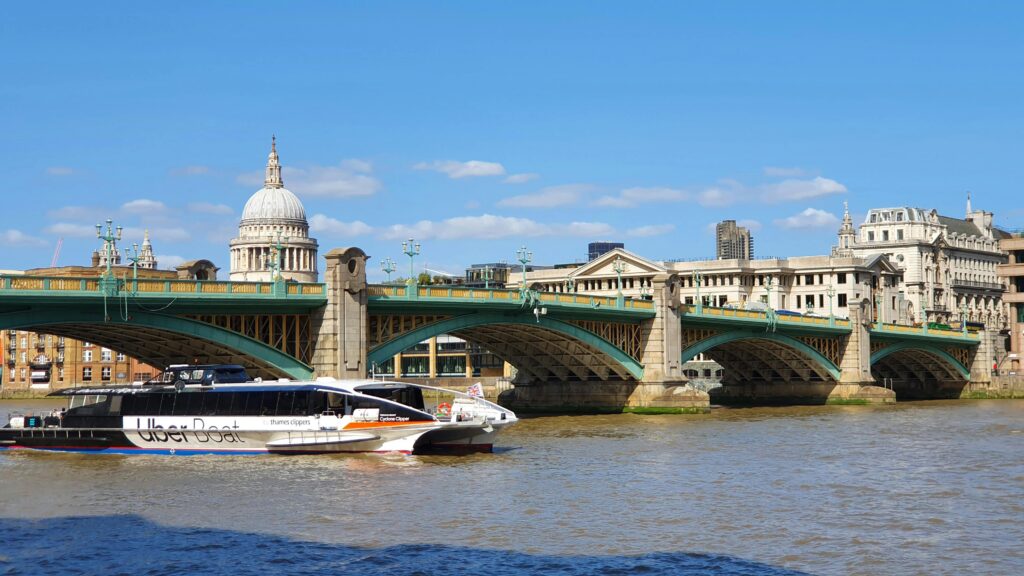
From there, you can get the River Bus. Uber boat (part of TfL) is another brilliant way to travel around London. You can hop on and tap your card on the yellow card reader Westminster Pier for an amazing sightseeing journey on the River Thames.
London transport fun facts
- When taking the Northern Line, pay close attention to the “mind the gap” announcement at Embankment station – the voice recording of actor Oswald Laurence was kept after his passing, so his widow could still cherish his memory.
- If you’re getting off at London Bridge station, carefully check the exit signs; otherwise, you may end up pretty far from where you’re planning to be. This is a useful tip for all big London stations.
- Angel station escalators don’t feel like an endless journey by accident; they are the longest in Western Europe: 60 meters (197 feet), although Hampstead is the deepest station.
- Some stations offer a “Thought of the Day” sign to inspire Londoners (or at least try) daily.
- There’s a London Transport Museum in Covent Garden – the ticket costs £25 per adult.
- Always, always, always stand on the right on the Tube station escalators.
**********
See more about London here in Dispatches’ archives.
Read more from Andrea here on Dispatches.

Andrea Juste is a writer and editor covering health, psychology, travel, productivity, thought leadership, and more. Andrea was born and raised in Brazil, where she worked for a decade as a journalist before moving to Italy in search of her roots, then the UK, to connect with different cultures. Based in London, she manages content marketing projects for clients worldwide.