Most of us never think about hospital visits when planning our holidays but the truth is that regardless of how much planning we do no trip is fully protected from surprises. A twisted ankle, a sudden illness or an accident can happen to anyone and have the potential to ruin a perfectly planned getaway unless dealt with carefully. Luckily if you live in a European Union country, travelling with your EHIC (European Health Insurance Card) can be a life-changer.
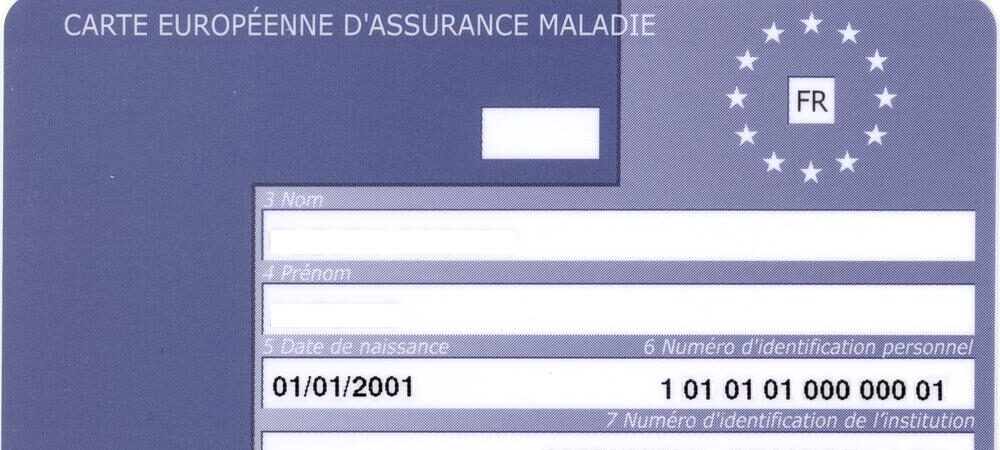
This little blue card (which you can get for free!) ensures that you will get medical care abroad just like locals do.
The European Health Insurance Card (EHIC) allows you to receive medical attention in the 27 EU countries, Iceland, Liechtenstein, Norway, Switzerland and the United Kingdom under the same conditions as residents registered in the national health system of those countries. Thus having this card might save you a lot of stress in your next holidays.
Keep reading to learn more about how it works and how to get yours:

How does it work?
The EHIC was introduced in the early 2000s in order to make life easier for people travelling around Europe. After all, if borders are open for travel then healthcare should be too. A common misbelief is that only EU citizens have the right to request and use the EHIC but this is not true!
Anyone who is legally residing in an EU country and registered in its national health system can request this card for free.
The idea behind the EHIC is to simplify the process of seeking healthcare in case of emergencies when travelling to the countries mentioned above. Having this card gives you the right to access to the health system under the same conditions as residents of those countries. Since access to healthcare is free in most EU countries, having the card will allow you to receive medical attention for free or for a very low cost. However, some countries may still require you to pay part of the cost or claim reimbursement later so it’s always good to check before you travel.
It is also important to remember that the card should not be treated as a replacement for travel insurance as it doesn’t cover private healthcare and other costs such as a return flight home or lost or stolen property. Furthermore, the card cannot be used if you are travelling specifically to receive medical treatment abroad.
How to get the EHIC
The institutions in charge of issuing the card vary from country to country. For example in Portugal the request should be made through the social security system while in Italy it is handled by the national health service. In other countries such as Sweden and Germany, you can even apply online through the public healthcare website or receive the card automatically once you’re registered in the system.
Anyone who is legally residing in an EU country and registered in the national health system can request the EHIC. This includes citizens but also immigrants who have access to public healthcare. In other words if you have a national health number or are listed in the local health system you are usually eligible.
The emission of the card is completely free and it is usually valid for a period of five years. If you lose it or it expires you can simply request a new one. Most countries are also able to provide a temporary certificate if you need proof of coverage before the physical card arrives. However, I would recommend applying way ahead of any planned trip. Even though it is a very straightforward process that only takes some minutes the card can take up to a couple weeks to arrive by post depending on your country of residence.
Does it actually work?
I have used my EHIC several times in different EU countries and I have never had any major inconveniences. The only thing everyone should know and be prepared for is that, depending on the place where you travel to, some healthcare providers could be less familiar with the blue card and try to find a way around it. In my case, my card has never been rejected but I have had to do some explaining about how it works and why it is my right to use it.
This has happened specifically in smaller cities or towns but, in the end, everything has worked out perfectly.
**********
Read more about healthcare around Europe here in Dispatches‘ archives.
Read more from Mónica here on Dispatches.

Mónica da Silva is half-Venezuelan, half Portuguese and has lived in Venezuela, Portugal, Spain and Germany. She has studied linguistics and has a Bachelor’s Degree in European Studies. Besides contributing to Dispatches, she works remotely as an English teacher, which allows her to be on the move as often as she wants.