
(Editor’s note: This is Pt.1 in a two-part guide to life in Cairo for expats. Dispatches focuses mostly on Europe, but there are no borders for expats.)
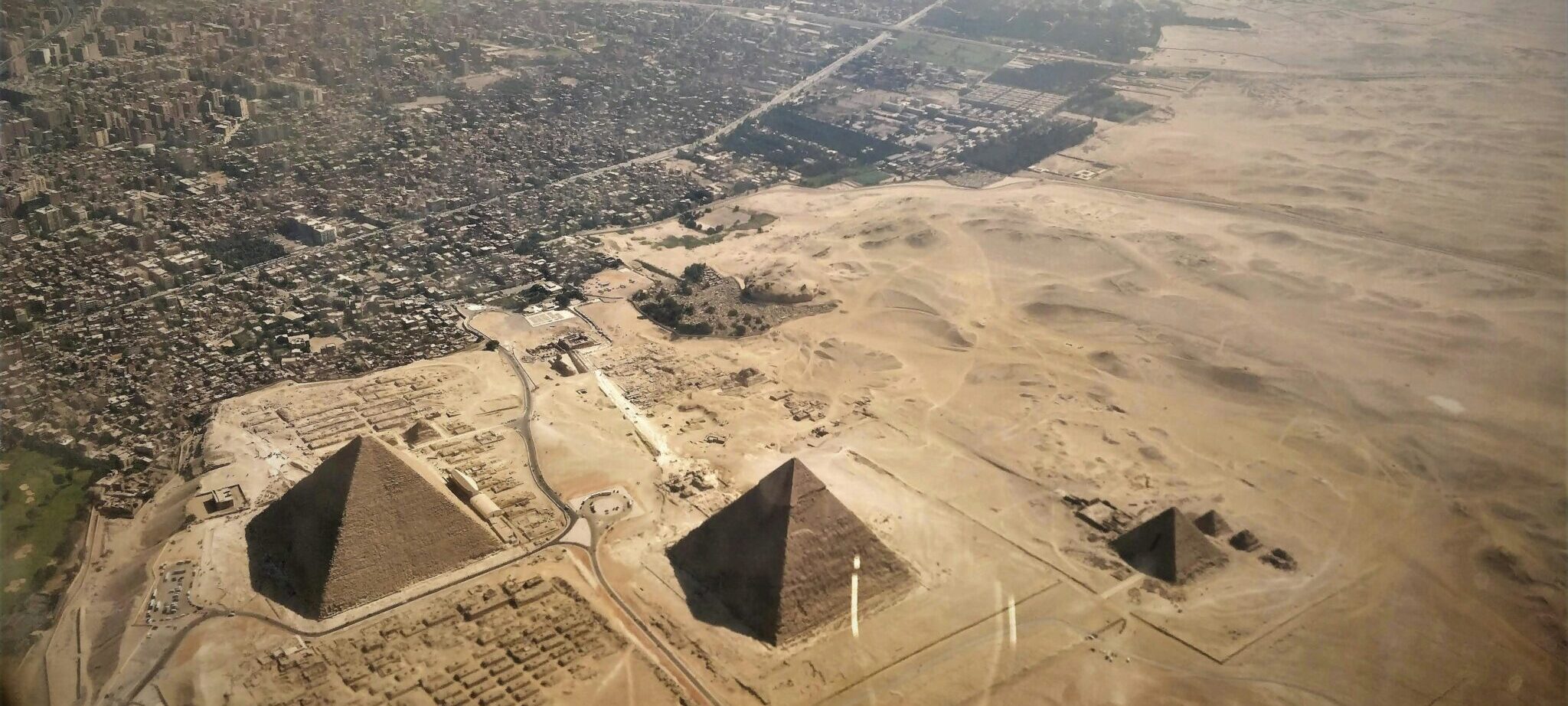
Whether it’s your personal choice or a job transfer, you are ready to take the leap – you’re moving to Cairo, Egypt! Cairo is known worldwide for the Pyramids of Giza, the only one of the Seven Wonders of the World still visible today. But as you might expect, living in Egypt is very different from vacationing there. I have been living in Cairo for 10 years, so the city holds (almost) no secrets for me.
Housing, visas, education, healthcare … I will explain everything below. Ahlan wa sahlan felqaheera! (Welcome to Cairo!)
Cairo at a glance
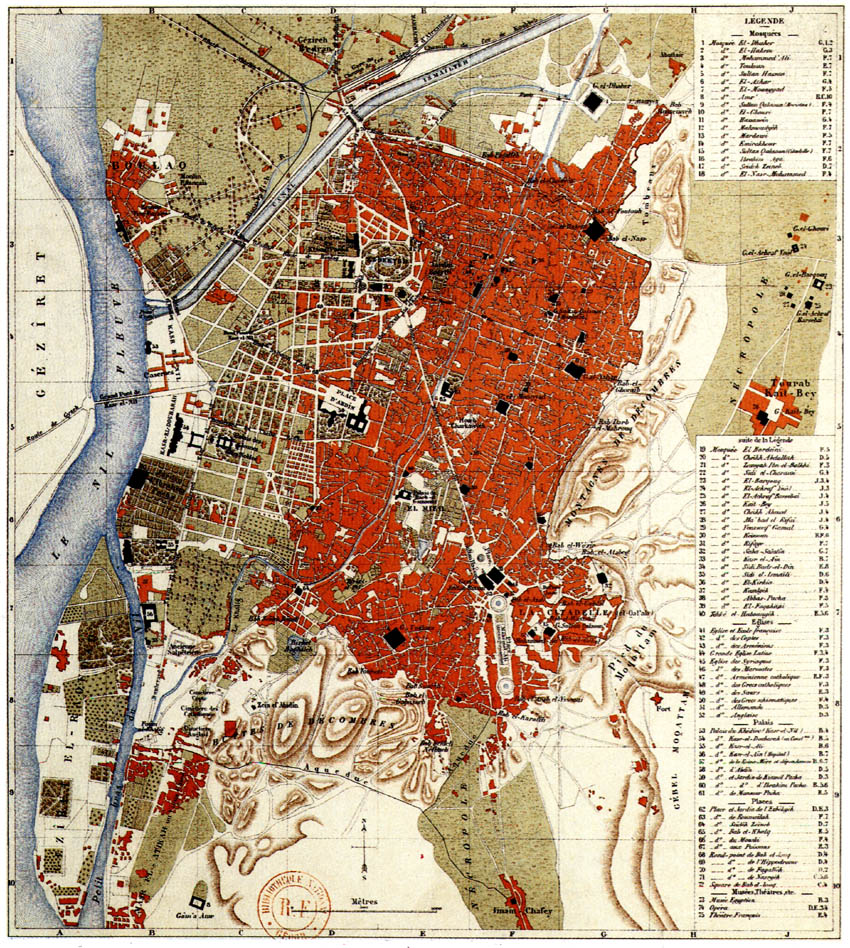
📌 Northeast of the African continent and western edge of the Middle East.
🏞️ River city located at the entrance to the Nile Delta – Africa’s longest river and the second longest river in the world.
👨👨👧👧 22 million inhabitants in 2024 (but statistics always lag behind reality!)
💬 Language: Egyptian Arabic, a dialectal version of Standard Arabic. English is also quite widely spoken.
🛐 Religion: Islam, a significant minority of Christians (mainly Copts) and a very small community of Egyptian Jews (fewer than 10 people)
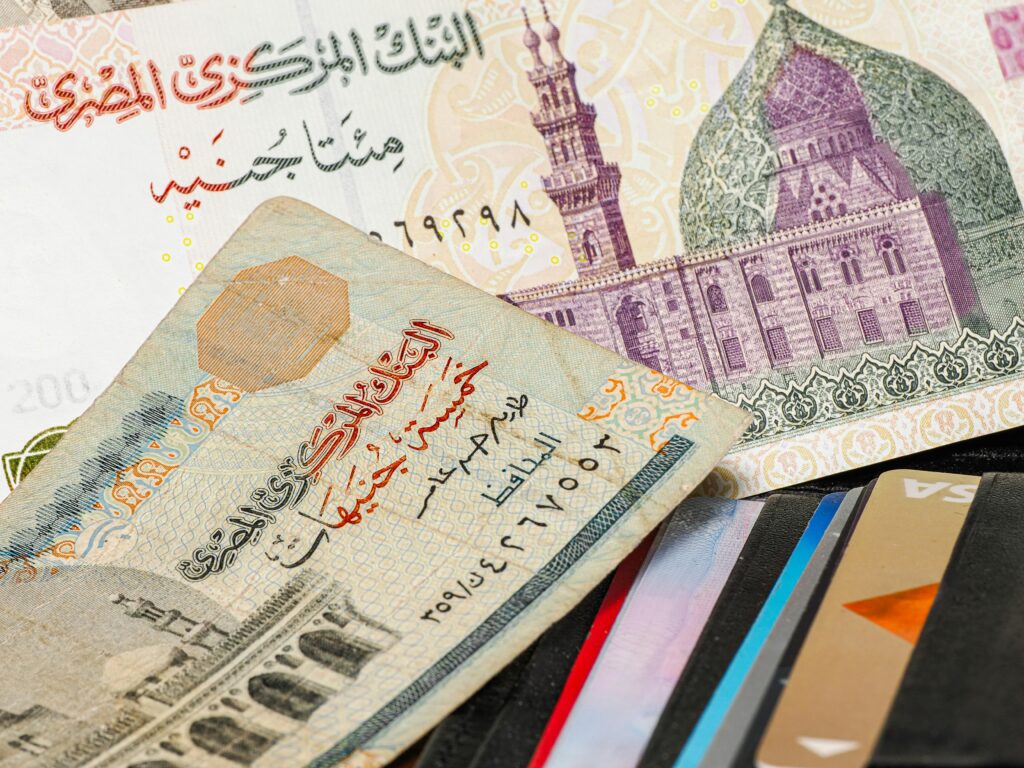
💰 Currency: The Egyptian pound (1 EUR = 57 EGP in August 2025)
📈 Ranking in the UNDP Human Development Report in 2025: No. 100 out of 193 countries.
Visas
Egypt offers three main types of visas: study, work and tourism. The legal conditions for staying in the country are often the source of most concern. So let’s start there.
Study visas
If you are admitted to study at an Egyptian university, your university will arrange for a student visa on your behalf. This will be done after the start of the academic year which means that you will first need to enter the country on a regular tourist visa. This will be more or less easy depending on your nationality. Generally speaking, citizens of Western Europe and the United States can purchase a 3-month tourist visa upon arrival at the airport (cost: $25 in August 2025). Others must obtain their visa in advance by contacting the Egyptian embassy in their country of origin. However, there are many special cases. For more detailed information, you can consult AUC’s website (the American University in Cairo), which lists situations by nationality.
Work visas
In theory, all companies (whether Egyptian or foreign) operating in Egypt must apply for work visas for their foreign employees. In this case you can simply enter Egypt on a tourist visa and switch to a work visa once you are there. Your company will take care of the application. Please note that obtaining a visa can take a long time (up to several months). Yes, but that’s the theory.
In reality, most Egyptian employers of foreign workers do not apply for work visas for their employees (to save money, avoid paying social security contributions, etc.) Companies that offer employment contracts are those that recruit executives, for example for international projects (subway lines, energy projects, etc.). Large groups with subsidiaries in Egypt also generally take care of obtaining work visas for their expatriates. But all the others (i.e., the majority!) reside in Egypt on a tourist residence visa. This applies in particular to tourism employees and international school staff. If you are in this situation you will be working off the books, but this has no consequences – you will be able to live a normal life and travel freely throughout the country.
That said, you will have to obtain this visa yourself.
Tourist visas
It follows from the above that this is the visa held by tourists, but also by all ordinary individuals who are not fortunate enough to belong to the category of “employees with work visas.” How do you obtain it? You will enter the country with a standard tourist visa which is often valid for three months. As mentioned above, certain nationalities can purchase it upon arrival at the airport but others must obtain it in advance. Check with the Egyptian embassy in your country.
After three months, it becomes a headache. You will have to apply for a tourist residence card, valid for a maximum of six months. This must be renewed every six months. The main difficulty for newcomers is that no official information is available anywhere. To stay up to date there is one major option: the Facebook group Visa Regulations for Ex Pats in Egypt. You will find everything there – where to apply; what documents to bring; costs and waiting times. Information is constantly being shared in this group and any changes are posted (and there are always changes!)
Telephone and internet
There is also a formality to complete at the airport upon arrival – registering your mobile phone. You will find the registration office before going through customs. Since early 2025, foreign mobile phones brought into Egypt must be registered upon arrival. Otherwise, you risk having your line disconnected three months later. Your mobile phone’s IMEI will be registered and you will be all set. In principle, the operation is free for one phone per person but some people are required to pay a tax of up to 38.5 percent of the phone’s value. Unfortunately, it seems to be mainly a matter of luck ….
Local mobile and internet operators
There are four providers – Etisalat, Orange, Vodafone and We. SIM cards are very affordable and cost about 1 euro in August 2025. Vodafone and Orange are the most widespread providers for mobile communications while We is the public operator Telecom Egypt and has an advantage in terms of home internet. In Cairo, home network speeds are generally equivalent to European standards.
Housing
Cairo’s geography differs from that of European cities – there is no real city centre or suburbs, but rather historic neighbourhoods surrounded by new towns which, together, form Greater Cairo. In historic Cairo, you will find the traditional neighbourhoods of this 1,200-year-old city. This is where the museums, pyramids, Saladin Citadel, Khan Elkhalili souk district, etc. are located.
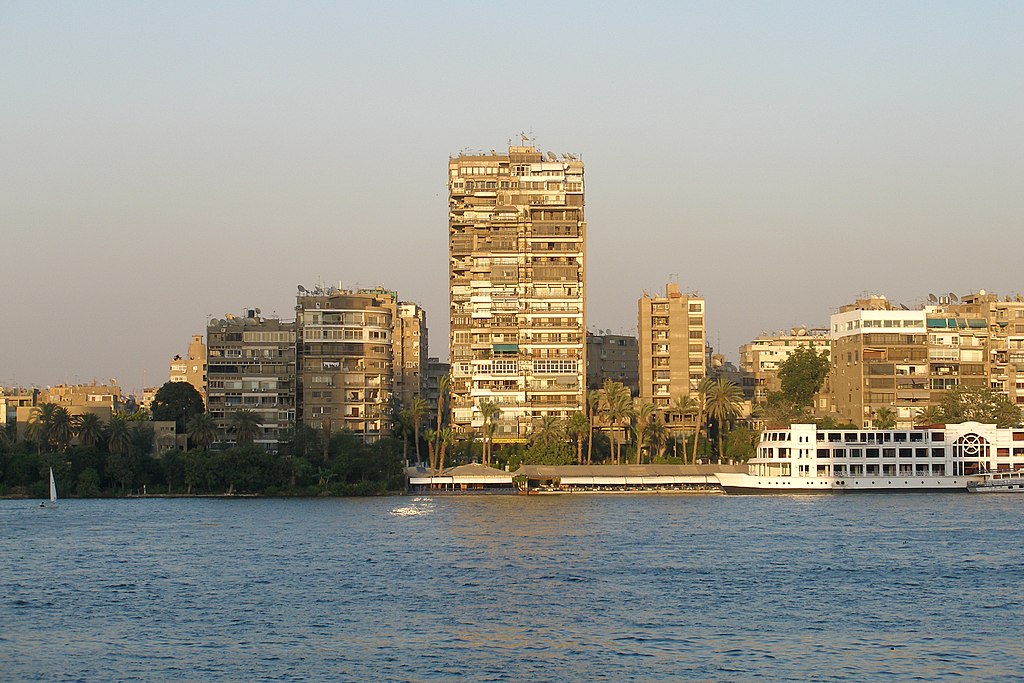
Here are the districts where many foreigners choose to live:
- Zamalek, the multilingual neighbourhood
- Dokki, the commercial neighbourhood
- Maadi, the academic neighbourhood, which is home to many international schools. This is also where the US Embassy houses a large number of its staff.
On the other hand, the new cities are mainly 6th of October City, the 5th Settlement (where the American University’s new premises are located), ElSheik Zayed and ElRehab. Theses cities include what are known as “compounds,” which are a kind of a gated community – you enter them through security gates; shops are separate from homes; and life is organised around the car.
How to find accommodation?
Few companies help with finding accommodation, so you will probably have to fend for yourself. Real estate agencies are rare.
There are actually three main methods for finding housing:
- Via classified ads on websites such as Dubizzle.
- Through independent real estate agents – called samasra (singular: semsar), who can be found in every neighbourhood. Just ask local shopkeepers where to find them
- Using the random method – ask the bawabs (i.e., building caretakers) if there are any vacant apartments in their building. Many people find accommodation this way!
Once you have found your future cozy nest, you will need to sign the lease with the owner.
Top tip: Ask for a bilingual Arabic-English version of the contract. The usual practice is to pay one month deposit of one month’s rent in advance and a sum to be agreed with the real estate agent or other intermediary who helped you find the apartment. Offer half a month’s rent and resist if he/she asks for a whole month.
👉 A few things to know:
- If you are a single woman, some landlords will prefer that you only have female friends over – no male friends. It’s up to you to decide if this suits you. But in any case, this condition must be made clear to you before signing the lease.
- The lease is often for one year, but two or three years are also possible.
- If the lease is signed for more than one year, the annual rent increase rate is negotiable. Try not to accept more than 10 percent to limit your rent increase in a year.
- In Egypt, the content of the lease is of little importance. The spoken word counts for more, so discuss with your landlord before signing and if you feel it is unclear, walk away.
- Rent is paid in Egyptian pounds, not foreign currency, which is prohibited by law.
Education
How to choose a school for your kids
If you are moving with your family, one of the important questions you will face is choosing a school. Cairo has long been an international city, offering educational options in various foreign languages. Overall, the different systems are as follows:
Kindergartens
(Hadana in Arabic) accept children age 4 to 6, but some have programs for children as young as 3 years old. There’s a wide range of options available and the quality of care varies greatly. It is best to gather information in advance, for example by asking questions on Facebook groups for foreigners or foreign women in Cairo.
Public education
This should be avoided at all costs – because of overcrowded classrooms (80 students per class), dilapidated buildings, poor teaching standards and a method of learning based exclusively on memorization.
In Egypt, only people who cannot afford private school send their children to public school.
Private education
There are many options available, varying considerably in price and quality of teaching. If you are a citizen of a country with its own education system, it will be easier for you, as it will probably be offered in Cairo –this is the case for the US, British, French, and German systems, which have schools in Cairo. Children of other nationalities are also eligible.
International schools
There are also Egyptian international school groups; some of them may be very good and offer international ‘final exams’ giving students the opportunity to enrol in any university in the world. Alternative teaching methods are also represented – for example, there are Montessori schools in Cairo. Finally, large religious congregations – Jesuits, Armenians, etc. – also offer their own educational networks, in English as well as French. Although Christian, these schools also accept students of other faiths, as religious education classes are optional.
Stay tuned for Pt. 2.
**********
Read more about Egypt here on Dispatches.

Gaëlle Anne Fouéré
Gaëlle Anne Fouéré holds a Master's degree in journalism and has contributed to major outlets including Le Monde and the BBC website. Gaëlle later joined the United Nations system, where she worked with several agencies (WHO, UN Women, and peacekeeping missions), mainly producing both online and offline publications.