(Editor’s note:This post about Sofascore is part of Dispatches’ Tech Tuesday series. Dispatches covers tech because so many of our highly skilled internationals are founders and entrepreneurs.)
Sofascore’s origins are humble ones. They don’t begin with generous investments or famous mentors. They begis with Zlatko Hrkać and Ivan Bešlić, two friends in Zagreb who decided to start a blog back in 2010. It was named Cesarica. On that blog, they commented on everyday topics, social phenomena and the tech of the time, not yet aware that their data-driven approach to content would become the foundation of their shiny business future.
As the blog and its engagement matured, Zeljko Jankovic of Croatia’s Business Diary notes that Zlatko and Ivan noticed what the audience was most interested in: sports content. Not in the form of sensationalist headlines, but through concrete numbers and real-time game tracking.
It was this transition towards sports marked the key turning point for Cesarica’s evolution to Sofascore.
Data-driven player rankings
Zlatko and Ivan decided to develop the very first version of their future platform, first as a desktop service for tracking results, and then – as the era of smartphones arrived –they increasingly focused on the mobile experience.
That’s how Sofascore came to be.
It’s a Croatian–developed app that not only informs, but also contextualizes games, with data, analysis, graphs and more. What would eventually become their trademark is the Sofascore rating that assigns players a numerical value for their performances, regardless of subjective impressions or media narratives.
Today, Sofascore can boast of a massive 30 million monthly active users, and in May 2025, new records were set: 16 million weekly active users and 10 million daily active users.
Sofascore becomes the benchmark
Growth like that doesn’t just appear overnight.
This Croatian app built trust among its users slowly. It started with winning over sports enthusiasts, and now it is regularly used by players, coaches, agents, scouts and media outlets such as the Italian Gazzetta dello Sport, which uses the Sofascore Rating as the official benchmark for evaluating a player’s performance. Spanish Mundo Deportivo and the British Daily Mail also use Sofascore.
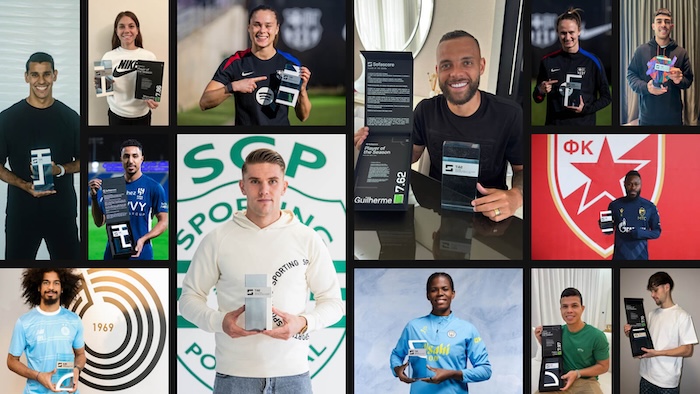
One of the key moments in strengthening the brand was the launch of the Sofascore Player of the Season award, which is based solely on numerical parameters and consistency throughout the season. Recently, Sofascore’s Player of the Season award reached a new peak. At this year’s Sunset Sports Festival, a special recording of the first live presentation of this award took place for the New York City-based broadcast network CBS. The award ceremony was hosted by Kate Scott of CBS, and Peter Schmeichel of the BBC.
The awards will be broadcast this month on CBS.
A platform of equality
One of Sofascore’s most important missions is to open up space for those outside the spotlight. Amateur leagues, lower league football, local competitions and less popular sports often lack access to visibility tools. This is where this inspiring Croatian story comes in not as just another app, but as a platform for equality.
Through tools like Torneo by Sofascore, amateur leagues from around the world can upload results, lineups and statistics. This gives their competitions visibility in the same app as the world’s biggest clubs. In doing so, they democratise sport.
The best-known tool, used by more than 30 million people every month, is the Sofascore player rating, which rates a player’s performance on the pitch with a simple score from 3.0 to 10. Behind that simple number lies a complex algorithm. The ratings aren’t based on impression or popularity, but on a detailed analysis of more than 100 different parameters including passes, shots, defensive actions, fouls, tackles and many more seemingly small, yet significant statistics.
Poised for growth
Today, Sofascore boasts more than 300 employees. They’re mostly based in Zagreb, as well as in other parts of the world. The biggest team outside of Croatia is located in Brazil and Latin America. Sofascore’s employees come from different fields, but are united by a love for sports and data. In contrast to the glamorous startup scenes that rely on hype, a quiet passion for quality, accuracy and long-term thinking is what has got Sofascore where it is today.
Never prone to fancy external campaigns or excessive promises, Sofascore’s growth was built organically. Today, based on Sofascore data, graphics are created for TV shows, sportsjournalists use them for analysis, influencers and clubs. Through projects like Torneo, the community itself becomes part of the production process, and this is what makes Croatia’s innovative Sofascore unique.
Sofascore is now ready for its next big challenge – entering the US market. In the run-up to the 2026 FIFA World Cup, which will be held in the US, Canada and Mexico, local teams, new products and branded content are being developed for American users. This doesn’t just mean translating the app or further developing American football and other “American” sports.
This means developing local teams, hiring people who understand that market, producing content that resonates with American users, and branding that will capture the same tone, all while maintaining Sofascore’s reliable consistency in analytics and quality.
Lauren Simmonds is the editor of Total Croatia News, the largest English language portal in Croatia. She lives in Zagreb, Croatia, and is a translator, content writer, interpreter and the co-author of "Croatia - A Survival Kit for Foreigners," which was published in 2022.
Receive the latest news and updates from Dispatches Europe. Get lifestyle & culture, startup & tech, jobs and travel news dispatched to your inbox each week.