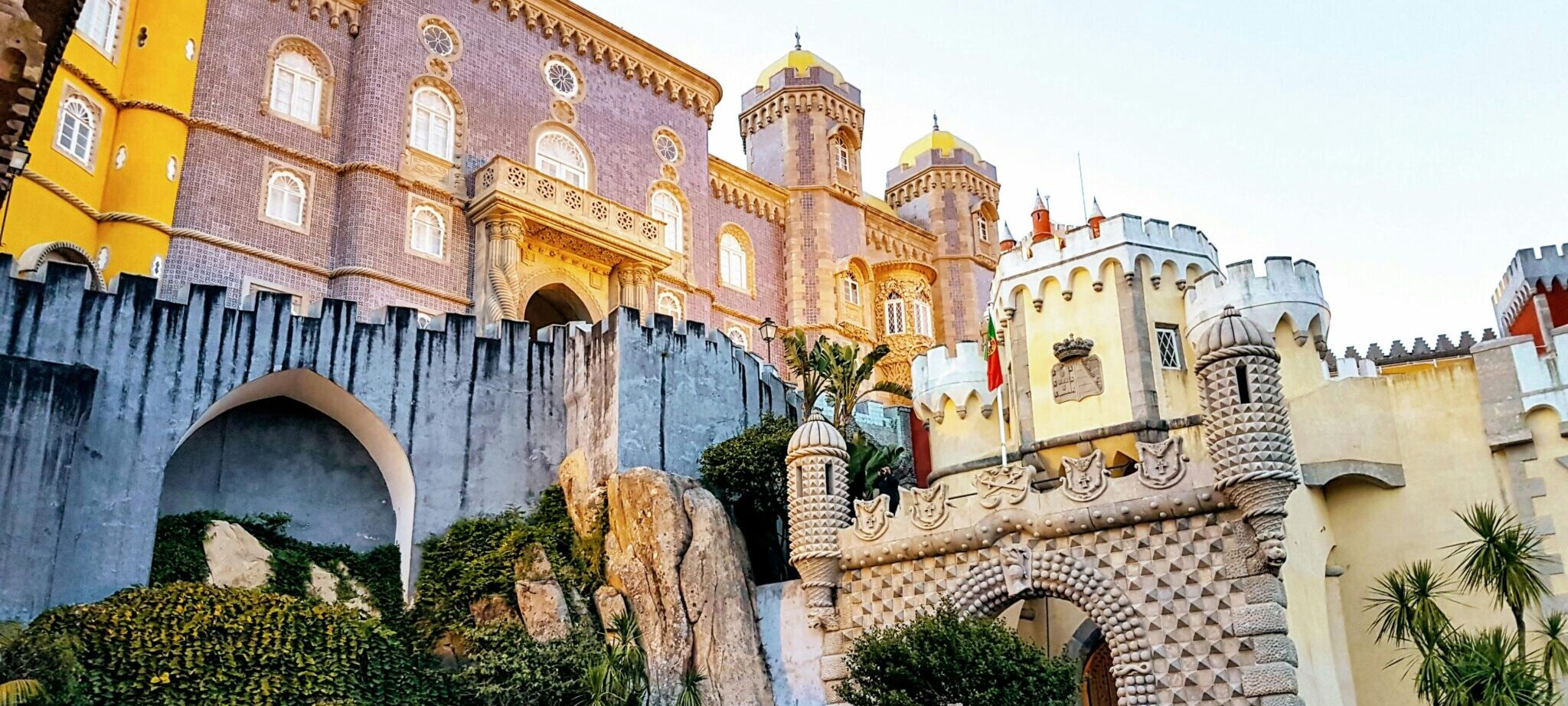
Even though Portugal doesn’t overlook the Mediterranean, it has been massively associated with this large intercontinental sea. Historically, Portugal shares deep connections with major empires from the Mediterranean: the Romans, the Umayyads of Northern Africa and the Spaniards. Moreover, in some parts of Portugal the climate is defined as Mediterranean, such as on the island of Madeira, or influenced by the Mediterranean as we see around the Tagus River.
The shared cultural aspects between Portugal and the Mediterranean-facing south of Europe go beyond the climate and culinary traditions. For example, the heightened sense of community and emphasis on the family unit are other common traits. Enjoying ancient festivals in the moment, along with a relaxed pace of life, also adds to Portugal’s Mediterranean feel.
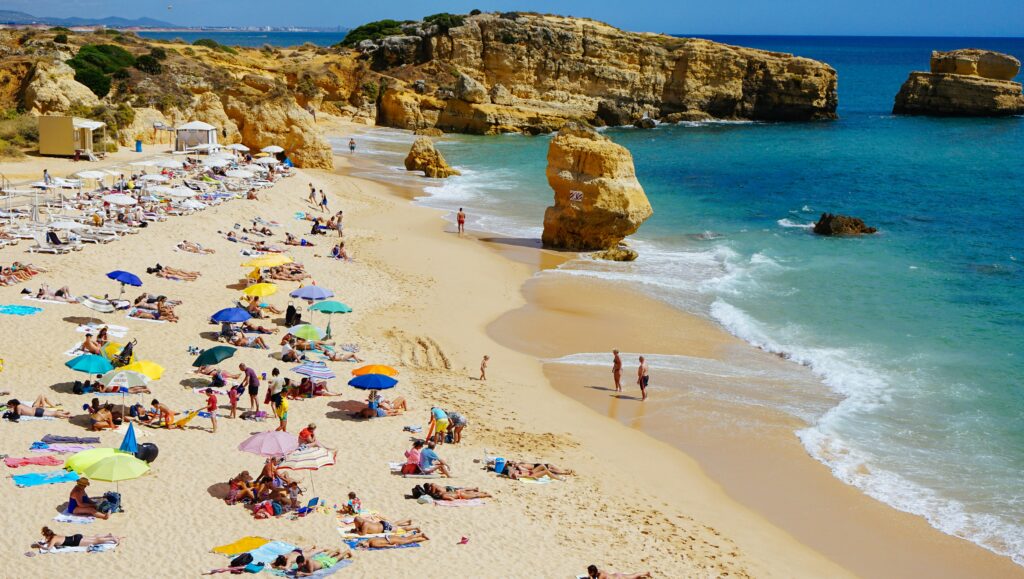
However, Portugal has a large coastline on the Atlantic which contributes to the unpredictability of the weather and rains. Like the climate, the Portuguese are also a hybrid between the chill Southern European culture and the Atlantic seafaring tradition. The melancholic aspect of the culture, best embodied in the famous Portuguese word “saudade,” meaning “melancholic longing or yearning,” departs from the festive cultures of the neighbouring countries. Saudade seeks something other than what is there in the present which can be closely linked to a nostalgia for the lost glory of the Portuguese Empire.
We can see how Portugal lies right in the middle of open Mediterranean and introspective Atlantic cultures in customs and habits of everyday life.

Image source here.
The family unit
The boyfriend of a Slavic friend of mine is Portuguese. Even though they have been together for many years, she still can’t understand how close he is to his family. I assumed that he is close in the way we, as Arabs, are to our families. But over time and as I listened frequently to her complaints, I realised that the issue is closely linked to trust as well.
The Portuguese tend to trust their families up to the third cousin or so more than they trust friends or workmates.
It is the exclusivity of the family unit that, to me, belongs neither east nor west. In Mediterranean culture it is also common to find friends functioning as a substitute for the family unit, while in the north such as in the United Kingdom, the family doesn’t necessarily come first at all.
Warmth with a distance
My Sicilian colleague invited me to his mother’s house in Sicily two months into our professional relationship. He promised to show me and my husband around Palermo next summer. The Portuguese would go about this differently. They are warm but they won’t invite you to meet their parents or to hang out in their family house two months or even two years into the friendship. Likewise, they won’t expect you to go out of your way for them.

Surprisingly less noisy
From personal experience, a bit of noise is tolerated in Portugal. But if you think you can be as loud as Spaniards or Italians in a restaurant or at a party you’ve got another think coming. I remember I couldn’t finish my breakfast in a café in Madrid at 8 a.m. because of how loud people were at 8 a.m.! Again, I am Egyptian. I thought I was immune to this. But I had never heard that much noise at 8 in the morning before.
That will never happen in Portugal, and if it does someone will be glaring at the source of the loudness murderously.
This doesn’t mean that the Portuguese don’t know how to party but they have to be drunk on a Saturday night out to sound as loud as Spaniards at 8 a.m. on a working day.
People often sing birthday songs very loudly in cafés and restaurants which in Denmark caused a waiter to stop our birthday song halfway as we weren’t allowed to be that “loud” blowing birthday candles.
I find this Portuguese “middle-ness” exceptionally unique. It has a distinctive charm which is equally communal and introspective, individualist and family-oriented. I don’t personally subscribe to all these customs, but I find them rich in how they originally came to being and in the ways in which they continue till now.
**********
Read more about Portugal here on Dispatches archives here.
Read more from Sarah here in Dispatches archives.

Sarah Nagaty has a PhD in cultural studies, She’s lived in Portugal for six years.
As a student of cultural studies, Sarah is drawn to what connects people from different backgrounds to new cultures and places, how they relate to their new surroundings and what kind of activities they could engage with in their new hometowns.