If you’re still deciding where to spend your Christmas holidays and eyeing destinations for an atmospheric city trip, here’s an idea: stunning architecture with an old-Europe feel, Christmas markets, hearty food, thermal baths and – with a bit of luck – snow. Budapest offers all of it within walking distance.
I happen to know the city quite well – thanks to a husband with Hungarian roots and frequent family visits there. But this time I decided to go beyond my own experience and ask Budapesters themselves how they spend the Christmas holidays, where they go and what they eat, so this guide is as local as it gets.
How locals celebrate
In Hungary, Christmas Eve is the main event. Families gather on the evening of 24 December to exchange presents and sit down to a bowl of halászlé, a spicy paprika fish soup. Days before, kitchens are busy with baking: the most important cake is bejgli, a rolled pastry filled with poppy seeds (mákos) or walnuts (diós), closely followed by zserbó, layers of walnut and apricot jam under a chocolate glaze.
Christmas Markets
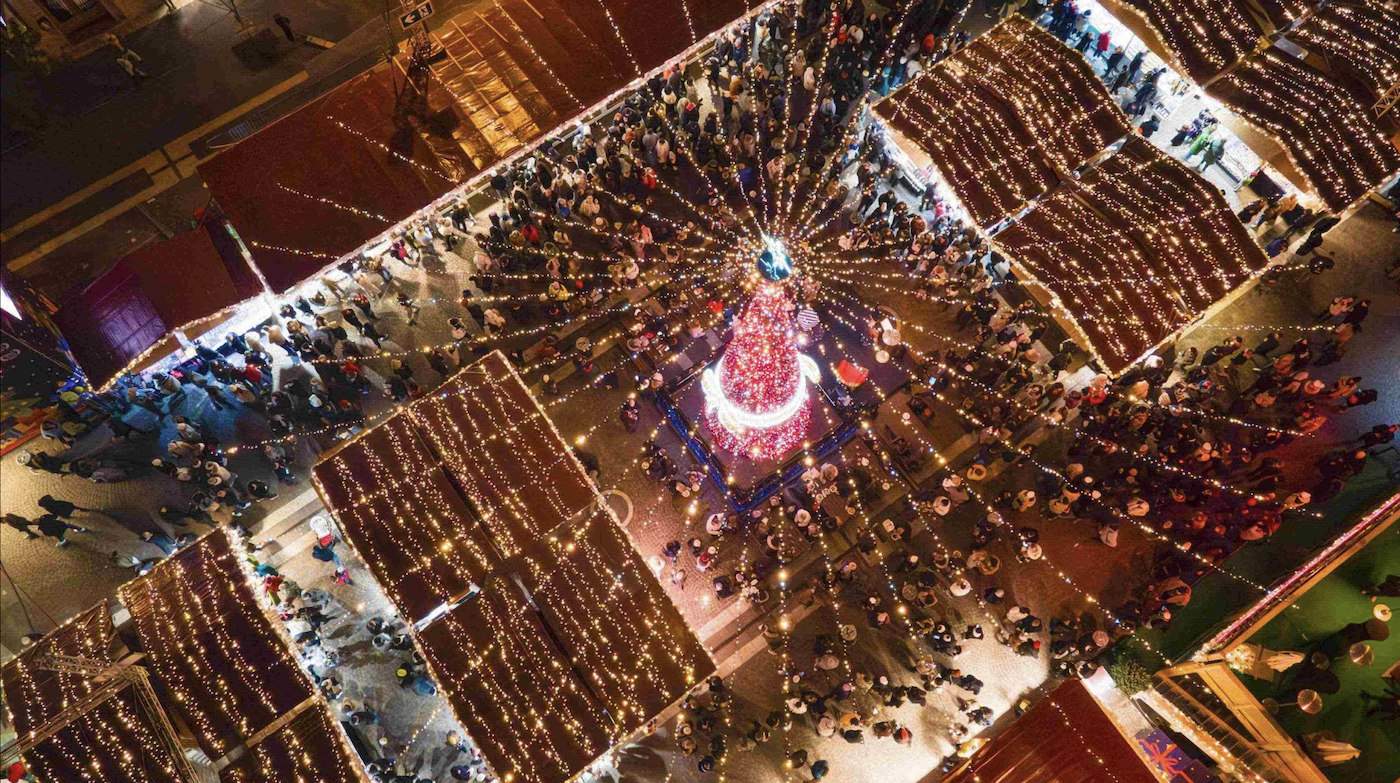
The two big ones are open from 13 November: Advent Basilica in front of St Stephen’s Basilica, where a light show is projected onto the façade every evening from 17:30, and Vörösmarty Classic Xmas on Vörösmarty tér, with its giant Christmas tree and a free mini train. By the way, Advent Basilica has been voted Europe’s best Christmas market four times by European Best Destinations, and in 2024 was even crowned the best European Christmas market of all time.
For a calmer atmosphere, locals recommend Budavári Advent by Matthias Church in the Castle District and the Advent weekend fair at Várkert Bazár, right below the Castle on the Danube. Smaller markets also pop up on Deák tér and in Városháza Park.
What to eat at the markets
Skip the generic sweets and go for the classics: hurka and kolbász (Hungarian sausages), a steaming cup of halászlé, and töltött káposzta (cabbage leaves stuffed with minced meat and rice). Hungry for more? This guide to eating in Budapest covers where to find the city’s best dishes beyond the markets.
Lights and skating
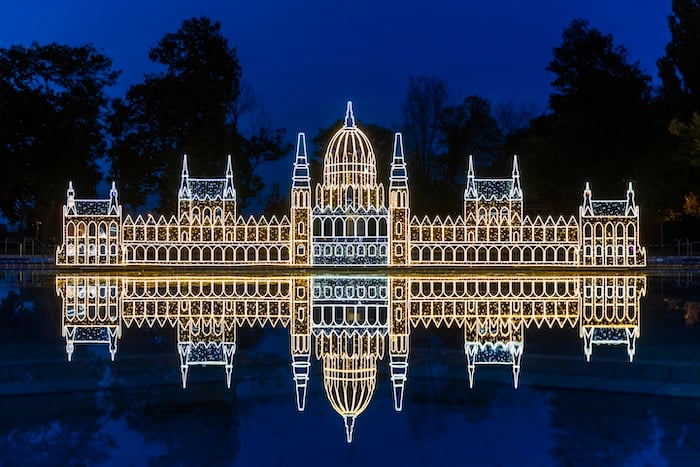
After dark, head to Margit Island, where Lumina Park turns the Palatinus baths into a light garden until early March, or take a short trip to Gödöllő, about 40 minutes by HÉV from Örs vezér tere, where the gardens of the Royal Palace turn into the Story of Lights (this season it is closed on 24 and 25 December). And for something more active, the City Park Ice Rink in front of Vajdahunyad Castle is open for the season from 20 November.
Getting around
On the metro and the 100E airport bus, you can simply tap your bank card at the validator; on buses and trams, buy a ticket in the BudapestGO app and scan the QR code on board.
If you plan to travel a lot, a weekly or monthly pass from a ticket machine is the most worry-free option. Between the airport and the centre, the 100E Airport Express runs around the clock to Kálvin tér, Astoria and Deák Ferenc tér for a special fare of 2,500 Florits (about 4 euros) – the easiest way to catch an early flight. Otherwise, the regular 200E bus and the M3 metro get you there with standard tickets.
Good to know: anyone over 65 years of age travels free on Budapest public transport with an ID showing their age, though seat reservations on Intercity trains and boat trips still cost extra.
What happens 24 thru 26 December
Christmas Eve belongs to families, so the city slows down from midday. This year, 24 December is a public holiday for the first time, so most shops stay closed all day and the Christmas markets close in the early afternoon. The evening of the 24th is the quietest of the year.
Public transport winds down early as well: last year, most buses and trams made their last daytime runs between 3 p.m. and 4 p.m. and the metro ran until 6 p.m., with night buses taking over after that.
On 25 and 26 December, most shops and many traditional restaurants stay closed and transport runs on a holiday timetable, while the thermal baths stay open. So book your Christmas dinner in advance, stock up before the 24th and check this year’s timetables closer to the date.
Practical tips:
- Shops are usually open late, but most close on public holidays, including 24, 25 and 26 December, though there are always a few 24/7 shops around.
- Eating out is easy, and many restaurants have heated terraces. Popular breakfast and lunch spots get queues, so go early.
- Street parking in the centre is paid on working days from 8 a.m. to 10 p.m. (until 8 p.m. or 6 p.m. farther outside the centrum), and since July 2026 only by phone (app, text message or call). Mind the time limit and look out for signs reserving spots for residents with permits. On public holidays parking is free.
- Between the markets, there are plenty of museums and concerts to fill your days, and to warm up, nothing beats a soak in a thermal bath. Széchenyi and Lukács have outdoor pools that stay warm all winter, while Rudas offers a 16th-century Ottoman pool and a rooftop pool with Danube views. Note that the famous Gellért Bath is closed for renovation until 2028.
*Author’s note: Some details for this year, such as dates, opening hours and holiday closures, are still to be published, so check the official websites before you go.
–––––––––––
See more about Christmas markets across Europe here in Dispatches’ archives.
Read more from Oxana here.

Oxana Skibun
Oxana Skibun is a fashion and lifestyle editor who has crafted her stories for print and digital media outlets across Europe, the Middle East and Russia. Raised in Moscow, she now lives in Amsterdam, where she continues writing for international audiences.