

Greece is rapidly becoming a top hub for digital nomads thanks to its lively metropolises, picturesque islands and high levels of safety and stability. For those coming from higher-income European and Anglophone countries, the cost of living is relatively affordable too. In fact it’s become so popular that for the past few years Greece has been offering a digital nomad visa. For those who don’t know much about it – or don’t know how it affects you if you hold European citizenship – this post is here to answer all your questions.
Greek Digital Nomad Visa: The basics
The Digital Nomad Visa for Greece allows self-employed, freelance or remote workers to stay and work in Greece for up to one year. It costs 75 euros for the application fee, and 150 euros for the administrative fee. If you wish to bring family members over with you, you must pay an extra 150 euros per family member. Digital nomad visa applicants must work for companies or clients outside Greece and either prove they have sufficient resources for the duration of their stay, or make a net salary of at least 3,500 euros per month.
Greek Digital Nomad Residence Permit: For extended stays
The Digital Nomad Residence Permit is valid for up to two years. It is intended for digital nomads who plan to make Greece a more permanent home and is ideal for those who want to bring spouses or family members with them. It costs €1,000 Euros to apply and an extra €150 Euros for each additional family member. The residence permit does have one additional requirement: you must show proof of accommodation (residential lease or contract for real estate purchase in Greece). Both visas stipulate that you cannot work for Greek companies.
What are the requirements for the Greek Digital Nomad Visa?
All applicants must meet eligibility for a Type D visa to be considered for a digital nomad visa. The Type D visa is a long-term visa that allows third-country nationals to stay in Greece for up to a year. Digital nomad visas fall under this umbrella. Applicants must have a valid passport, medical certificate stating they have no contagious diseases and are healthy, official proof of no criminal record and valid health insurance for the duration of their stay in Greece.

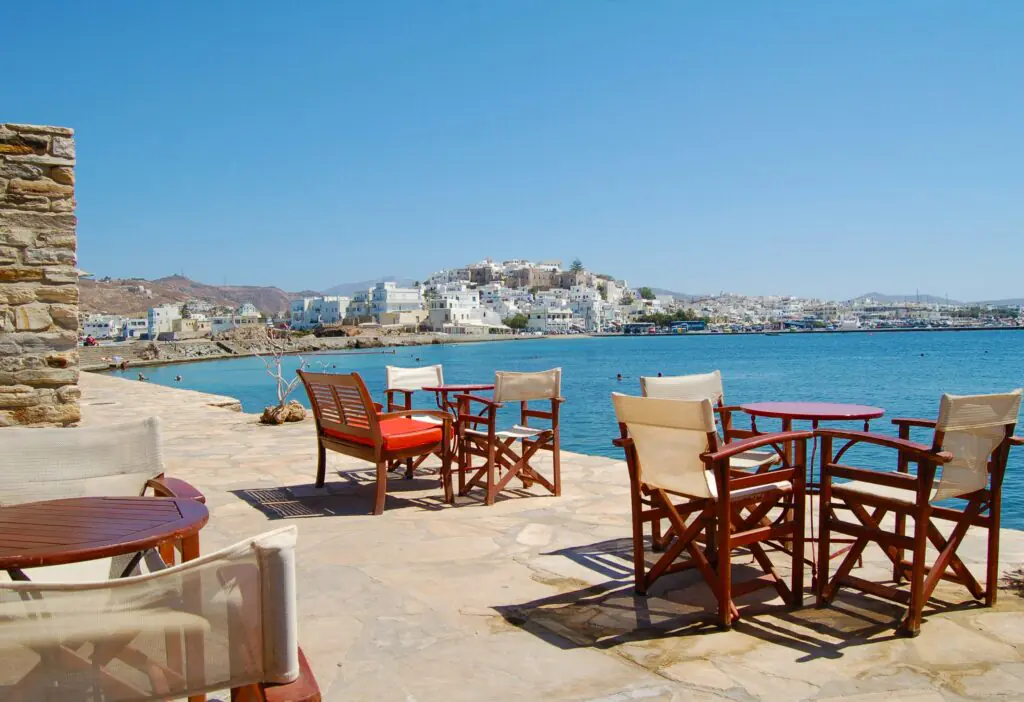
Image source Wikimedia Commons.
Can a digital nomad apply for the visa while in Greece?
Digital nomads cannot apply for the year-long Digital Nomad Visa while in Greece.
Also, digital nomads whose initial application is for the Digital Nomad Residence Permit must apply at an embassy or consular office outside of the country. This change has been executed as of February 2026. Since regulations may change again, it’s best to double-check the Work From Greece website, the official site set up by Greece’s Ministry of Foreign Affairs, for details before applying. However, if you’re in Greece on a digital nomad visa and decide you’d like to stay in the country longer, you can apply for the Digital Nomad Residence Permit within Greece before your visa expires.
What documents do I need to apply for the visa?
To apply for the visa at your nearest Greek embassy or consular office, you must submit:
- Signed and completed application form
- Your passport
- A certificate of criminal record from your home country’s authorities
- Proof of travel/health insurance
- Medical certificate
- Declaration letter (that you will work remotely and not for any Greek companies)
- Proof of employment (either contract or your own company’s papers)
- Proof of sufficient funds
- Visa fee (75 euros for the visa, 1,000 euros for the residence permit)
- Proof of accommodation (for residence permit only)
How long does it take to obtain the visa?
The entire process for the Greek Digital Nomad Visa or Residency Permit is usually from one month to three months. Once you have submitted your request, the consulate is obliged to inform you of the receipt and status of your application within 10 days.
Can family members accompany me on a digital nomad visa and/or residence permit?
Yes, for both. There are, however, a few more income and administrative fee requirements. The monthly amount you need to make increases by 20 percent if your spouse comes with you and by 15 percent for each child you bring.
How does this process change if I have an EU passport?
People holding an European Union passport do not need a specialized visa to live and work in Greece, as the EU permits the free movement of people across its borders. However, if you work full-time for a European company, working in Greece for more than six months may affect your salary and taxation. In Greece, your tax liability is dependent on you residency status, meaning that moving from another EU country to Greece for more than 183 days makes you liable to pay tax in Greece. Not only will you now be held to local (Greek) taxation rules and regulations but your employer may have to set up a local payroll or use an Employer of Record to handle Greek income taxes and social security. These extra fees may force a reduction of your compensation. If your company has a branch in Greece, it may adjust your salary to local cost-of-living standards. For remote workers from most European countries, this means a likely pay reduction.
For these reasons, if you’re working in the EU full-time for an EU company and plan to stay in Greece for more than 183 days, you should first check with your employer. Many companies bar employees – even remote workers – from permanently moving to other countries while still under contract with them so they don’t have to deal with a whole lot of extra fees and paperwork. Others have security reasons for preferring you stay in-country to work.
Unexpected perks: Tax Break
Foreigners entering Greece with a Digital Nomad Visa or Residence Permit are eligible for a 50% reduction in their Greek tax burden under a state law that applies to immigrants who have not held Greek residency in the past seven years. The tax break applies for seven years. This also applies to UK nationals
Good luck with the process of miving to Greece. In my experience the quality of life makes up for any cut to wages that you may receive.
**********
Read more about being a digital nomad in Greece here in Dispatches’ archives.
See more from Joanna here.

Joanna Kalafatis
Joanna Kalafatis is a Greek-American travel writer and actress who has lived in Greece, the U.S., and the UK, and currently resides in Athens, Greece. She wrote "Best of Greece" for Moon Travel Guides and has a travel blog at LosetheMap.com; her work has also appeared in Time Out New York, Business Insider, and Matador Network. Joanna has traveled to over 50 countries and plans to visit every destination in the world.