(Editor’s note: This Eindhoven Business Briefing is dedicated to whether the Netherlands can replicate the American model for producing biotech, pharma and medtech and get to market quickly. With our Tech Tuesday series, we cover innovation because so many of our highly skilled internationals are researchers and founders.)
We just got back from Utrecht where we were working with medtech/healthcare/biomed startups and scale-ups, doing pitch training for a Dutch trade mission to Los Angeles and San Diego. California is the largest economy in the United States. If it were an independent country, California would be the fourth largest economy in the world, behind only the U.S., China and Germany.
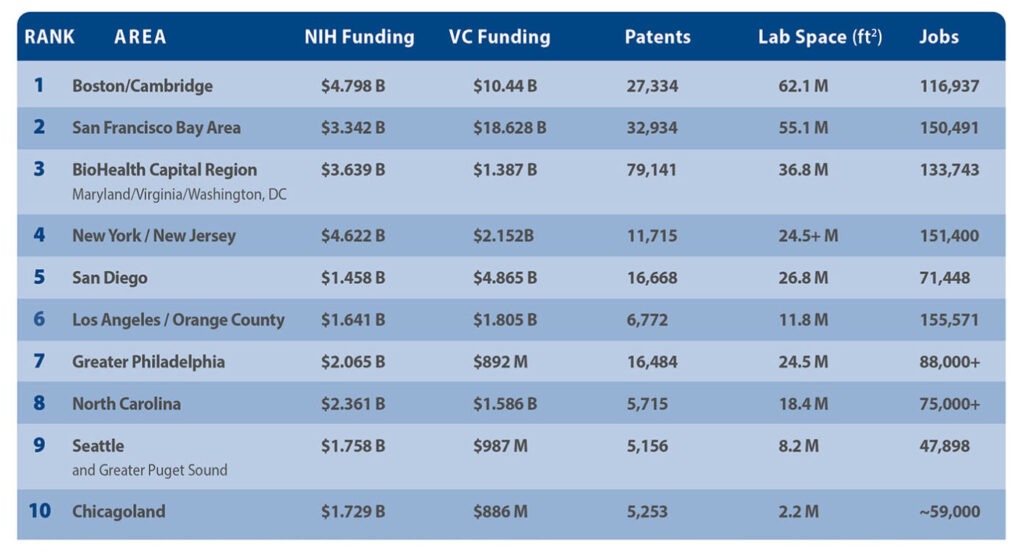
So, for pharma, healthcare and medtech startups/scale-ups, California is the Promised Land. Both LA and San Diego have giant medical centers. LA/Orange County led the nation in biomed jobs (155,571, according to BIOCOM California) and placed fifth in venture capital ($1.2 billion in 2024 and $607 million in Q1-Q2 2025, according to HSBC data cited by BIOCOM California). See more here in Genetic Engineering and Biotechnology News.
One of the questions that came up at our event in Utrecht is “Why do American universities spin out healthcare/biomed/pharma startups faster and on a bigger scale than here in the Netherlands, which can claim some of the best talent in the world?”
Dash for cash
As with publicly traded tech companies, the U.S. leads the world when it comes to creating advanced medtech and biotech/biopharma. And the U.S. does it faster, boosted by universities with venture arms and corporate partnerships with the biggest pharma companies such as Pfizer and Eli Lilly.
The most significant capital raise we could find lately for a Dutch company was 73 million euros raised by protein-design platform Cradle Bio in 2024. Otherwise, the European Innovation Council hands out smallish grants of 15 million and under.
By comparison, American spinouts raise hundreds of millions:
• Last year, MIT spinout Strand Therapeutics has raised a total of about $250 million for technology that makes cancer cells “light up” for faster detection so the immune system can destroy them. The plan is to go to market by 2030.
• In 2025, San Diego-based Timberlyne Therapeutics, a clinical-stage biopharmaceutical company focused on the development of novel therapies for autoimmune disorders. It closed a $180 million Series A round to develop CM313, a “novel humanized anti-CD38 monoclonal antibody” to treat autoimmune diseases. This is sort of the other side of mRNA drug development.
American VCs and private equity have noticed that great tech is going unfunded and they’re getting in on the game.
In breakout rounds (50-100 million euros), participation by American investors in Dutch companies tripled to 40 from 14 percent, while European involvement fell to 21 percent from 55 percent. “Dutch companies are therefore increasingly dependent on foreign capital for scaling up,” according to TNO‘s “State of Dutch Tech 2026” report.
So, when will the Dutch catch up?
Here’s the thing. The U.S. systems operate totally differently from the government-funded Dutch model. American universities license their tech to pharma/biotech/medtech startups. American investors such as VCs are always hovering on the sidelines, waiting for the next Genentech or Medtronic to emerge from a university lab or medical center. They invest, watch the startup mature, then take it public or sell it. The founders get stupid rich, then go off to start other companies or become VCs themselves. But they also make hefty donations to their university’s endowment, to their medical or engineering schools, or to research efforts … capital that is the fuel powering this perpetual motion machine.
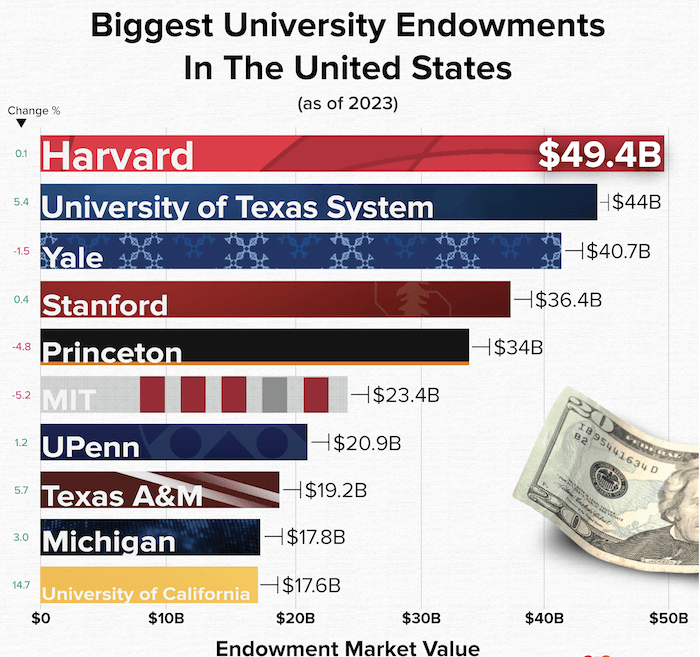
Harvard has the largest endowment at $57 billion. Those funds are used for lots of things, but much of it goes to research. By comparison, the Technical University of Delft, the Netherlands’ highest-rated engineering school, had an endowment valued at about 12 million euros as of 2022.
American universities are less greedy than their Dutch counterparts, and less controlling.
In the Netherlands, universities can claim up to 25-percent equity stakes in companies using technology developed in their labs. By comparison, the algorithm of the search engine that became Google was developed at Stanford University, yet Stanford only retained 5 percent of the equity. Still, when Google went public in 2004, Stanford got a check for about $300 million. Unsurprisingly, professors at top research universities such as Stanford and MIT are encouraged to be entrepreneurs, though we’ve met plenty of Dutch professors such as Carmen van Vilsteren who are also medtech startup founders.
But we’ve also heard horror stories from Dutch professors about endless meetings with university personnel and arbitrary and capricious rules. “No one,” a Dutch source told us last week “wants to get involved with Dutch startups where the university has an equity stake.”
American universities attract the best talent in the world, talent that spins out the best tech
If you look at some of the most successful bio/pharma companies, most are founded by people who have two things in common – they went to top universities such as MIT, Harvard and Stanford, and they are either immigrants or first-generation Americans.
Take Moderna, for example. Moderna developed mRNA vaccine that stopped COVID in its tracks. Of its five founders, two are Canadian and one is a second-generation American of Chinese descent. Or Appellis, which was developed in our home state of Kentucky at the University of Louisville. Of its three founders, one is Belgian and two are Canadian.
With increasing requirements for Dutch at unis and in the workplace, and a preference on hiring Dutch people, the Netherlands is becoming less welcoming for English-centric talent.
Funding
Donald Trump has cut much of the funding for medical research, including $783 million worth of cuts made by the National Institutes of Health alone. But there’s another source of funding and that’s from billionaires and celebrities who like to see their names on the university buildings, research and programs they endow. For example, CAA talent agency founder Mike Ovitz donated $120 million to UCLA for cancer research and endowed a chair.
Entertainment mogul David Geffen donated 200 million to UCLA’s School of Medicine. Surgeon and entrepreneur Gary Michelson donated 120 million to the school.
In 2025, 19 different Southern California institutions received major gift totaling $855.7 million in commitments.
Donations to Dutch schools are a bit more modest. A $225,000 donation to Eindhoven Technical University was front page news in 2023.
Speaking of Moderna, the company received a huge financial boost from Defense Advanced Research Projects Agency, or DARPA. Though it’s funded by the U.S. Department of Defense, DARPA funds non-military research deemed crucial to national security. Yes, the Dutch government has a military development arm, but not on the scale of DARPA.
Finally, it almost goes without saying the U.S. has the most active and aggressive VCs and funds in the world, not to mention the most successful incubators and accelerators. All have raked in money during the past decades, capital they now need to deploy. There is nothing comparable in Europe, where most of the largest VCs are offices of Sand Hill Road investment firms.
The intangibles
Those are all the components – education, capital and management – of the American ecosystem. Copying that is the easy part if the Dutch want to replicate the American approach. The hard part is between the ears.
What it’s like to do biz in Cal? We asked Dutch entrepreneur turned Silicon Valley mogul Pim Tuyls that very question. Tuyls sold his company, Intrinsic ID, to Sunnyvale, CA-based Synopsys back in 2024.
Last year, we hosted him for a Lunch & Learn on High Tech Campus Eindhoven where he told the crowd:
A) they should immediately take their startup to the U.S.
B) when they do, expect to do nothing but work. “It’s really a 24-hour society, almost where you constantly are involved in calls and emails and the whole thing,” he said.
What it’s like to be a startup founder in the U.S.?
“If you want to be successful in the U.S., you need to make sure that you as a CEO know what you’re talking about, technically speaking,” Tuyls said. “Not just about finance or whatever, but also technology-wise. They really test you like, ‘Is the founder solid? Does he know his stuff? Will he be here when there’s trouble? Can he help us when there is trouble?’ and so on.”
So, to recap, to the Netherlands needs:
• stronger connections to American universities and medical centers, which is happening through Dutch economic-development agencies
• more risk capital, especially early-stage capital
• less government controlled investment
• an entirely new university spinout model
• less bureaucracy, especially in restrictions that encourage working hours that are unrealistic for startups
• more foreign talent
• and all these points need to connect to each other
This is a transformative moment for the Netherlands. Can any prime minister or political leaders start the transformation? Do Dutch leaders even care? As we’ve said before, the Dutch system of companies created at research institutes such as TNO works well without the anarchy and capital destruction of the American startup system. But you can also argue that without chaos, there’s no disruption.
We’ve documented tech in the Netherlands for 10 years and have a foot in both worlds. If you need a guide to the U.S., we’re always here for you. Just ping us at: terry@dispatcheseurope.com

Co-CEO of Dispatches Europe. A former military reporter, I'm a serial expat who has lived in France, Turkey, Germany and the Netherlands.