(Editor’s note: Dutch Design Week grew out of Design Academy Eindhoven, which attracts international students from Europe and beyond.)
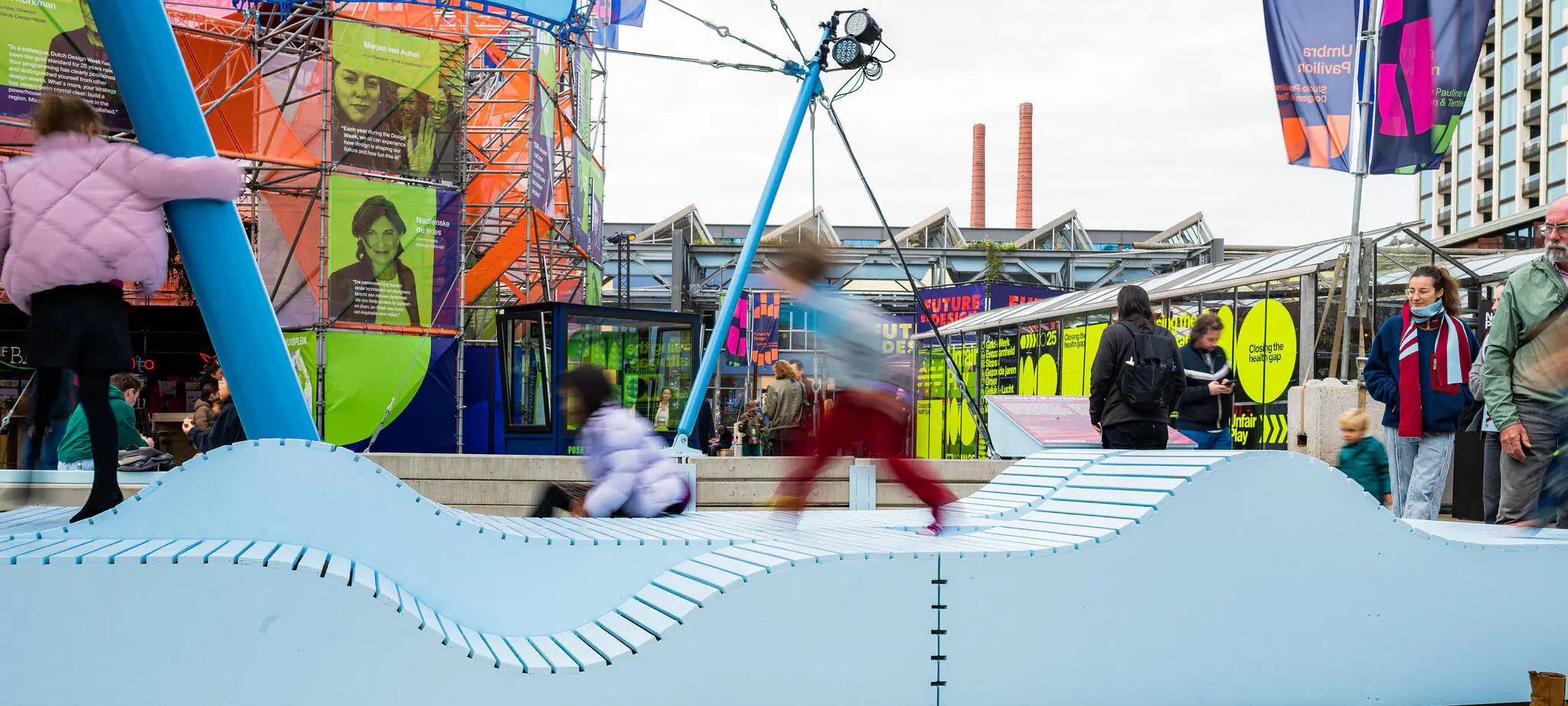
Dutch Design Week – 17 thru 25 October – has occurred every October since 1998 in a fabulous celebration of Dutch Design. It is the biggest design event in Northern Europe, attracting more than 350 000 visitors from home and abroad. The host city, Eindhoven, is famous for its cross-over between design and technology, making it a hub for innovation and creativity alike. For people working in the field and for the restaurants, bars and hotels of Eindhoven, Design Week is unforgettable. But how does it impact non-creatives in the city, which is arguably Europe’s most important tech innovation center?
Dutch Design Foundation finds it important to attract non-designers to the Design Week. The aim is to inspire and to demonstrate the need for culture art within society. Design Week facilitates third spaces where strangers may meet and converse with others outside of their usual environment: from parties at Ketelhuis to quiet away-from-the-crowds listening events at Foundation We Are. The event takes place on Sunday 25 October from 5:30 p.m.
General information
The main DDW events are ticketed.
These locations include:
- Klogebouw
- Design Academy Graduation Show
- Sectie-C
- Van Abbemuseum and Van Abbehuis
- Kazerne
- New Order of Fashion
- Dutch Invertuals
- Forward Furniture exhibition on Strijp TX
- ‘HUB Bouw aan morgen’, BioBased creations op de Caai
- Designing Society
- De Kruisruimte
- Building TT
- ‘Young Graduates HUB’, DDW x Design Perron (previously VGZ building)
However, everything in between is free to access. Grab a map and go!
Since design is for everyone, including the next generation, there is a kids’ programme too.
Below, I have listed some of my favourite spots during Design Week in order to explain why its worth the visit.
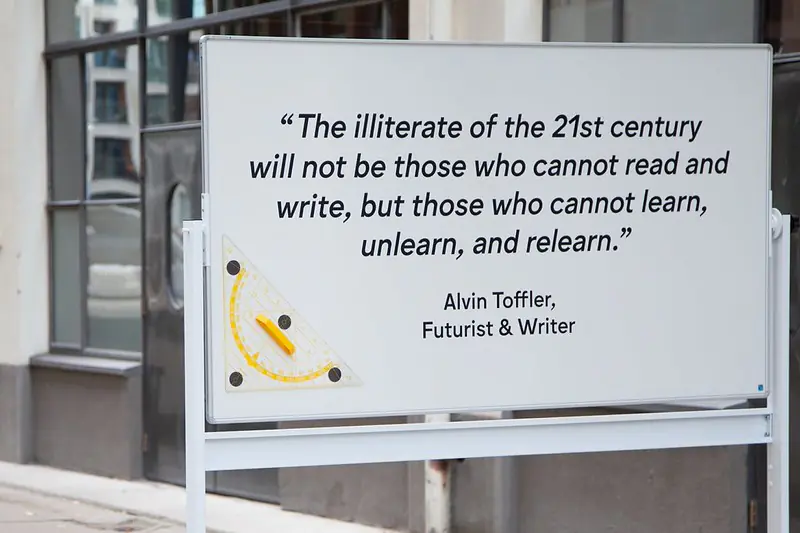
Manifestations (8th floor of Veemgebouw)
Art is where innovation begins. Like scientists, artists stand on the shoulders of the creative minds that came before. In this exhibition, you will see how flexible and adaptable thinking is used to address some of the big questions facing our time, such as the impact of climate change and the influence of AI on our lives. Thinking creatively isn’t reserved only for artists.
The infamous toeslagenaffaire or benefits affair of 2017 is a brilliant example of how important it is to think creatively. The Dutch Administrative system is well-known for being rigid and the rules are clear: citizens can be asked to repay any kind of social benefits, from housing allowance to healthcare allowance, if it’s retrospectively deemed that they are not entitled to it. As a result of a system error, tens of thousands of parents who had been receiving benefits for childcare were accused of fraud and required to repay their allowance in full. In 2017, the scandal made headlines, with effects of the crisis still being felt to this day. The government eventually reached out to universities and to art organisations to help teach the people working in the system how to be more flexible and react instinctively when they see that something is going wrong. The focus was, of course, people outside of the art and design bubble.
This is why exhibitions such as Manifestations are so important.
The content is diverse: from robots, e-fashion, nature and kids education, with inspirational design to entertain all kinds of people. Through visual storytelling, the exhibition combines art, technology and fun.
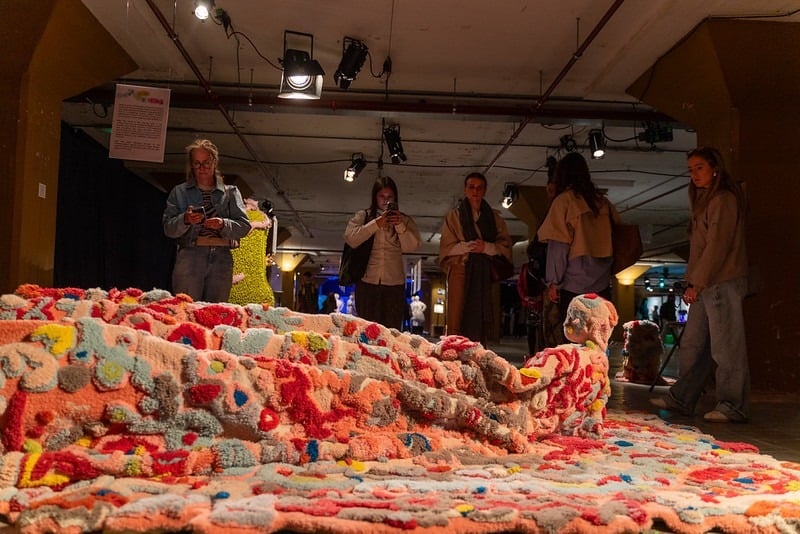
Fashion Tech Farm (Strijp)
Located slightly off-the-beaten-track, Fashion Tech Farm is a studio, incubator and production facility for innovative fashion and wearable technology. This might look like clothing that vibrates when the wearer is feeling anxious, sensors which read heart-rates, the integration of 3D printing on textile or specialised clothing for a particular medical illness.
What makes the Fashion Tech Farm unique is that it houses a variety of different companies throughout the year. Through a business incubator programme, they support emerging talent in developing ideas and growing their practice into viable business models. The exhibition will showcase a work from the Fashion Tech Farmers alongside external designers.
Kazerne Bar, Restaurant and Gallery (Paradijslaan, City Centre)
The exhibition at Kazerne, titled “Embodied Energy, Vibrant Relations” is focused on nature-inclusive design. It brings the invisible to light, with each project paying close attention to a specific phenomenon. From gold recovered from electronic waste, to a cocktail bar that doesn’t serve martinis but serves river water, inviting a conversation about water quality, who is responsible for it and how to act now in order to protect our rivers for all living species alike.
The future isn’t something that looms in the distance, but something that we make happen every single day. That applies to nature in our gardens: what to plant now so that your garden will look like that in 10 years, and to speaking a new language: practicing a little every day. Eindhoven is known for its international ecosystem. The effect that the growing amount of non-Dutch speakers has on the local community is certainly a point to address for locals. The exhibition at Kazerne is as much about nature as it is about culture and community. Aimed at expats to connect with the local public, the exhibition at Kazerne hosts Holland Expat Centre South where viewers can find cheat-sheet items (umbrellas, board games, scarves and bags) to help make conversation in Dutch.
Through a monthly talk series and networking event (EHV Innovation Cafe), the Kazerne Foundation facilitates discussions about the future of our city from both technical and design perspectives. During Dutch Design Week, a special edition of the EHV Innovation Cafe will take place: Monday 19th October from 17:30.
Sectie C (Tongelre)
Sectie-C is famous for being a raw, unpolished creative hub, located on the east of Eindhoven. What I like the most about Sectie-C is that there is such a variety in the types of work that can be found there. Designers open up their workshops to give a real-life snapshot so that visitors can peek into the behind-the-scenes. Others host the work of external participants, bringing together design from across Europe. It’s one of Design Week’s ticketed locations but the thriving community makes every penny worth it. Visitors can easily spend a day looking around so don’t be put off by the rain. For that reason, you’ll find food stalls, a buzzing bar and live on-stage entertainment.
The site is home to many workshops across eight buildings. Amongst the professionals, recent graduates and hobby-ists who rent a workshop on the terrain, several notable Dutch Designers, including Nacho Carbonell, Tessa Koot, Victor Sonna and Paul Heijnen are based here all year round.
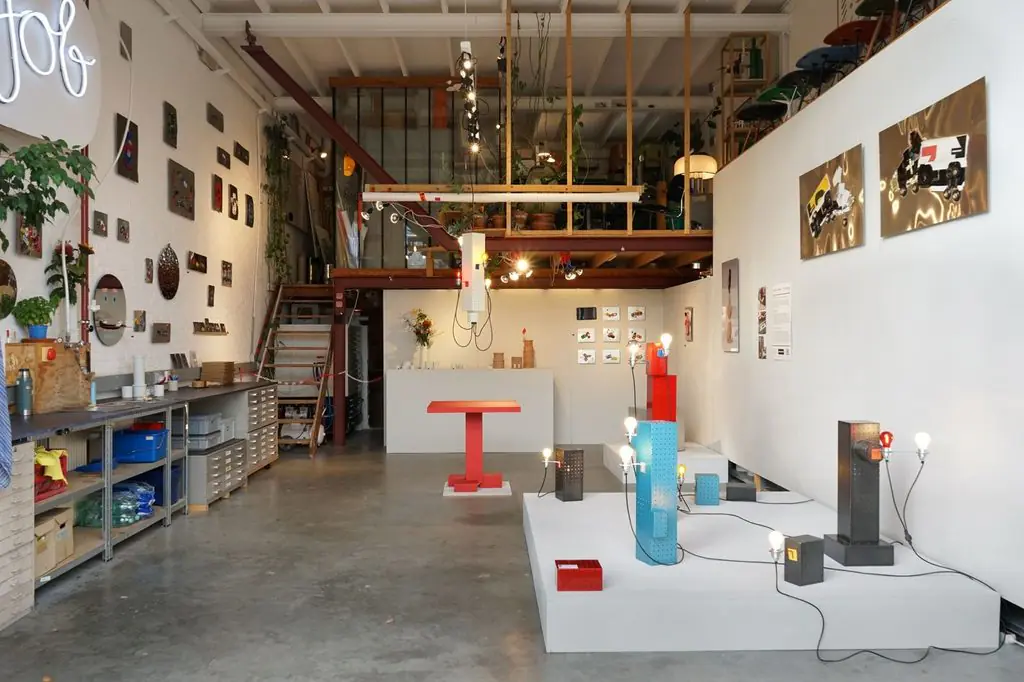
This site has become somewhat political in recent years. As is the case with many areas of Eindhoven, new housing developments are sweeping away creative spaces. On the terrain where Sectie-C currently sits, the plan is to build 1,400 new homes with a significant portion dedicated to affordable housing. The development project will take place between 2029-2035. Due to a coalition between the city council (Gemeente Eindhoven) and the foundation of Sectie-C, the creative sector will be preserved by dedicating a multistory building which is to become workshops for the existing tenants (Sectie-C 2.0). This has been deemed essential for maintaining the vibrant and creative ecosystem that is Sectie-C.
Kettlehuisplein (Strijp S)
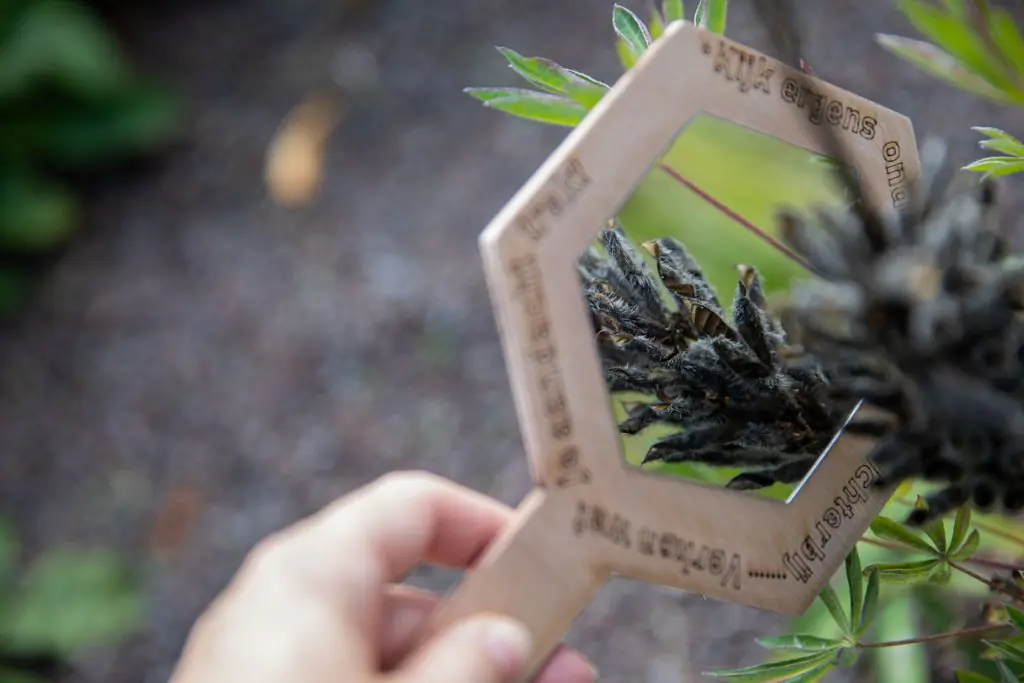
Much of Dutch Design Week is about celebrating Dutch Design but at Kettelhuisplein you will find projects that are related to the province of Brabant. In one interactive project, you will find mirrors cut out in the shape of the five lakes of Brabant. Natuurkattsen, invites participants to observe their local surroundings with attention and curiosity. The aim is to create more mindful connections between people and nature, helping to involve the environment in the choices that we make.
Fuutlaan (City Centre)
The future of Eindhoven is at stake! The Fuutlaan is another site for incoming developments by a company called Knoop XL. As it stands, the terrain alongside the railway hosts creative workspaces and, similarly to Sectie-C, the Design Week offers a chance to wander around the studios to see what’s cooking and where the designers work. There is a designer market at Design Perron (Fuutlaan 12). But what I find most fascinating at this location is the Fuuttuin. For the past year-plus, the unused land along the old railway line has been transformed into a guerrilla community garden. Neighbours were invited to care for a flowerbed and the garden offers a third space for visitors to find peace amongst the blooming garden.
Throughout Design Week, refreshments and lunch will be served from Saturday to Saturday from the on-site kitchen-bar, food will be cooked on the outdoor stove and a campfire will keep visitors warm. Throughout the week, there will be workshops and other kinds of interactive activties to keep your hands busy.
Otomoto (Vrijstraat, City Centre)
Dutch Design Week is about more than exhibitions – the night programme is equally important. At Otomoto, located on Vrijstraat in the city centre, there is a music programme with vinyl DJs every evening until 2 a.m., as well as good food and drinks. The bar opened last October and since then has become a vibrant third space for residents of Eindhoven.
Artists have a reputation for being poor and the creative sector has a reputation for underpaying its contributors. As a result, many creatives have a part-time job to help pay the bills. For many, that job is in the horeca field, as a waiter or cook. What I find special about Otomoto is that they celebrate their creative workforce. Staff members will display their work during Design Week on the walls of the bar and at their second location on Kettelhuisplein.
Equally, Dutch Design Foundation supports its local entrepreneurs by asking Otomoto to host the outdoor bar at Kettelhuisplein for the second year in a row. During the daytime, fun collectives will be playing music in Strijp S. The bar offers a resting and refreshing spot to enjoy the outdoors.
There’s so much more…
Aside from these few places listed, Design Week has so much to offer. You might want to check out United Cowboys on Kleine Berg, De Fabriek, the recently opened district of Strijp TX, Design Academy Graduation Show, independent gallery Salon Veneman, creative collective workspace Studio YL… the list goes on. Grab a map and go!
**********
Read more about Eindhoven here in Dispatches’ archives.
Read more from Zoë here on Dispatches.

Zoë Prifti is a native of London. Zoë came to the Netherlands to study at the Eindhoven Design Academy and has been here ever since. She's an artist, entrepreneur and writer.