
(Editor’s note: This post on Darmstadt space programs is part of Dispatches’ Tech Tuesday series. We cover technology because so many of our highly skilled internationals are the founders, engineers and developers creating Europe’s next opportunities.)
A small German city south of Frankfurt has the satellite operators, the startups and, it turns out, the jobs. Some European cities build their reputations on technology. Darmstadt, Germany, built its on keeping satellites from getting lost, a quieter line of work but a far less forgiving one. The city sits about 30 kilometers south of Frankfurt and 25 kilometers from Frankfurt International Airport. Most travelers pass it by. Engineers, entrepreneurs and anyone building a career in aerospace, satellite communications or Earth observation should not.
Darmstadt is home to two major European space organizations, a network of aerospace contractors and a growing crop of startups. Unlike any emerging tech clusters, it already has the infrastructure, relationships and expertise to support the industry. There is an economic story behind that concentration, too.
CESAH, Darmstadt’s satellite-navigation and startup center, says it has supported more than 160 companies in the city, which have created well over 500 jobs. And the European Space Agency’s operations center, ESOC, employed about 900 people, according to a 2023 report by Hessen’s economic development agency. Those figures aren’t a headcount of the entire local space industry, but they offer a glimpse of the business and employment ecosystem that has grown around it.
A European command center
The anchor is the European Space Agency’s European Space Operations Centre, known as ESOC. Established in 1967, it controls spacecraft, manages missions and coordinates the global network of ground stations that keep in touch with satellites in orbit. More than 80 satellites belonging to ESA and its partners have been operated from Darmstadt. The work goes beyond keeping satellites on course. ESOC also handles mission planning, flight dynamics and space safety.
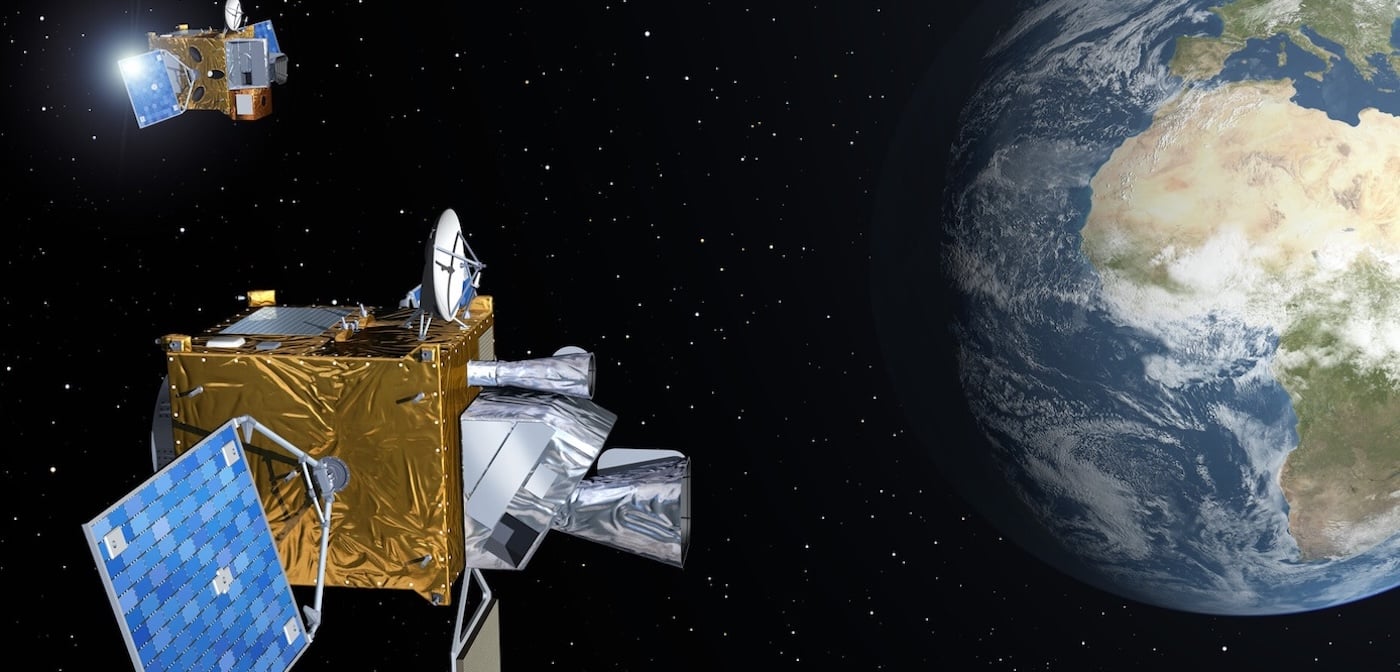
Nearby is EUMETSAT, the European Organisation for the Exploitation of Meteorological Satellites. Its 30 member states depend on its Meteosat and Metop programs for weather forecasting, climate monitoring and environmental observation. The next generation, Meteosat Third Generation, is designed to give forecasters more detailed and more frequent views of the atmosphere, helping them spot fast-developing storms. EUMETSAT’s planning already extends through 2040.
For job seekers, the point is simple: Institutions with missions that long mean steady demand for engineers, software developers, data specialists and satellite operators. Satellites, once launched, need looking after for years, and someone has to do the looking.
The companies behind the satellites
ESA and EUMETSAT have attracted private companies that supply the technology and the talent.
Among them:
• Telespazio Vega: Satellite systems, ground infrastructure and mission support. An established employer for engineers and mission specialists.
• ExoStaff: Personnel and project management for the space sector, placing technical exerts on complex programs.
• OHB Digital Connect: A new Darmstadt location for the German aerospace group, which is expanding its satellite operations business. Through a subcontract involving ExoStaff, its teams already support EUMETSAT, monitoring Meteosat satellites, analyzing telemetry and performing routine maneuvers.
• IMS Space Consultancy: Flight dynamics, mission analysis, ground systems and space-debris mitigation for ESA, EUMETSAT and other contractors.
The OHB example shows how the local space economy works. It isn’t only the people who design and launch spacecraft. It also needs software developers, communications specialists, mission controllers and engineers who keep satellites running for their entire working lives.
Darmstadt’s universities and incubators are producing newer companies, and not all of them build hardware:
• Aperio Space Technologies: A TU Darmstadt spinoff developing software that links satellites run by different organizations into one flexible data network. Today, data can wait an hour or more for a satellite to pass over a ground station.
• MAITY Space: Automated collision-risk software for satellite operators, built on an operational framework developed with ESA. Orbit is getting crowded, and someone has to direct traffic.
• ALCAN Systems: Intelligent antenna technology for satellite and mobile communications.
The lesson is that opportunity may lie less in building another satellite than in the software, communications systems and safety technology that let thousands of them work together.
Help for the ambitious
TU Darmstadt and Hochschule Darmstadt supply a steady stream of engineering graduates. CESAH, the Centre for Satellite Navigation in Hesse, supports companies developing commercial space applications and runs an ESA Business Incubation Centre that helps startups turn research into businesses.
Startups look beyond satellites
Because satellite technology now overlaps with artificial intelligence, telecommunications, transportation, environmental monitoring and cybersecurity, a company doesn’t need to build spacecraft to join in. Analyzing satellite images, securing a communications network or building navigation apps counts, too. For job seekers and entrepreneurs alike, that widens the field considerably.
Why Darmstadt
Darmstadt’s place in the communications age was earned long before the first satellite. In 1882, its technical university set up what is described as the world’s first chair in electrical engineering, and a degree course followed. By World War II, the city also hosted military communications networks and sat on important railway links, which, along with its chemical works, made it a target. The Royal Air Force raid of 11 – 12 September 1944, destroyed much of the Old City and left 66,000 of its 110,000 residents homeless.
After the war, the Reichspost’s central telecommunications office settled in Darmstadt, and from 1949 it ran as the Federal Post Office’s research hub until it folded into Deutsche Telekom. When European space officials needed a home for satellite operations in the 1960s, Darmstadt had a technical university, a rare mainframe computer and a deep bench of engineers. Steering spacecraft turns out to require mostly computing power and brainpower, and the city had both.
Today, Europe’s space industry is gaining importance as governments and businesses look for technological independence and reliable satellite services. Weather forecasting, climate research, navigation, communications and security all depend on it.
Darmstadt has the institutions, the contractors, the universities and the startups to benefit.
Frankfurt’s airport is close, so relocating, or flying in for meetings, doesn’t require a trek to a remote industrial park. Darmstadt may lack the profile of Paris, Munich or Luxembourg’s tech sectors, but its influence on Europe’s space industry is far larger than its size suggests. For professionals planning their next move in aerospace, satellite communications or data, it’s a city worth knowing.
Looking for a Career in Europe’s Space Industry?
Darmstadt’s space sector offers opportunities in satellite operations, engineering, software, data analysis and business support. These are useful places to start looking:
EUMETSAT – Careers and vacancies are here. Opportunities include science and engineering roles, support positions, internships and early-career programs.
European Space Agency job portal is here. Search vacancies by location, including Darmstadt.
OHB – See careers here. Explore opportunities with one of Europe’s major space technology companies.
Exostaff: A Darmstadt-based space-sector engineering and staffing company. Check its website and professional-network listings here for openings.
IMS Space Consultancy: A Darmstadt consultancy working in mission analysis, flight dynamics, ground systems and other space-related services. Contact the company directly about opportunities.
A note for international applicants: Eligibility requirements vary. ESA and EUMETSAT positions can be subject to nationality or member-state conditions, so check the requirements for each vacancy.
Further Reading and Industry Resources Istitutional and Industry Background:
- European Space Agency – European Space Operations Centre (ESOC)
- EUMETSAT – Who We Are
- EUMETSAT – Strateg
- City of Darmstadt – Space Industry Cluster
- CESAH – Centre for Satellite Navigation Hesse
- ESA Business Incubation Centre Hessen
- IMS Space Consultancy
- OHB Digital Connect
- MAITY Space
- Aperio Space Technologies
- ALCAN Systems
- ALCAN Systems – Satellite Antenna Technology
Additional European Space Industry Resources:
- European Space Agency – Business Incubation Centres
- OHB Group – Digital Business Segment
–––––––––––––
See more from Alice here in Dispatches’ archives.

Alice Verberne is a journalist and writer whose career has taken her from Washington, D.C., to Europe. Her reporting explores the systems and industries that shape everyday life, from business and technology to healthcare, taxation and real estate. Particularly interested in how things work—and occasionally why they don't—she writes from France, where there is never a shortage of material.