
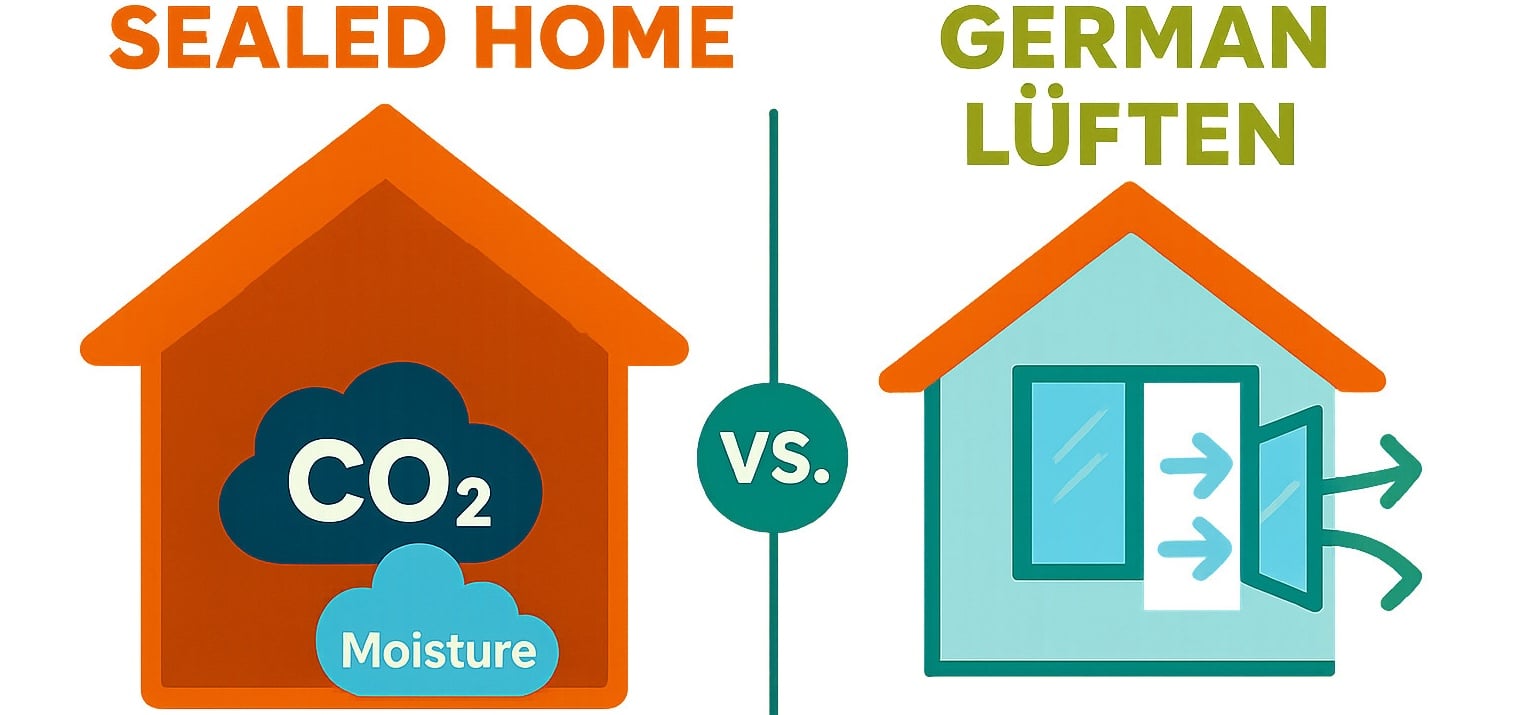
We’ve wrapped up an unpredictable summer here in northern Germany. No yellow or brown hues dominating the colour palette of the UK’s parks and lawns – or devastating wild fires like in southern Europe. We experienced 192 litres per square metre of rainfall this summer (88 per cent of the summer norm), but we also endured sporadic patches of days in excess of 30 degrees Celsius.
Living in a ground floor apartment finally becomes enviable over summer; that’s now the place to be to survive European heatwaves. Especially in Germany, where only six per cent of households have air conditioning. As ground-floor tenants, my partner and I didn’t need air conditioning – or even a fan – in 2026, Germany’s second-hottest summer since 1881. The breeze trailing in through the windows was more than sufficient to keep us cool.
The windows won’t stay closed as we head into autumn and winter. Opening windows is a year-long, multiple-times-a-day activity in German households. Not by preference, but by requirement and governmental advice – by landlords and by the Umweltbundesamt (UBA, Germany’s Federal Environment Agency).
What is Lüften?
Lüften is the German noun from the verb “lüften,”meaning to air out indoor spaces and ventilate them.
What has been governmental advice in Germany for decades has bizarrely become a social media trend in other parts of the world, as lüften has been embraced as “house burping.”
Just type in “house burping” into a TikTok search bar for more context. It even has its own Wikipedia entry.
As unserious as “house burping” sounds, most Germans take the act of Lüften seriously, since it’s proven to prevent mould build-up as well as improve indoor air quality, mental health and sleep. It is also often a requirement in German rental leases.
A UBA study reveals that four in five public buildings in Germany are ventilated through windows – they rely entirely on people manually opening windows. Lüften became necessary due to the nation’s very well-insulated modern housing – and it especially became a public health recommendation during the COVID-19 pandemic.
And ventilate the people will in Germany, even throughout the long winter season – pandemic or not.
It’s recommended (even urged by landlords), all year round, to open windows wide three to four times a day for five to ten minutes.
My colleagues at my first office in Hamburg told me in a laissez-faire way that opening the window or door wide – come rain, come sun, come subzero temperatures – was to be done without fail multiple times a day. This was especially stipulated by the company’s works council.
And so my colleagues and I sat and worked at our desks on the far side of the shared open office space, the furthest away from the door, with blankets acting almost as thermal sleeping bags around our bodies.
This is Stoßlüften – shock ventilation – which requires only a few minutes of opening the window wide multiple times a day. For those not acquainted with experiencing these cold bursts of winter air inside, “shock” is an apt way to describe it. Stoßlüften is designed to prevent heat loss as much as possible when opening windows, and heating and thermostats should be turned down during these moments of shock ventilation.
When I moved into my first rental flat in 2021, my landlords packed a neat leaflet dedicated to Lüften best practices in my rental pack; it was titled “Richtig heizen und lüften” (“Heating and ventilating correctly”). It gives you many fun variables to consider as a tenant, including that the correct indoor humidity is between 30 and 60 per cent, and you should heat your flat for around two-thirds of the year.
Following the advice for your lungs and landlord
Since more than half of the German population rent their homes – the highest share in the European Union – it’s important to do as the advice says – not just for individual health and the quality of the air indoors, but to appease landlords. Regardless of whether you live in Germany, if you want to enhance the quality of your indoor air, it’s important to keep an eye on air circulation, humidity and room temperature in the buildings where you live and work.
- Open windows wide three to four times a day for five to ten minutes (Stoßlüften/shock ventilation)
- Turn heating and thermostats down while ventilating
- Don’t leave windows permanently open or tilted in winter – it wastes energy
- Maintain indoor humidity between 30 and 60 per cent
- Ventilate the bedroom after waking to remove overnight moisture
- Heat your home for approximately two-thirds of the year (a challenge for many with the rising energy costs)
Other countries are now beginning to adopt Germany’s stringently regulated Lüften habit – and how to do this in winter without releasing excessive emissions and heat. That is the real caveat of Lüften – along with Lüften during springtime, when pollen allergy sufferers might question the health benefits promised by Lüften. Public advice is still to open windows, and commit to a regular shock ventilation schedule.
My slight but very real gripe with this sensible German habit is that this acknowledgement of the importance of fresh, clean air is coming from a country that insists on painting futile yellow boxes on concrete train station floors to signify outdoor smoking areas – knowing full well cigarette smoke doesn’t respect the line, even when smokers do.
–––––––––––
Read more about Germany here in Dispatches’ archives.
See more from Sara here.

Sara Vordermeier
Sara Vordermeier is a Hamburg-based freelance writer and editor specialising in sports, technology and culture stories from her life abroad. Her professional writing experience spans more than seven years in the fields of content marketing, organic search trends and journalism.